Bitcoin
This page lists the latest Bitcoin news and market analysis. Browse articles, expert insights, and updates in this category on JrKripto. Stay informed with in-depth coverage of cryptocurrency trends and developments.
News
Bitcoin News
Bitcoin News
Browse all Bitcoin related articles and news. The latest news, analysis, and insights on Bitcoin.
Bitcoin Breaks Through Resistance, Eyes Turn to Derivatives Market
Bitcoin tested $76,000 for the third time in four days. The price briefly surpassed this level on Friday morning, but BTC is currently around $75,440. It still faces a $450 million sell wall; according to CoinGlass data, most of these orders are concentrated in the $75,900-$76,300 range. Some traders are opening short positions at this resistance, while others have placed pre-orders to protect positions that will be liquidated if a breakout occurs. Stocks RiseUS stock markets reached record highs on Thursday. The easing of tensions on the Iranian front following the Israel-Lebanon ceasefire was reflected in the markets. Crypto had significantly outperformed stocks during the period of escalating conflict. Now the situation has reversed, and BTC is moving in a more measured direction.Futures Market ActivityWhile the price has not yet charted a clear direction, there is some activity in the futures market. Total market capitalization surged 28% to $225.8 billion, with open interest (OI) rising over 1.5% to $126.68 billion. The most notable development: Total liquidations surged 140% to $529 million. Short positions are slightly outpacing long positions, indicating a limited-scale short squeeze dynamic.SOL leads the list in open interest growth. The number of active SOL futures contracts increased by 11% in the last 24 hours, reaching 5.53 billion SOL; the highest figure since March 18th. Dogecoin is also noteworthy: DOGE open interest is at a six-month high of 14.17 billion DOGE.Rising funding rates and positive OI-weighted CVD (cumulative volume delta: the cumulative sum of the volume difference between buy and sell orders) in SOL indicate that buyers are becoming increasingly aggressive. The picture is mixed in DOGE: CVD is showing buying interest, while slightly negative funding rates remind us that there is still a bearish sentiment in the derivatives market. ADA stands out in the OI-weighted CVD ranking; buying pressure is evident in Cardano.Volatility is falling, the options market is cautiousBitcoin's 30-day implied volatility index, BVIV, has fallen to 43.35%, its lowest level in 2.5 months. Ethereum's index, EVIV, is hovering near its recent lows, around 65%. Falling volatility usually paves the way for market calm and an upward trend.In Deribit, however, the options market gives a slightly different feeling. Put options continue to dominate both BTC and ETH options; downward concerns have not yet fully dissipated. The market is preparing for an uptrend, but it is not very willing to put all its money on the table.

$11 Trillion Giant Schwab Enters Spot BTC, ETH Trading
Charles Schwab shared details of the Schwab Crypto platform this week. Expected to roll out gradually in the coming weeks, the platform will allow clients to buy and sell Bitcoin and Ethereum through the same account infrastructure they use for stock and bond trading. This move directly pits the company against Robinhood, which, while targeting a relatively young audience, has long offered stock and crypto trading under one roof, and is now adding additional financial services. Given Schwab's position as one of the world's largest brokerage firms with over $11 trillion in client assets, this move is attracting attention in the industry. Schwab Crypto accounts will be linked to existing brokerage accounts but will remain separate. The account will be offered under the Charles Schwab Premier Bank, SSB, which will be responsible for the storage and recording of digital assets. Sub-custody and transaction execution services will be handled by Paxos, an OCC-regulated blockchain infrastructure provider. The transaction fee is set at 0.75% of the dollar value of each trade. For comparison, Robinhood's commission-free trading is still a possibility. Coinbase, on the other hand, applies different rates depending on user tiers. The company positions this pricing among the lowest in the market for crypto trading among major brokerage firms.Customers are interested in cryptocurrenciesSo, is the timing of this decision a coincidence? Not really. Schwab has been openly stating for months that its customers are interested in crypto investing. With the Trump administration's regulatory stance towards the sector becoming more pronounced, traditional financial institutions that had previously been on the sidelines have begun to take action. Schwab is not alone in this respect: Morgan Stanley recently launched a spot Bitcoin ETF, and Goldman Sachs has applied for a Bitcoin income ETF.Schab is actually no stranger to the crypto market. According to company data, Schwab customers currently hold approximately 20% of all spot crypto exchange-traded products. Existing access options on the platform include spot crypto ETPs, crypto futures, options on spot crypto ETPs, and crypto-focused mutual funds. The new platform adds direct spot trading to these.Initially, only Bitcoin and Ethereum will be supported. The company plans to add more cryptocurrencies to the platform in the future and introduce transfer features that will allow deposits and withdrawals, enabling customers to move their digital asset holdings from elsewhere to Schwab.The survey, conducted between July and September 2025, involved 460 crypto investors and potential investors. Participants highlighted three factors when choosing a crypto trading platform: low and transparent pricing, a familiar brand and trust, and the belief that digital assets will be kept safe. The market will show how competitive Schwab is in these three areas. Looking at the shares, they fell 2 percent following the company's quarterly financial results announced on Thursday. The crypto announcement did not offset this decline.

Morgan Stanley's Bitcoin ETF Breaks Record in its First Week
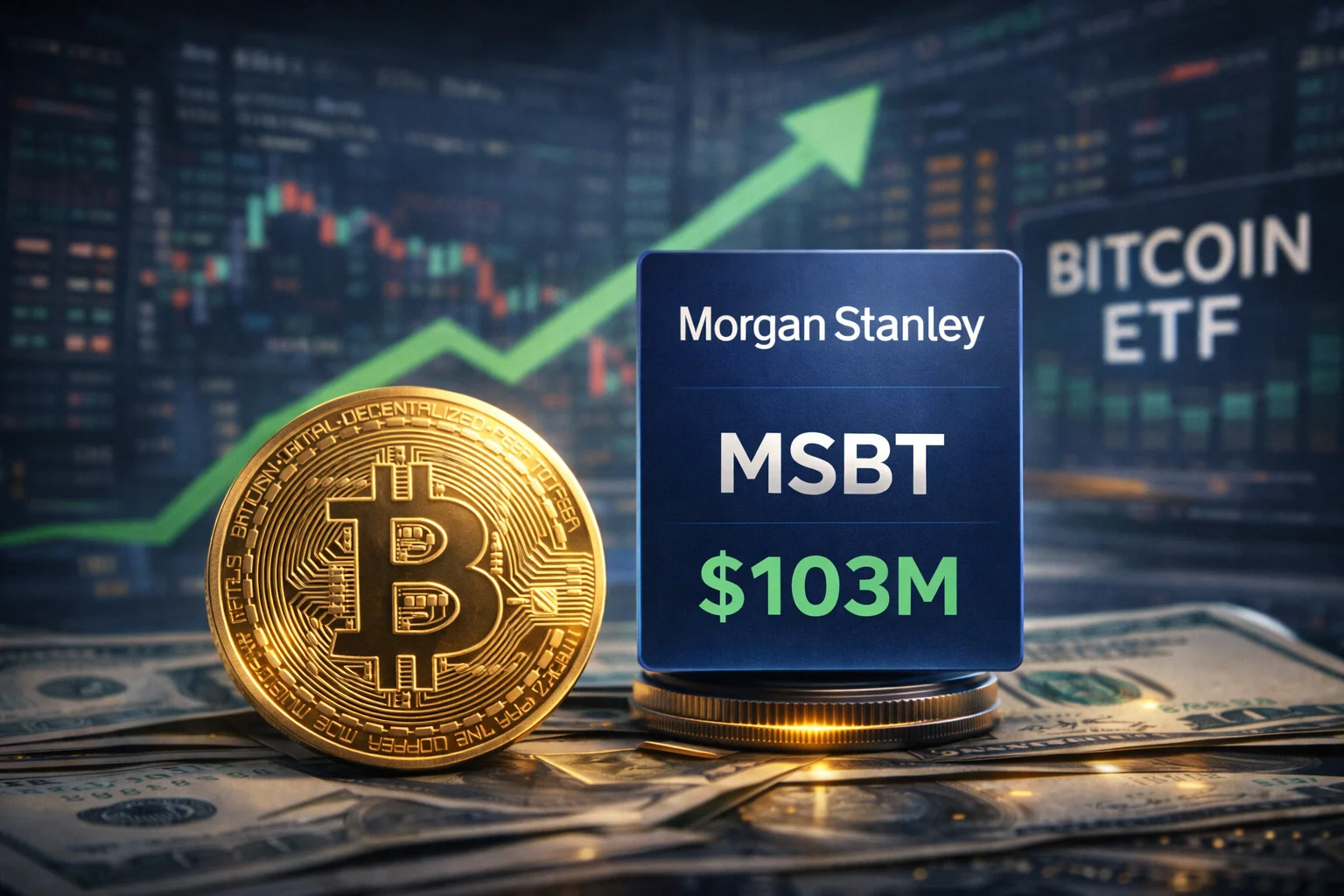
Morgan Stanley's spot Bitcoin ETF, MSBT, has attracted a net investment of $103 million in six trading days since it opened on April 8. This marks the highest inflow in the bank's history for an ETF in terms of first-week performance. Digital assets head Amy Oldenburg confirmed this to Bloomberg. The figure makes more sense when put into perspective: MSBT has surpassed the inflow rate of WisdomTree's Bitcoin fund in its first week. It's also the cheapest of the current spot Bitcoin ETFs, with an annual fee rate of 0.14%, including BlackRock's IBIT.Background: A decade of waitingThe SEC rejected the first Bitcoin ETF application in 2013. Over the next decade, dozens of applications have been submitted, all suffering the same fate. The reasoning has always been the same: the risk of market manipulation and the lack of adequate oversight mechanisms. In 2021, the door was opened to Bitcoin futures-based ETFs, but approval for a product directly linked to the spot market did not come until BlackRock applied in June 2023.BlackRock's move was symbolic. The world's largest asset manager had taken the matter to the table, and the market took it seriously. Fidelity, Invesco, and ARK Invest lined up. The SEC approved several applications at once in January 2024. In the first few days, the money flowing into IBIT broke record after record. But the real issue is not the price, but the channel. Morgan Stanley's network of financial advisors managing trillions of dollars will now offer MSBT as a priority option for clients to access the crypto market indirectly. These advisors had been recommending BlackRock's fund since August 2024. The priority has changed hands.It should also be noted that MSBT is still a small player. BlackRock's IBIT has reached $53 billion since its launch in January 2024. $103 million is a good start, but the gap between these two figures is long.Goldman and BlackRock are next in lineMorgan Stanley's launch hasn't left competitors inactive. Goldman Sachs filed with the SEC last week for a Bitcoin Premium Income ETF. This structure, which aims to generate income through options strategies, aims to offer regular cash flow rather than spot price gains. BlackRock is also working on a similar income-focused product.According to Nate Geraci, head of NovaDius Wealth Management, Goldman's move is a sign that established Wall Street institutions can no longer ignore Bitcoin. Geraci says it wouldn't be surprising if names like JPMorgan also take action soon.We clearly see that spot ETF competition is leading to price compression. MSBT's 0.14% share is putting downward pressure on BlackRock and Fidelity. In the coming days, BlackRock's IBIT earnings data and the Federal Reserve's interest rate policy announcements will remain the two most important variables shaping the market's direction.
K33 Warns: Risk of Short Squeeze in Bitcoin is Increasing
An unusual pattern has been observed in the crypto derivatives markets for some time. According to research and brokerage firm K33, the persistence of negative funding rates in Bitcoin, coupled with increasing open positions and continued upward price movement, is increasingly strengthening the possibility of a "short squeeze" in the market. The latest analysis shared by the company's research director, Vetle Lunde, particularly highlights this contradictory appearance in derivatives data. The 30-day average funding rate for Bitcoin has been negative for a full 46 days. This period perfectly matches the negative funding period seen during the bottom of the 2022 bear market. Negative funding rates indicate that short positions are more dominant than long positions. However, this situation takes on a different meaning when it occurs in an environment where the price is moving upwards. At this point, the overall positioning in the market becomes critical. Under normal circumstances, during periods of strong bearish expectations, the price is expected to move in parallel. However, in the current scenario, while a significant portion of investors are taking short positions, the Bitcoin price continues to rise. The increase in open positions also supports this trend. Such situations have historically been seen near market lows, followed by strong upward movements. What does negative funding mean?The funding rate is a key metric in the futures market that shows the balance between long and short positions. Negative funding indicates a high concentration of short positions, with investors paying long position holders. This alone can be interpreted as a bearish signal; however, if negative funding continues while the price is rising, it may mean that the short side is caught in the "wrong position."According to K33, the current situation points exactly to this. While funding rates remain negative on daily, weekly, and 30-day averages, the upward movement of the price indicates an accumulation of aggressive short positions in the market. This accumulation can trigger forced liquidations when the price rises above a certain level. In such a scenario, purchases made to close short positions can push the price even higher, creating a chain reaction. This process is called a "short squeeze." Lunde notes that similar market conditions have been observed in the past and generally coincide with the end of consolidation phases. He specifically points out that periods of increased open interest, rising prices, and negative funding rates tend to occur near market lows.According to the data, such prolonged negative funding regimes are quite rare. Negative funding lasted for 63 days between March and May 2020, and for 49 days between June and August 2021. The current 46-day series follows immediately after these two periods, indicating that the current market situation is at a historically significant point.The Bitcoin price has risen by approximately 3% in the last week. Since reaching the $60,000 level around February 6th, the total increase has reached 23%. Despite this, the asset is still trading more than 40% below its peak of approximately $126,000 recorded on October 6, 2025. When all this data is considered together, it is noteworthy that the price has remained resilient despite the prevailing downward expectations in the market. If this structure is maintained, sharper upward movements may be possible as short positions are squeezed. For this reason, K33 maintains its positive outlook for Bitcoin.
Bitcoin Surpasses $75,000: What is Supporting the Rally?
Inflation data from the US and geopolitical developments have triggered a renewed strong movement in the crypto market. The lower-than-expected Producer Price Index (PPI) data for March increased appetite for risky assets, and Bitcoin's price reached its highest level in recent weeks.Inflation surprise and geopolitical developments stirred the marketAccording to data released by the US Bureau of Labor Statistics, the annual PPI increase in March was recorded at 4 percent. Market expectations were at 4.7 percent. Although the data was higher than the 3.6 percent increase in February, it was noteworthy for being below expectations. On a monthly basis, the PPI increased by 0.5 percent, significantly below the expected 1.1 percent. Core PPI, however, maintained its highest annual increase in recent times at 3.8 percent.This picture shows that inflationary pressures have not completely disappeared, but the pace is not as strong as expected. On the market side, this situation strengthened the expectation that the US Federal Reserve may pursue a more dovish policy. The halt in interest rate hikes, or the renewed discussion of potential rate cuts in the future, is creating a supportive environment, especially for risky assets like cryptocurrencies.The Bitcoin price reacted quickly to these developments. According to the data, BTC reached $75,495, its highest point in the last four weeks. A daily increase of approximately 5.4% was recorded. The price, which rose above $75,500 during the day, has gained strong momentum in the short term. Looking at the market as a whole, it is clear that the rise is not limited to Bitcoin alone. Ethereum gained over 8%, and XRP also participated in the rise, albeit to a more limited extent. The increase in trading volume is also noteworthy; the significant increase in volume on the Bitcoin side in a short time indicates that new money is accelerating its inflow into the market.On the geopolitical front, the talk of renewed negotiations between the US and Iran has somewhat softened risk perception. Such developments can provide markets with a breather, especially during periods of intense global uncertainty. The expectation of lower tensions makes it easier for investors to return to risky assets. In the coming period, all eyes will be on the steps the US Federal Reserve will take. The next Federal Open Market Committee (FOMC) meeting, in particular, could be decisive for the market's direction. A rate cut or a dovish statement could support the current uptrend. Conversely, a signal of a tighter stance if inflation accelerates again could increase market volatility. Some analysts believe that if the current momentum is maintained, Bitcoin could move towards the $80,000-$85,000 range in the medium term. However, the realization of this scenario depends on both macroeconomic data and geopolitical developments continuing their current positive trend.

Kraken Crypto Exchange Gains Major Partnership: Deutsche Börse Invests $200 Million
German financial giant Deutsche Börse Group has made a strategic investment of $200 million in Payward, the company behind the cryptocurrency exchange Kraken. This investment both accelerates the integration process between traditional finance and the crypto ecosystem and provides significant support for Kraken's planned initial public offering in the US.Institutional support increases as Kraken moves towards IPOAccording to the statement, Deutsche Börse made this investment by purchasing existing shares through a secondary market transaction. As a result of this transaction, the company obtained a diluted stake of 1.5% in Payward. This percentage reveals that Payward's total valuation is approximately $13.3 billion. Considering that the company received an investment at a valuation of $20 billion in November, this figure indicates a significant pullback.In its assessment, Kraken emphasized that this investment is a natural continuation of the strategic cooperation initiated a few months ago. The two companies had previously formed a partnership aimed at connecting traditional financial infrastructures with crypto asset markets. With this latest step, this collaboration has gone beyond technical integration and transformed into direct capital support.Kraken operates as one of the largest cryptocurrency exchanges globally, while Deutsche Börse is among Europe's leading financial infrastructure providers. Housing major trading platforms like the Frankfurt Stock Exchange, Deutsche Börse also offers a wide network of services in areas such as clearing, custody, and collateral management.The two companies' shared goal is to create an integrated financial infrastructure operating under a single umbrella for institutional investors. This approach aims to move away from the current structure where different systems operate in parallel, creating a more efficient and accessible model. New products are expected to be developed, particularly in areas such as tokenization, custody services, and multi-asset trading infrastructure.The timing of this investment is also noteworthy. Payward filed for a private IPO in the US last year. The company had previously reached a valuation of $20 billion with a $200 million investment from Citadel Securities. This new investment stands out as a step to strengthen the company's financial structure before the IPO. On the other hand, Payward has expanded beyond spot crypto transactions in recent years, focusing on a wider range of financial services. The company announced adjusted revenue of $2.2 billion for 2025. This growth is attributed to the effectiveness of products for institutional clients and alternative revenue models. Deutsche Börse's move suggests a new phase in the approach of traditional financial institutions to the digital asset space. In the sector, not only collaborations but also direct capital investments and infrastructure integrations are becoming prominent. The Kraken and Deutsche Börse partnership is expected to be more discussed in the coming period as a concrete example of this transformation.
Strategy and Bitmine Continue to Accumulate BTC and ETH
While institutional purchases in the crypto market continue unabated, two significant moves have been noted in both Bitcoin and Ethereum. Strategy's recent Bitcoin purchase further increased the company's market share, while Bitmine's Ethereum holdings now encompass a significant portion of the supply. Strategy acquired an additional 13,927 Bitcoin for approximately $1 billion, with an average purchase price of $71,902. This latest transaction brings the company's total Bitcoin holdings to 780,897 BTC. The company's total investments to date reach $59.02 billion, with an average cost of $75,577. This size makes Strategy by far the largest institutional Bitcoin investor. The amount of BTC held by the company represents approximately 3.8% of the total circulating supply. This percentage indicates a very high concentration compared to other publicly traded companies. The company's CEO, Michael Saylor, shared a noteworthy calculation regarding the sustainability of their Bitcoin strategy. Accordingly, Strategy's BTC holdings only need to appreciate by 2.05% annually to cover its preferred stock dividends. This rate is quite low compared to Bitcoin's historical performance.Strategy's financing model also stands out at this point. The company largely finances its Bitcoin purchases through a variable-rate preferred stock instrument. The income from this instrument, which offers an annual return of approximately 11.5%, is directly reinvested in new BTC purchases. Based on the current reserve level, it is calculated that dividend payments can be covered for approximately 48 years.Purchases continue despite significant lossesDespite this aggressive buying strategy, the company faces significant fluctuations in the short term. In the first quarter of 2026, Strategy's digital asset portfolio incurred approximately $14.5 billion in unrealized losses. The approximately 20% pullback in the Bitcoin price caused it to fall below the average cost. Nevertheless, the company's continued purchases indicate that its long-term outlook is maintained. Strategy also announced that it has achieved a 5.6% "BTC Yield" since the beginning of 2026. This metric stands out as one of the key indicators measuring the company's Bitcoin performance per share.The company's purchasing pace has also outpaced the new supply in the market. While global miners produced approximately 16,200 BTC in March 2026, Strategy purchased over 46,000 Bitcoin during the same period. This situation brings the discussions about the supply-demand balance in the market back to the forefront.It is stated that Strategy's current funding capacity is over $57 billion. This indicates that similar large-scale purchases may continue in the coming period. Analysts estimate that if the current pace is maintained, the company could reach the 1 million BTC threshold towards the end of 2026.Bitmine also purchased ETHOn the other hand, a similar accumulation is also noticeable on the Ethereum side. With its latest purchase, Bitmine added another 71,524 ETH to its portfolio. Thus, the company's total Ethereum holdings reached 4,874,858 ETH. The average cost is stated as $2,206, which represents approximately 4.04% of the Ethereum supply.
Sharp Turnaround in Crypto Funds: BTC, ETH, XRP, and LINK Stand Out
Cryptocurrency investment products saw a strong rebound last week. According to CoinShares data, a total of $1.1 billion in inflows were recorded globally. This figure stands out as the strongest weekly performance seen since the beginning of the year.This market recovery was influenced by lower-than-expected inflation data in the US and a relative easing of geopolitical tensions. CoinShares Research Director James Butterfill states that the increase in risk appetite has redirected investors back to crypto assets.While only $224 million in inflows were seen the previous week, the recent data shows a significant increase. Despite this, trading volumes still remain below the year-to-date average. Although weekly volume increased by 13 percent to $21 billion, it is still below the average of $31 billion since the beginning of the year. On the other hand, total assets under management (AUM) have returned to their highest levels since the beginning of February. Bitcoin takes center stage again.The majority of capital inflows were concentrated in Bitcoin-focused products. Bitcoin funds, which recorded weekly inflows of $872 million, have brought their total inflows since the beginning of the year to approximately $2 billion. US-based spot ETF products appear to be particularly decisive in this picture. However, a cautious stance in the market has not completely disappeared. Short Bitcoin funds, or products based on open positions, had their strongest week since November 2024 with inflows of $20.2 million. In other words, investors are maintaining their hedging positions despite the rise. Mixed outlook in altcoinsEthereum experienced a remarkable recovery. Ethereum investment products saw weekly inflows of $196.5 million. However, it is still in net outflow territory for the year as a whole.Looking at other altcoins, the picture is more balanced and sometimes weaker. XRP funds recorded inflows of $19.3 million, while multi-asset products saw a limited increase of $3 million. In contrast, Solana funds saw a noticeable outflow of $2.5 million. Sui experienced outflows of approximately $2.4 million, while Litecoin saw a limited decline. In contrast, Chainlink attracted a small but positive inflow of $1.3 million. Multi-asset products and other categories continued to show low-volume but positive flows. US influence is significantWhen the regional distribution is examined, it is seen that capital inflows largely originated from the US. The US alone accounted for approximately 95% of total flows with $1.065 billion inflows. Thus, we see that a large part of institutional demand is still from the US.On the European side, there is a more limited but positive picture. Germany stands out with $34.6 million inflows, while Canada and Switzerland recorded inflows of $7.8 million and $6.9 million respectively. Inflows remained quite limited in other countries.

US-Iran Tensions Escalate: Bitcoin Pulls Back
The cryptocurrency market entered the weekend under geopolitical pressure. The failure of talks between the US and Iran, followed by military actions, created a cautious atmosphere among investors. As a result of these developments, major crypto assets, especially Bitcoin, saw a decline. The Strait of Hormuz decision triggered sell-offs in the marketThe talks on Sunday lasted approximately 21 hours, but the parties could not reach a common ground. The US side stated that Iran did not approach the conditions offered. Iranian media, on the other hand, wrote that the process was stalled due to US demands. The mutual statements weakened the possibility of an agreement in the short term.Following the talks, US President Donald Trump's order to impose a naval blockade on the Strait of Hormuz accelerated the sell-off in the market. The increase in tension in this region, which is critical for global energy flow, led to an exit from risky assets. The possibility of a wider tension in the Middle East was quickly reflected in pricing.Bitcoin fell by approximately 1.18 percent in the last 24 hours, dropping to $70,776 and approaching the $70,000 mark during the day. Ethereum fell 1.41% to trade around $2,183, while XRP dropped 0.52% to $1.32. Solana declined 0.62% to $81.8, while Dogecoin's loss was limited to 0.30%, stabilizing around $0.09. TRON also saw a slight decrease of 0.09%, remaining at $0.32. Cardano lost 0.88%, falling to $0.23. On the other hand, BNB rose 0.39% to over $597, while Hyperliquid (HYPE) increased 1.58% to $41.4. The sharp rise in oil prices has brought inflation expectations back into focus. Following developments around the Strait of Hormuz, Brent crude rose above $100. This supported the expectation that tight monetary policies may continue for a longer period in global markets. A similar picture was observed in traditional markets. Selling pressure dominated US stock markets at the beginning of the week. The S&P 500 and Dow Jones indices fell by approximately 1 percent, while losses were even higher on the Nasdaq. Investors' risk aversion became more pronounced. Despite this, a lasting sense of weakness has not yet emerged across the entire market. Institutional interest continues. Inflows into spot Bitcoin ETFs, in particular, remain noteworthy. Strong capital flows into these products were observed last week.In the coming days, the course of geopolitical developments will be decisive. Tensions between the US and Iran and volatility in energy markets will continue to shape the direction of the cryptocurrency market.

Critical US Inflation Data Released: Bitcoin Holds Sturdy Above $72,000
US inflation data for March has been released, and market attention has once again turned to the trajectory of price pressures. The figures reveal that headline inflation was driven upwards, particularly by sharp increases in energy prices, while core indicators showed a relatively more balanced picture.The Consumer Price Index (CPI) increased by 0.9 percent on a monthly basis in March. This increase was 0.3 percent in the previous month. Annual inflation rose to 3.3 percent, indicating a significant acceleration compared to the 2.4 percent level in February. Nevertheless, the data was slightly below market expectations. Expectations were around 3.4 percent on an annual basis.Core inflation remained limited while energy prices roseLooking at the details of the data, it is seen that the main driver of price increases was the energy item. Energy prices rose by 10.9 percent on a monthly basis, with the increase in gasoline prices exceeding 21 percent being particularly noteworthy. This shows that geopolitical tensions and supply-side uncertainties are directly reflected in consumer prices. In contrast, core inflation, excluding volatile items such as food and energy, showed a more limited increase. Core CPI rose 0.2 percent monthly in March, reaching 2.6 percent year-on-year. These figures were both below expectations and indicated that price pressures remain under control in the underlying trend. This divergence is considered a critical signal for the Federal Reserve's (Fed) policy decisions. While the rise in headline inflation could weaken expectations of interest rate cuts in the short term, the moderate trend in core inflation shows that the effects of tight monetary policy continue. Therefore, the Fed is expected to maintain its data-driven approach in the coming period and closely monitor volatility, especially in energy prices. The initial market reaction was cautious. While the data being slightly below expectations did not completely suppress risk appetite, the signal of renewed acceleration in inflation led investors to take a more balanced position. Limited movements were seen in bond yields, while the dollar index also showed a flat trend after the data. What's the latest on Bitcoin?The cryptocurrency market experienced volatile movements around the time the data was released. Although Bitcoin experienced short-term volatility after the announcement, it maintained its upward trend throughout the day. According to the data shown in the image, the leading cryptocurrency traded around $72,200, gaining approximately 1.39% in the last 24 hours. While the price approached $72,800 during the day, it retreated slightly due to profit-taking after the data release, but remained strong overall.

Two Crucial Data Releases from the US: How Did Bitcoin React?
The latest data on the US economy revealed a significant slowdown in growth in the last quarter of 2025. According to the final GDP data published by the Bureau of Economic Analysis (BEA) of the US Department of Commerce, the economy, which grew by 4.4 percent in the third quarter, recorded only 0.5 percent growth in the fourth quarter. Thus, the growth rate was revised downwards by 0.2 percentage points compared to previous estimates. Signals of weakeningThe revision particularly highlighted the weakening in investments. While consumer spending continued to contribute to growth, the decline in government spending and the decrease in exports limited this contribution. Conversely, the decrease in imports was one of the factors that boosted growth due to the calculation method. Looking at the sectoral distribution, the services sector showed a positive divergence; private services grew by 2.3 percent, while the public sector contracted by 7.8 percent, and goods-producing sectors contracted by 1.8 percent. Wholesale trade, information technology, and healthcare were among the items that contributed most to growth.On the inflation side, a relatively more balanced picture emerges. The Fed's closely watched PCE price index rose 2.9% in the fourth quarter, while core PCE increased by 2.7%, in line with expectations. These figures indicate that inflationary pressures remain under control. However, the same optimism is not seen on the income side. Personal income fell 0.1% month-on-month in February, significantly below the market's expectation of a 0.3% increase. A similar decline was observed in disposable income. In contrast, consumer spending remained strong. Personal consumption expenditures increased by 0.5% in February. This shows that consumption trends continue despite the weakening income. The fact that the savings rate remains at 4% reveals that households continue to act cautiously. On the corporate profit side, however, the picture is more positive. Corporate earnings before tax increased by $246.9 billion in the fourth quarter, exceeding the previous quarter. The 2.6% growth in real GDI, considered together with real GDP, also points to resilience on the income side. On an annual basis, the US economy is projected to grow by 2.1% by 2025.Bitcoin and cryptocurrency reactionWhile the released data signaled a slowdown in economic growth, the cryptocurrency market's reaction to this picture remained more limited. Bitcoin, after retreating to levels around $70,600 during the day, recovered and rose again to the $71,200 range. On the hourly chart, the $71,000 level is seen to be acting as a strong support. In upward attempts, the $71,500 - $71,600 range stands out as a short-term resistance zone. Looking at general market data, Bitcoin has recorded a weekly increase of over 7%, and Ethereum has also shown a similarly strong performance. However, a volatile trend is noticeable in short-term price movements. The fact that the cryptocurrency market remains resilient despite signals of weakening macroeconomic data indicates that investors have not completely lost their risk appetite.
Large Bitcoin Transfer from Bhutan: Is a Sell-Off Coming?
The Kingdom of Bhutan has repositioned a portion of its Bitcoin reserves. On-chain data reveals the country transferred approximately 319.7 BTC to different addresses, fueling speculation that these transactions may be linked to a potential sale. Details of the transactionsAccording to on-chain analysis data, these transfers were made to two separate wallets. Approximately 250 BTC was sent to an address previously used for institutional sales transactions. This address is known to have been used in the past for sales redirects via Galaxy Digital and OKX. The remaining 69.7 BTC was transferred to a new wallet with no prior transaction history. This suggests that the transfers may not only be for sale purposes but could also be part of an asset management or security-focused restructuring process.Bhutan's Bitcoin transfers throughout 2026 also present a noteworthy picture. According to data, the country has withdrawn over $215 million worth of BTC from its main reserve addresses since the beginning of the year. Approximately $162 million of this amount was sent to wallets that have not yet been labeled. While such transfers are generally viewed cautiously by the market, investors may interpret these movements as a potential sell signal.Following the recent transfers, it is estimated that Bhutan holds approximately 3,954 BTC. At current prices, the value of this reserve is around $280 million. However, the country's Bitcoin holdings have reached much higher levels in the past. In particular, reserves peaked at approximately 13,000 BTC in October 2024, and subsequently showed a gradual decline.The Bhutanese government's digital asset strategy was based on a different model compared to many other countries. The country largely built its Bitcoin reserves through mining activities powered by hydroelectric energy. The use of low-cost and sustainable energy sources made Bhutan a prominent player in the cryptocurrency mining field.However, recent on-chain data suggests that these mining activities may have slowed down. According to analyses, there has been no significant new Bitcoin inflow into Bhutanese wallets in the last year. This situation suggests the country is focusing on managing existing reserves rather than active production.The exact purpose of the transfers is still unclear. While no official statement has been made by the authorities, market players continue to closely monitor these movements. Large-scale BTC transfers, in particular, are among the developments that could put pressure on the price in the short term.On the other hand, the Bitcoin price has experienced a limited pullback in the last 24 hours. The leading cryptocurrency has lost approximately 1 percent of its value and is trading around $70,800. Bitcoin, which previously reached its all-time high of $124,900 in October 2025, is currently moving in a more stable range.

Morgan Stanley Bitcoin ETF is Now On The NYSE!
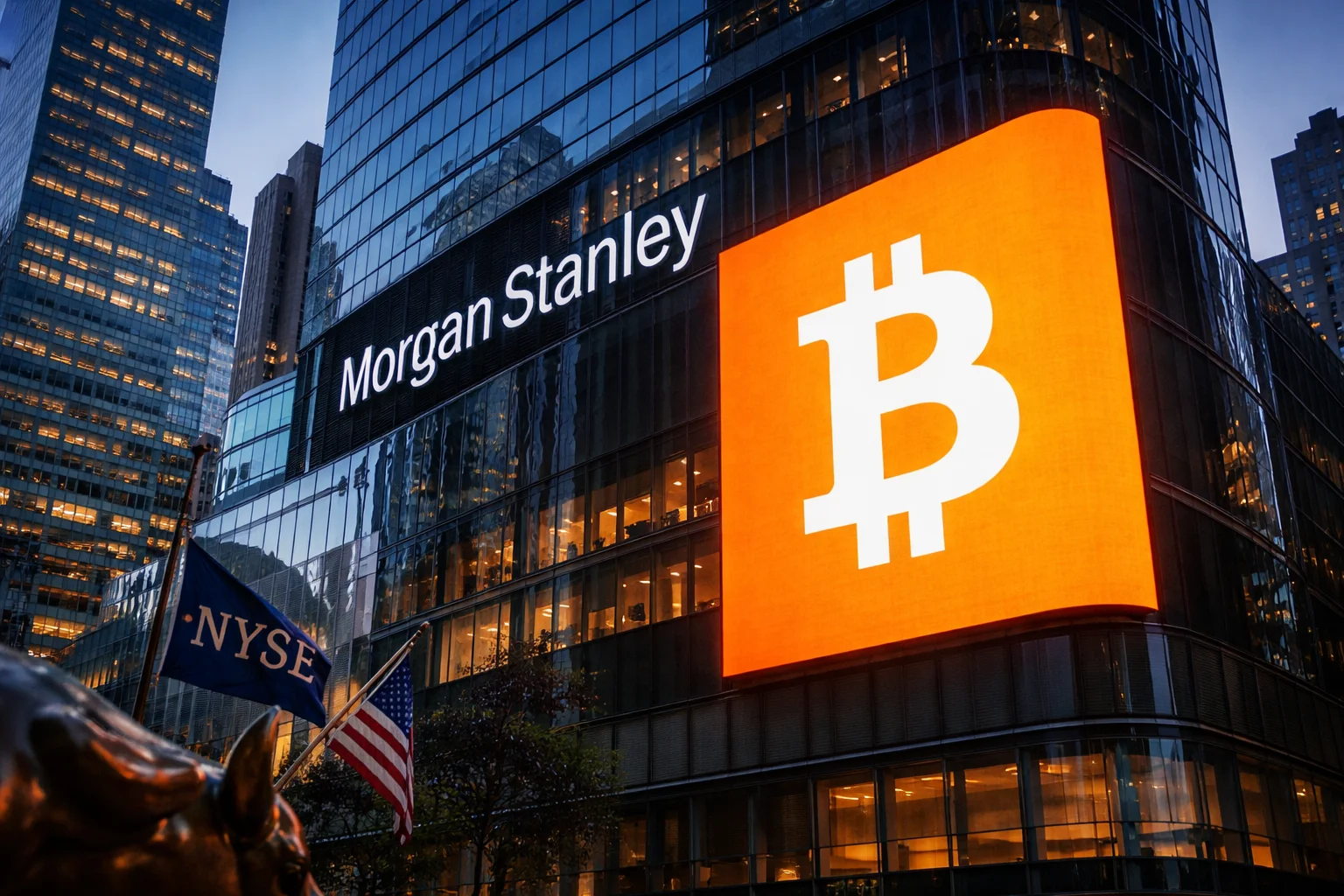
US-based financial giant Morgan Stanley has taken one of its most concrete steps into the cryptocurrency market. The bank's long-awaited Bitcoin ETF product has begun trading on the New York Stock Exchange's electronic trading platform, NYSE Arca. Launched under the name Morgan Stanley Bitcoin Trust (MSBT), it is noteworthy as the first spot Bitcoin ETF directly offered by a major commercial bank in the US. MSBT, which began trading on April 8th following the NYSE's listing announcement, aims to further facilitate institutional investors' access to Bitcoin. The product adds a new player to the increasingly competitive ETF market, while also making a significant contribution to the market's maturation process.Low fees and a massive client network could intensify competitionThe Bitcoin ETF market is currently shaped by giants like BlackRock and Fidelity. BlackRock’s iShares Bitcoin Trust (IBIT) and Fidelity’s Wise Origin Bitcoin Fund (FBTC) have established significant dominance in the market, attracting net inflows exceeding $74 billion since the beginning of 2024. Morgan Stanley is relatively late to this competition. However, the bank’s low commission rate stands out as a factor that could shift the balance.The 0.14% fee set for MSBT is below the industry average. This could put pressure on other ETF issuers to lower their costs. Bloomberg ETF analyst Eric Balchunas also drew attention to this point, emphasizing Morgan Stanley’s extensive client network. Balchunas stated that the bank manages $6 trillion in assets with approximately 16,000 financial advisors, and that this structure plays a critical role, especially in guiding wealthy investors.Morgan Stanley’s ETF move is seen as part of the bank’s broader strategy towards cryptocurrencies. The company had previously announced that it would prefer Coinbase and BNY Mellon for custody services. In addition, in February, it applied for a national trust banking license, revealing its goal to offer cryptocurrency custody, trading, and even staking services. The bank also applied for a staked Ether ETF and a Solana ETF earlier this year. These steps show that Morgan Stanley will not be limited to Bitcoin and plans to create a broader range of products in the digital asset ecosystem. Amy Oldenburg, the experienced executive who was appointed head of the company's digital asset unit in January, is also positioned as a key part of this transformation process.
Iran-US Ceasefire Boosts Bitcoin and Altcoins
The temporary ceasefire announced between the US and Iran quickly led to a sharp reversal in the crypto markets. The two-week "bilateral ceasefire" announced by US President Donald Trump reversed the bearish expectations that had intensified in recent days, causing Bitcoin to rapidly rise to $72,700. This sudden movement also triggered a significant short squeeze in the markets. According to data shared by the crypto data platform CoinGlass, a total of $595 million worth of positions were liquidated, with the majority being short positions. The liquidation of approximately $427 million worth of short positions clearly demonstrates the intensity of bearish expectations in the market. In particular, in recent weeks, geopolitical risks and increasing uncertainty had led a large portion of investors to take bearish positions. This sharp rise was not limited to Bitcoin. Ethereum gained approximately 6% on the same day, while XRP rose 5% and Solana 5.5%. The overall crypto market recorded a daily increase of around 4%. On the other hand, the majority of liquidations occurred in a relatively short period. Approximately $508 million of the total $595 million liquidation took place in just 12 hours, with $398 million of that coming from short positions. This marked the most aggressive short squeeze since the beginning of March. The largest single liquidation occurred on Binance. Approximately $11.79 million worth of BTC-USDT short positions were liquidated in a single transaction, with Bitcoin leading the list with a total liquidation of $245 million. Ethereum came in second with $126 million, while altcoins like Solana, ZEC, and XRP also felt the effects of this wave. The impact of the ceasefire decision was not limited to cryptocurrencies. Oil prices also saw a sharp decline. Brent oil fell to around $99, and WTI to $95, indicating a rapid normalization in energy markets that had previously risen due to the war-related "risk premium." This situation also led to significant liquidations in tokenized commodity contracts. The agreement is valid for two weeksFrom a market sentiment perspective, one of the key factors behind the rise was overly pessimistic positioning. While the "fear and greed index" remained in single digits during the war, negative expectations dominated social media. The ceasefire news broke this one-sided expectation, sharply reversing the market. However, experts are cautious about whether this rise will be permanent. According to analysts, a two-week temporary ceasefire is not enough to start a long-term bull market. For a sustained rise, not only is a reduction in geopolitical risks needed, but also an improvement in global liquidity conditions, a strengthening of expectations for interest rate cuts, and continued corporate capital inflows are required.

CoinShares: Money Flows Into XRP and SOL, Outflows Persist in ETH
Digital asset investment products moved back into positive territory last week, albeit modestly. According to CoinShares’ latest weekly report, crypto funds recorded total inflows of $224 million. However, stronger-than-expected macroeconomic data and increasingly hawkish expectations later in the week caused this positive momentum to fade.Throughout the week, robust U.S. retail sales data and the postponement of rate cut expectations were among the key factors weighing on investor appetite. At the same time, ongoing geopolitical uncertainty contributed to a more volatile market sentiment. As a result, part of the inflows seen earlier in the week was partially reversed in the latter days.From a regional perspective, Europe stood out as the main driver of inflows. Switzerland led with a dominant $157.5 million, followed by Germany with $27.7 million and Canada with $11.2 million. The United States, by contrast, saw relatively muted activity, recording just $27.5 million in inflows. This suggests that European-based investors have recently shown stronger interest in digital assets.XRP and Solana draw attentionOn an asset level, XRP delivered the most notable performance of the week. It attracted $119.6 million in inflows, marking the strongest weekly figure since mid-December 2025. Year-to-date inflows into XRP have now reached $159 million, accounting for around 7% of total assets under management.Bitcoin, meanwhile, presented a more mixed picture. While it saw $107.3 million in weekly inflows, it remains in net outflows of $145 million on a month-to-date basis. This indicates that investor sentiment toward Bitcoin remains divided. In addition, short-bitcoin investment products recorded $16 million in inflows, pointing to a growing expectation of downside risk among some market participants. Solana was also among the assets that closed the week in positive territory. With $34.9 million in inflows, it continues to see steady demand throughout the year. This trend suggests that Solana is gaining a stronger position in investor portfolios, reflecting sustained interest in alternative layer-1 projects.On the other hand, Ethereum continues to lag behind. The asset recorded $52.8 million in outflows last week, highlighting ongoing investor caution. Regulatory uncertainty in the U.S., particularly around the Clarity Act, remains a key factor putting pressure on Ethereum.Overall, while digital asset funds showed signs of recovery, macroeconomic developments continue to play a decisive role in shaping market direction. Expectations around interest rates and shifts in global risk appetite are likely to remain key drivers of fund flows in the coming weeks.