
Bitcoin (BTC) is attempting to recover on Thursday, November 19, following the previous session’s sharp decline. While the price has climbed back above $63,000, hawkish signals from the Federal Reserve’s minutes and outflows from spot Bitcoin ETFs continue to weigh on the market.
U.S. funds recorded approximately $306 million in withdrawals during the latest trading session. Meanwhile, declining futures open interest points to weaker risk appetite across Bitcoin, Ethereum and Solana.
Bitcoin recovers from the $62,000 level
Bitcoin recovered some of its losses after falling to $62,086 during trading on November 18. On November 19, Bitcoin was trading at approximately $63,442, while Ethereum stood near $1,801.
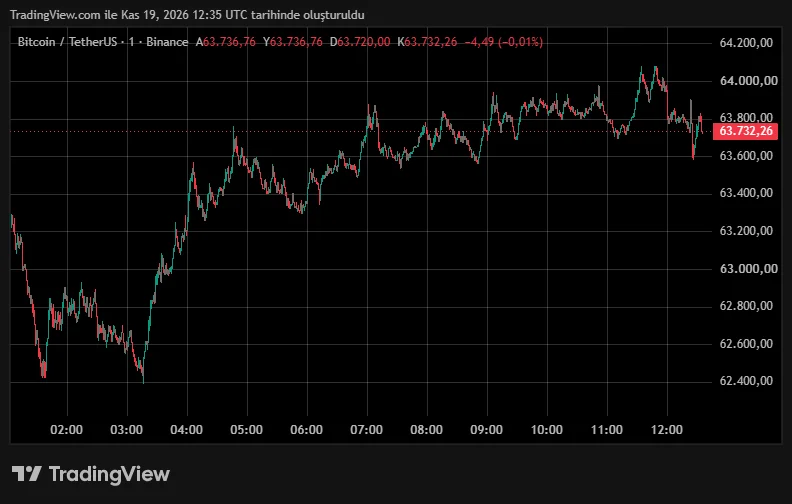
Then recent data put Bitcoin at approximately $63,680. Ethereum and Solana also joined the rebound as Bitcoin attempted to recover from its lowest levels since early August, reached the previous day.
Still, the return above $63,000 does not establish that selling pressure has ended. With ETF outflows continuing, interest rate expectations remain a key source of uncertainty for the crypto market.
Fed minutes highlight inflation concerns and further rate increases
The Fed released the minutes of its October 27–28 meeting on November 18. The document showed that officials remained concerned about elevated inflation and that some participants viewed the decision to hold rates steady as a close call.
The central bank kept its policy rate in a range of 3.75% to 4%. Ten members supported the decision, while two preferred a 25-basis-point increase.
Some participants judged that the current policy stance was not restrictive enough to bring inflation down. Others considered market expectations for additional tightening in December and next year broadly consistent with their own assessments.
Many participants who supported holding rates steady wanted more time to assess economic data and the effects of the previous rate increase.
The next FOMC meeting is scheduled for December 8–9. Although the minutes do not determine the outcome of that meeting, they signaled that October’s pause did not necessarily mark the end of policy tightening.
Bitcoin ETFs record $306 million in outflows
U.S. spot Bitcoin ETFs remain another source of pressure on the market. According to SoSoValue data, the funds ended November 18 with net outflows of $306.42 million, extending the withdrawals that began on Tuesday into Wednesday.
BlackRock’s IBIT led the outflows at approximately $148.66 million. Fidelity’s FBTC recorded withdrawals of around $69.31 million, bringing the two funds’ combined share of the day’s net outflows to approximately 71%.
According to Farside Investors data, total net outflows in November reached approximately $2.89 billion. The funds recorded net inflows on only two trading days during the month, and the modest $7.9 million inflow on November 16 failed to carry through into subsequent sessions.
The figures point to weaker demand for Bitcoin exposure through ETFs. However, fund flows do not capture all market activity; spot exchange trading and derivatives also matter when assessing price movements.
Open interest declines across Bitcoin, Ethereum and Solana
Santiment’s November 18 assessment showed that the recent downturn had also affected futures markets. Across the platforms it tracks, the dollar value of open interest fell by 20% for Bitcoin, 31% for Ethereum and 34% for Solana over two weeks.
Bitcoin open interest declined to $17.99 billion. Ethereum’s fell to $10.56 billion, while Solana’s dropped to $1.68 billion.
In Santiment’s dataset, Bitcoin open interest reached one of its lowest levels since October 2024.
Open interest refers to outstanding derivatives contracts that have not yet been closed or settled. A decline in its dollar value can reflect both the closure of positions and a fall in the price of the underlying asset.
The 20% decline therefore should not be interpreted as an equivalent reduction in the number of Bitcoin contracts. Santiment’s assessment indicates that forced liquidations and falling prices both contributed to the decrease.
Buying demand will be key to sustaining the recovery
A reduction in leveraged positions can leave fewer positions vulnerable to cascading liquidations during sudden price swings. However, falling open interest alone does not prove that Bitcoin has reached a market bottom.
Rising prices alongside subdued open interest could suggest that spot buying is playing a greater role in the recovery. Conversely, a rapid increase in leveraged positions alongside prices could make the market more vulnerable to another wave of liquidations.
As of November 19, three developments remain in focus: how far Bitcoin can recover from its recent lows, whether ETF outflows slow, and how derivatives positioning evolves. Expectations for the Fed’s interest rate path remain a major influence on whether buying demand strengthens.