Regulation
This page lists the latest Regulation news and market analysis. Browse articles, expert insights, and updates in this category on JrKripto. Stay informed with in-depth coverage of cryptocurrency trends and developments.
News
Regulation News
Regulation News
Browse all Regulation related articles and news. The latest news, analysis, and insights on Regulation.
Legal Protection for Crypto: UK Approves Law
The United Kingdom has taken a historic step, putting years of debate surrounding crypto asset regulations behind it. The Property (Digital Assets etc.) Act 2025, which came into force on Tuesday, officially defines digital assets as a "third category of property." This gives Bitcoin, stablecoins, and other digital assets a distinct class of property under English law, separate from physical assets and contract rights.Critical crypto legislation in the UKThe legislation passed both houses of parliament without amendment and was signed into law with the assent of King Charles III. This demonstrates the broad political consensus the process has enjoyed. CryptoUK, a leading UK industry organization, stated that this step provides a long-awaited "clear legal basis" for the crypto industry. The association emphasized that courts have considered crypto property for years, but that clearly codifying this principle into law would eliminate uncertainty in areas such as criminal investigations, asset recovery cases, and inheritance law. Bitcoin Policy UK CEO Susie Ward commented on the decision as "now your satoshis are legally protected." The organization's policy director, Freddie New, described this development as "the biggest change to English property law since the Middle Ages." The statements indicate that the reform is a turning point not only for the crypto ecosystem but also for the English legal system.This regulation was first proposed by the independent legal body Law Commission in 2023. The proposal was then brought before the House of Lords in September 2024 and, as a short draft bill, was finalized in 2025. The main purpose of the bill was to strengthen the legal definition of what digital assets are, how they are owned, and how they should be protected.CryptoUK states that the new framework will be particularly effective in three areas: proof of ownership, recovery of stolen assets, and the treatment of crypto assets in bankruptcy and inheritance proceedings. Until now, a significant portion of crypto-related cases in the UK have been proceeded by judges' interpretations; Now, the written law provides a standardized approach to this area.The UK isn't content with simply defining crypto assets; it's also working to accelerate financial regulation. The Bank of England (BoE) recently published a draft new regulatory framework for sterling-backed stablecoins. The bank emphasizes that stablecoin use will become widespread in payment systems in the coming years and that preparations should be made now. BoE Deputy Governor Sarah Breeden stated that the country doesn't want to lag behind the US, saying the new rules will come into effect "at the same pace as the US."With this latest step, the UK has become one of the few countries that has moved closer to defining crypto assets in terms of both ownership and financial regulation.
Chainlink ETF Opens for Trading in the US: LINK Price Jumps 15% in One Day
Chainlink's native token, LINK, debuted strongly on Tuesday. Grayscale's initial listing of a Chainlink-focused exchange-traded fund (ETF) in the US quickly boosted the asset's price. LINK rose 13-15% intraday to $13.9, marking one of the most notable recoveries following a weak market outlook in recent weeks. A Critical Step for ChainlinkThe new product is trading on the NYSE Arca under the ticker symbol GLNK. Grayscale's Chainlink Trust, which launched as a private placement in 2021 and moved to OTC Markets in 2022, has now been converted into a fully public ETF. This step makes access to LINK easier and more regulated for both retail and institutional investors.According to Grayscale, GLNK offers investors the opportunity to gain exposure to Chainlink through traditional brokerage firms within a regulated framework. However, because the fund does not fall under the Investment Company Act of 1940, it lacks some of the consumer protections found in traditional ETFs. The fund's operating principle is based on holding LINK on behalf of investors and providing indirect access to the performance of these assets.The Chainlink ecosystem itself demonstrates that this interest is no coincidence. LINK powers the decentralized oracle network, already one of the most critical components of the blockchain world. This network securely transfers off-chain data (such as price feeds, weather forecasts, election results, or other API-based data sets) to smart contracts. It also supports cross-chain infrastructure, enabling data and asset transfers between different blockchains that don't communicate with each other. This infrastructure, used in a wide range of applications from DeFi and NFTs to gaming applications and enterprise solutions, contributes to the safekeeping of tens of billions of dollars in value.With the launch of the ETF, Chainlink's social media accounts also emphasized the "opportunity to invest in the fundamental bridge between the real world and blockchain." GLNK's volume exceeding 860,000 shares on its first day of trading demonstrates rapid investor interest. According to Yahoo Finance data, the fund has approximately $27.8 million in net assets and a 2.50% expense ratio.LINK's price action has been quite volatile in recent months. The token has lost approximately 39% of its value since the beginning of the year and has experienced declines of up to 47% in the past year. Therefore, analysts believe the new ETF could create price stability in the medium term. The recent entry of similarly themed ETFs for assets such as Solana, Litecoin, and XRP, particularly in the US, demonstrates a diversified interest in traditional capital.Grayscale's rapid transition from its product line to an ETF format is also noteworthy. The company previously transitioned from trust structures to an ETF model for assets such as Dogecoin and Solana. As the number of crypto-related securities products continues to grow in the US, Chainlink's acquisition of its own fund is a significant milestone in the sector.

Japan Offers Major Tax Cuts on Cryptocurrencies
The Japanese government is preparing to implement one of the most comprehensive regulatory packages regarding the taxation of crypto assets. Crypto gains, currently subject to a progressive income tax of up to 55%, will be taxed at a flat rate of 20% under the 2026 tax reform, under the same scope as mutual funds and stocks. This change is expected to increase the trading volume of individual investors and strengthen Japan's global competitiveness.Japan's Crypto ProposalAccording to the proposed reform, crypto gains will be separated from business income and wage earnings and moved into a separate income category. This means investors' crypto trading profits will no longer fall into progressive tax brackets; instead, a single flat rate of 15% income tax and 5% residence tax will be applied. This regulation is expected to be included in the final tax package to be announced in December 2026.The tax reform is driven by Japan's desire to encourage individual investors and its efforts to align with international practices. A comparative study conducted by the Financial Services Agency (FSA) noted that crypto assets are classified as property in the US and taxed at rates ranging from 0% to 37%; the UK applies rates between 20% and 28% for capital gains; and France has adopted a 30% flat tax model. Japan's 20% flat rate creates a framework more compatible with these countries and has the potential to increase competition in the domestic market.Beyond tax reductions, the FSA is also preparing structural classification changes. The new framework, which covers Bitcoin, Ethereum, and approximately 100 tokens, will redefine crypto assets as "financial products" under the Financial Instruments and Exchange Act. This will allow banks, insurance companies, and institutional brokerage firms to offer crypto products or provide custody services under certain conditions. This is expected to increase institutional participation and generate higher volume on domestic exchanges.The agency is also preparing a token whitelist of approximately 150 assets. Crypto assets included on this list will benefit from more flexible tax treatment, banking custody services, and market access. Tokens that remain unlisted will remain subject to existing strict regulations. With this approach, the FSA aims to both increase institutional compliance and enhance its oversight power by more clearly categorizing market risk.The tax reduction isn't just a technical adjustment for Japan. For years, the country has faced the problem of individual investors preferring offshore platforms due to high tax burdens, and the concentration of trading volumes in foreign markets rather than domestic exchanges. The 20% flat rate has the potential to reverse this trend and re-introduce the crypto ecosystem.Japan is also targeting young individuals and small investors in its comprehensive investment reform package designed to revitalize its capital markets. According to local media, the government is also considering a plan to extend some of the tax benefits to products suitable for investment by minors.All of these steps are expected to be enacted during 2026, and the new tax regime will take effect in fiscal 2027. If the process progresses as planned, Japan will have one of the most competitive legal frameworks for crypto taxation both in the Asia-Pacific region and among G7 countries.
Japan Tightens Security: Requires Reserves for Crypto Companies
Japan is preparing a new and comprehensive regulatory package to make the cryptocurrency market more secure. The Financial Services Agency (FSA) is working on a draft law requiring cryptocurrency exchanges in the country to establish mandatory liability reserves to protect users. This regulation aims to provide additional protection against losses, particularly those resulting from hacking attacks and operational errors.The FSA's recommendation will be included in the Financial System Council report to be convened on Wednesday. The report is expected to accelerate the regulatory process, and the relevant law is expected to be submitted to parliament during the regular Diet session in 2026.Japan already requires exchanges to hold user assets in cold wallets. However, cold wallet security isn't the solution. In 2024, the local exchange DMM Bitcoin lost approximately $312 million due to a breach involving Tokyo-based software company Ginco. This incident has once again demonstrated that asset custody measures alone are not sufficient. The FSA's new move aims to fill precisely this gap. With the new regulation, crypto exchanges will be required to establish emergency reserves to cover losses incurred by users as a result of potential attacks or technical glitches. The scope, oversight, and size of these reserves will be determined by the FSA. According to officials, the aim is to increase market confidence among both individual investors and institutional players by establishing a more robust trust infrastructure in the sector.Japan Takes Action on Crypto RegulationIn recent months, Japan has taken numerous steps to restructure not only security but also the sector's structure. The FSA announced that it is considering removing crypto assets from the current Payment Services Act and placing them under the Financial Instruments and Exchange Act. If this change is implemented, cryptocurrencies would gain full financial product status, similar to stocks and bonds.Tax reform is also on the agenda. A flat 20% tax rate is planned for digital asset gains. This approach could align crypto income with stock gains, creating a more predictable tax framework for investors.Meanwhile, Japan is also placing strategic importance on the stablecoin market. The country's first yen-backed stablecoin, JPYC, recently launched. New stablecoin projects, including those involving major local banks, are in the testing phase. Regulators believe that fiat-backed stablecoins will become a significant part of future payment systems.This market transformation has also spurred action from asset management companies. According to Nikkei, six major Japanese portfolio managers, including Mitsubishi UFJ Asset Management and Daiwa Asset Management, are preparing to launch the country's first crypto investment funds.

Critical Meeting on December 15: SEC Will Discuss Cryptocurrencies
The U.S. Securities and Exchange Commission (SEC) is preparing to hold a public roundtable on December 15th to address the growing privacy and financial oversight debates in the crypto sector. The meeting was organized by the SEC's Crypto Task Force and was shaped by the recent rise in privacy concerns among investors. The growing backlash within the crypto community has made it imperative for regulators to conduct a more comprehensive assessment of the issue. Sources close to the SEC state that the discussions will include both industry representatives and commissioners, but no policy recommendations will be made as a result of the meeting. The aim is to clearly outline existing issues and assess risks.Cases and Market Impacts That Spark Privacy DebatesAnalysts note that several critical events in the last two years have resurfaced the privacy issue as a major topic of discussion within the industry. The partial conviction of Tornado Cash developer Roman Storm in June, the prison sentence of Samourai Wallet developer in November, and the sharp increases in the prices of privacy-focused tokens during the same period have drawn the attention of both investors and developers to this area. Meanwhile, Ludlow Institute founder Naomi Brockwell stated on social media that privacy is a key factor in curbing authoritarian tendencies. According to Brockwell, when anti-privacy measures are taken, it threatens not only cryptocurrency but all digital rights.These discussions have revived an issue that stretches back to the very roots of crypto. The primary motivation for modern encryption technologies used in the industry was the secure and free individual communication championed by the early cypherpunk movement. Since then, the crypto community has maintained that privacy is a fundamental human right.Crackdown on open-source developers draws backlashLegal processes targeting developers have created significant unrest within the industry. Some legal experts argue that the Storm case and similar cases, where open-source developers are blamed solely for the code they write, sets a dangerous precedent. Critics argue that this approach could undermine the foundation of the open-source ecosystem.Bitcoin-supporting journalist Lola Leetz is also among those highlighting the issue. Leetz described blaming open-source developers as illogical, like "accusing the manufacturer of a tool of conspiracy because it was used in a crime." He argued that people should not be held responsible for how others use their tools.As the debate escalated, the Department of Justice released a striking statement. Matthew Galeotti, a member of the Department's Criminal Division, stated in August that prosecutions targeting developers simply for writing code had been halted. According to Galeotti, the creation of software without malicious intent cannot be criminalized; the department's purpose is not to regulate, but to inform developers about what actions could constitute crimes.Industry Focuses on December 15th MeetingThe upcoming SEC meeting is seen as a critical juncture in how the discussions will unfold. The session will discuss all recent cases, privacy tools, financial surveillance methods, and market impacts. Commissioner Hester Peirce (known as "Crypto Mom" in the crypto community) stated that the scope of the discussions will be broad and that they aim to directly listen to the industry's concerns. As discussions continue regarding the future of privacy-focused tools, the December 15th meeting looks set to be a critical meeting point for developers, investors, and regulators alike.

Historic Step from a US State: Bitcoin-Collateralized Municipal Bond
New Hampshire has approved the first Bitcoin-backed municipal bond in the US, marking a new chapter in the integration of crypto assets with traditional finance. The state's business support agency, the New Hampshire Business Finance Authority (BFA), greenlit a $100 million Bitcoin-backed conduit bond on November 17. This move is seen as a milestone that could enable the entry of digital assets into the $140 trillion global debt market.The approved structure allows companies to use overcollateralized Bitcoin held in private custody as debt instruments. Bitcoin assets will be held by BitGo, and investor protection will be provided entirely through this collateral. BFA acts solely as an intermediary, managing and approving the process; no government or taxpayers bear any risk.Wave Digital Assets and Rosemawr Management, a municipal bond specialist, are behind this financial innovation. The product is designed to align with the traditional framework governing municipal and corporate bonds. Wave co-founder Les Borsai states that their goal is to "combine traditional fixed-income markets and digital assets in a fully institutional and scalable model."The state government considers this step a strategic initiative. New Hampshire Governor Kelly Ayotte described this Bitcoin-backed bond as a "historic innovation" and highlighted the state's pioneering role in embracing technology. According to Ayotte, this model will open new investment channels without risking the state budget.How does Bitcoin collateral work?The mechanism of Bitcoin collateral is also noteworthy. According to the structure, borrowers must deposit approximately 160% of the bond value in Bitcoin as collateral. If Bitcoin's value falls below 130%, an automatic liquidation mechanism is activated, guaranteeing full repayment of bond investors. This model allows borrowing institutions to access capital without selling Bitcoin or incurring tax liabilities. BFA Director James Key-Wallace announced that the fees and potential collateral gains from these transactions will support entrepreneurship and job growth in the state through a new fund called the "Bitcoin Economic Development Fund." This aims to create a circular financial ecosystem that will create value for both the public and private sectors.This initiative follows the first US state legislature allowing the state treasury to invest in Bitcoin. Earlier this year, New Hampshire legalized the investment of up to 5% of public funds in digital assets, becoming the country's first "strategic Bitcoin reserve."According to experts, if this model proves successful, other states are likely to pursue similar Bitcoin-backed debt instruments. This move could set a precedent for the integration of crypto assets into mainstream financial infrastructure, particularly considering the $58.2 trillion US bond market.

Japan's Major Crypto Reform: 105 Coins in Question
Japan is preparing for a radical transformation in cryptocurrency regulations, a policy it has approached cautiously for years. The country's Financial Services Agency (FSA) has completed a comprehensive reform package that plans to classify 105 crypto assets as "financial products." This step is part of a strategic transformation aimed at both strengthening investor protection and re-establishing the country as a Web3 hub.Cryptocurrency Regulation in Japan: ActivityAccording to local sources, the FSA envisions the inclusion of these 105 crypto assets under the Financial Products and Exchange Act. This group includes assets such as Bitcoin, Ethereum, and the Shiba Inu, recently added to Japan's "Green List." The new classification imposes mandatory transparency obligations on exchanges. For each token, exchanges will be required to clearly disclose the issuer, blockchain technology, volatility level, and key technical specifications.The FSA does not want regulations to be limited to transparency and information sharing. The draft package proposes new sanctions for insider trading in crypto assets. Accordingly, those with access to non-public information, such as a token listing schedule, delisting decision, or the financial status of crypto companies, will not be able to trade in these assets. This step represents an adaptation of rules that have been in place in traditional markets for years to crypto.The second leg of the reform directly concerns investors. In Japan, crypto gains are currently taxed under the "miscellaneous income" category, with the rate reaching as high as 55 percent for higher-income brackets. The FSA is preparing to radically change this situation. If the proposal is passed, the tax rate for 105 approved crypto assets will be reduced to 20 percent, similar to that for stock gains. This will both provide relief for individual investors and make the country a more attractive hub for regional competition.The tax reform is expected to be evaluated in the next fiscal year. Legal changes are planned to be discussed during the regular parliamentary session in 2026.All these steps are considered one of the biggest policy shifts in Japan's approach to cryptocurrencies in years. Following the Mt. Gox collapse, the country was long associated with strict regulations; However, over the past two years, the government and the FSA have been actively working to strengthen the Web3 ecosystem. Last month, it was revealed that regulations that could allow banks to hold crypto assets like Bitcoin for investment purposes were being reviewed. Furthermore, the country's first yen-backed stablecoin, JPYC, officially launched at the end of October.The new approach, which elevates crypto to financial product status, offers clearer rules and stronger oversight for both local exchanges and institutional investors. The combination of investor protection and lower tax rates could pave the way for Japan to once again become a strong player in the crypto market.

UK Sets £20,000 Limit on Stablecoins
The Bank of England has announced its long-awaited draft regulation for sterling-denominated stablecoins. The new framework introduces holding limits of £20,000 for individuals and £10 million for businesses. The aim is to prevent sudden shifts of funds from banks to stablecoins amid the proliferation of digital currencies. The regulation also requires stablecoin reserves to be backed by government bonds and central bank accounts.Critical stablecoin development in the UKThe Bank of England (BoE) has released a draft new regulatory framework for sterling-denominated "systemic" stablecoins. This framework includes both collateral rules and temporary asset holding limits.According to the BoE, the new regulation will only cover stablecoins classified as "systemic" by HM Treasury and widely used in payment systems. Supervision for financial stability risks for these assets will be carried out by the Central Bank, while consumer protection and market conduct will be handled by the Financial Conduct Authority (FCA). "Non-systemic" stablecoins, such as USDT and USDC, which are primarily used in cryptocurrency trading, will not be included in this regime. These tokens will remain under the FCA's existing oversight.At the heart of the new framework are clear rules for managing stablecoin reserves. The BoE requires systemic stablecoin issuers to hold 60% of their reserves in short-term UK government bonds and the remaining 40% in interest-free accounts at the Bank of England. This regulation aims to both ensure rapid repayments and maintain public confidence.A more flexible structure is initially envisioned for issuers newly launched or transitioning from the FCA regime; these issuers will be able to hold up to 95% of their reserves in government bonds. The BoE is also considering central bank liquidity support for periods of market stress.Individual and institutional holding limits are also being introduced to prevent rapid outflows of funds from the financial system into digital currencies. Under the proposed plan, individuals will be able to hold a maximum of £20,000 (approximately $26,000) in systemic stablecoins, while businesses will be able to hold up to £10 million (approximately $13 million). While exceptions will be granted for the largest institutions, these limits will remain in place until the risks of the transition period are resolved.“Today’s proposals are a significant milestone in the UK’s path to implementing the stablecoin regime next year. Our aim is to protect confidence in money while supporting innovation,” said Sarah Breeden, the bank’s Deputy Head of Financial Stability. Breeden added that market feedback has been taken into account and that adjustments have been made accordingly to how stablecoin issuers interact with the central bank.However, the proposed limits have been met with criticism from the crypto community. Industry representatives argue that these restrictions are “overly cautious.” Tom Duff Gordon, Vice President of International Policy at Coinbase, told the Financial Times, “Capturing stablecoins is a negative step for both British savers and the City of London.” Breeden, responding to criticism, reminded the public that the UK's credit system differs from the US: "The majority of mortgages in the UK are provided by commercial banks. Therefore, temporary limits are necessary to prevent rapid deposit outflows."The BoE announced that the consultation period will last until February 10, 2026, after which it will publish detailed implementation guidance in conjunction with the FCA.
Big Step from CFTC: Leveraged Crypto Trading is on the Way
The US is on the cusp of a new era in crypto markets. Caroline Pham, the interim chair of the Commodity Futures Trading Commission (CFTC), announced that legislation is underway to authorize leveraged spot crypto trading. If implemented, investors will be able to trade spot crypto with leverage on regulated platforms within the US for the first time. This move could bring liquidity, which has long been diverted to offshore exchanges, back to the US and pave the way for the country to gain a more active position in the crypto markets.Critical crypto move in the USCaroline Pham, the interim chair of the US Commodity Futures Trading Commission (CFTC), confirmed that they are preparing to authorize leveraged spot crypto trading nationwide. Pham stated that they are in discussions with regulated US-based exchanges and that the first leveraged spot products could launch next month. In a post on X, Pham officially confirmed the process, saying, "We are working towards allowing leveraged spot crypto trading in the US." She also noted that despite the partial government shutdown, discussions with industry representatives are ongoing. The CFTC is reportedly considering issuing guidance for these products.This development follows the CFTC's "spot cryptoasset contracts" initiative launched in August. This initiative aimed to gather public input on rules for retail commodity transactions conducted with collateral or financing. According to Federal Register data, "leveraged or secured retail commodity transactions" fall under the CFTC's jurisdiction as long as delivery is not made within 28 days. This means that leveraged spot trading is legal in the US only for certain periods and under certain conditions.According to CoinDesk, Pham is currently in direct talks with large CFTC-registered financial institutions and crypto-focused platforms. These institutions include major players like CME, Cboe Futures Exchange, and ICE Futures, as well as Coinbase Derivatives, Kalshi, and Polymarket US. The focus of the discussions is on the creation of new spot crypto trading infrastructures that include leverage, margin, and financing. This will allow investors to access instruments previously only available on overseas exchanges through regulated US markets.Pham emphasized that this process aligns with the recommendations of the Presidential Working Group on Digital Assets. According to these recommendations, institutions should use their existing legal authority to regulate digital asset markets while Congress drafts new legislation. "We are swiftly utilizing our existing authority while continuing to work with Congress on regulatory clarity," Pham said.If the plan goes through, the US will become the first major economy to allow leveraged spot crypto trading within its borders. This step could increase both transparency and investor protection, but it could also lead to a significant repatriation of liquidity from overseas markets to the US. Leveraged spot trading in a regulated environment could accelerate the integration of digital assets into the US financial system by increasing the participation of institutional investors.
Canada's Stablecoin Move: The Digital Dollar Era Begins
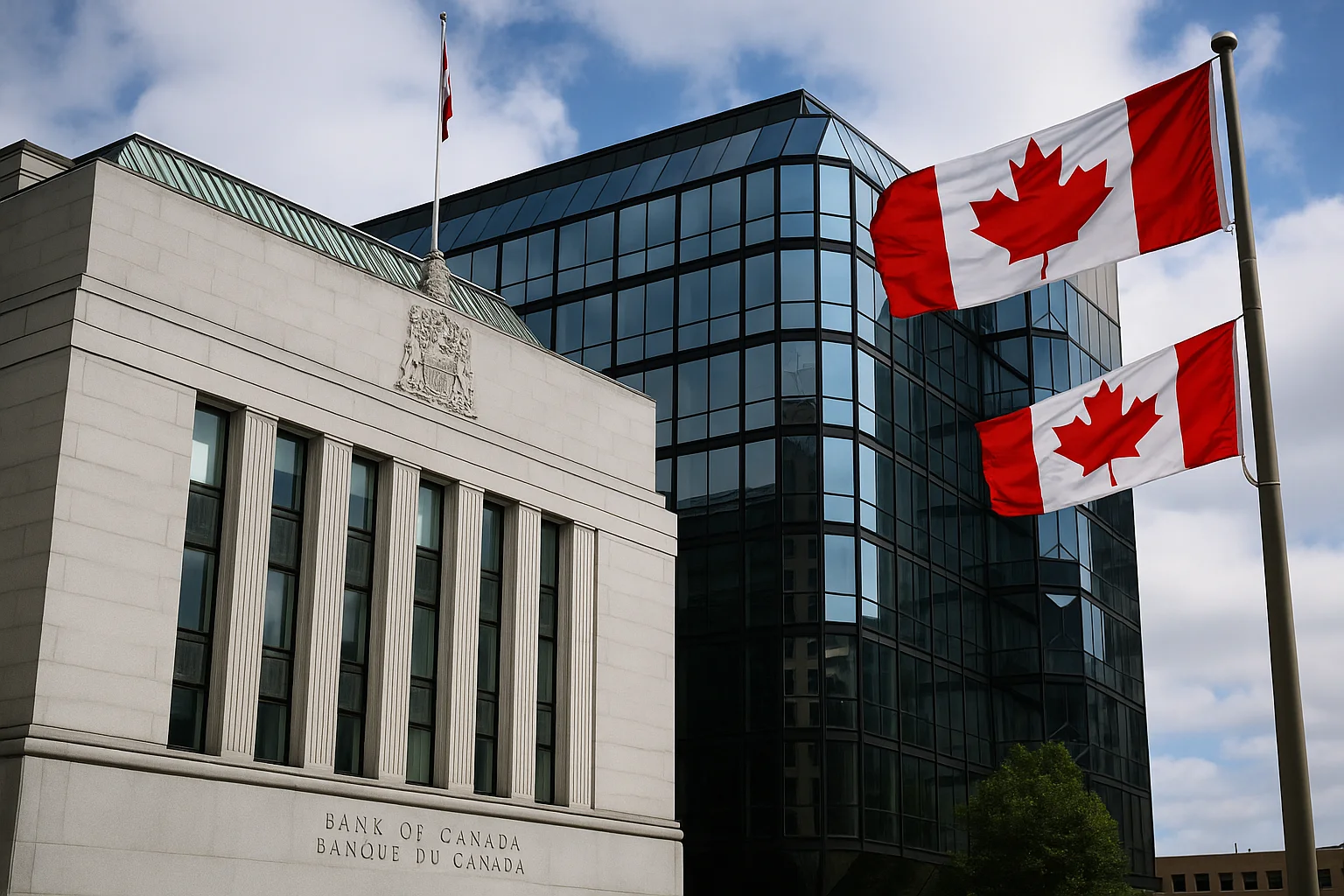
Canada included a new bill to regulate stablecoins in its 2025 federal budget. The government aims to create a comprehensive framework for the secure, transparent, and consumer-friendly market entry of digital assets pegged to fiat currencies like the dollar.Canada Takes Action on StablecoinsAccording to the budget document, the new law will require stablecoin issuers to meet specific reserve standards, establish repayment policies, and establish risk management frameworks. It will also introduce additional measures to protect users' personal information and ensure the integrity of the system for national security. The document states, "This regulation will ensure the safe use of fiat-based stablecoins for both consumers and businesses."With the enactment of the law, the Bank of Canada will be allocated a total budget of $10 million between 2026 and 2028 to manage this process. In subsequent years, regulatory costs will be covered by fees charged to stablecoin issuers. The government is also preparing amendments to the Retail Payment Activities Act to include payment service providers using stablecoins. This step aims to oversee digital payments and blockchain-based financial services under the same umbrella.The Canadian Ministry of Finance and other agencies have reportedly held intensive discussions with industry representatives in recent weeks, particularly on how stablecoins will be classified and how to prevent potential capital flight to US dollar-backed tokens. However, details regarding the government's final stance on this matter have not yet been released.The new regulation aims to encourage safe innovation in the digital asset ecosystem and ensure that the stablecoin market develops in line with the Canadian economy. This is expected to ensure that both individuals and businesses can safely access digital payment instruments.Canada's move is part of a global movement towards stablecoin regulations. The US passed the GENIUS Act in July, which introduces comprehensive rules for dollar-backed cryptocurrencies. The European Union's MiCA regulation is already in effect. Japan and South Korea are also working on similar legal frameworks. According to market data, the global stablecoin supply stood at approximately $291 billion as of November 4, largely comprised of US dollar-backed tokens. Standard Chartered estimates that up to $1 trillion in deposits in developing countries could shift to US-backed stablecoins by 2028.
Trump Picks Fed Chair: Crypto-Friendly Names in the Race
Major change is imminent at the US Federal Reserve (Fed). The Donald Trump administration has selected five candidates for the new Fed Chair, replacing current Chairman Jerome Powell. Treasury Secretary Scott Bessent announced that the shortlist will be presented to Trump immediately after Thanksgiving, with the final decision to be announced before the end of the year. This development suggests that the central bank's direction could change significantly in 2026.Who are among the Fed Chair candidates?The list includes Christopher Waller, Michelle Bowman, Kevin Warsh, Kevin Hassett, and Rick Rieder. These names include both current Fed members and experienced economists from the private sector. Given Trump's criticism of Powell for being "slow on interest rate cuts," the new chair is expected to lean toward a pro-growth and more aggressive monetary policy.Christopher Waller is one of the most notable names on the list. Appointed to the Fed Board by Trump in 2020, Waller has consistently advocated for swifter action on interest rate cuts. Waller, who describes Bitcoin as "electronic gold," believes stablecoins can increase competition in the financial system. He recently stated that crypto companies should be given direct access to the Fed's payment infrastructure. He believes digital assets are now an integral part of the financial system.Michelle Bowman, the Fed's deputy chair for oversight, is known for her cautious yet open-minded approach to crypto. Bowman argued that regulators should not be "overly cautious" and that it would be beneficial for Fed employees to experience digital assets in small amounts. She emphasized the importance of firsthand experience, saying, "I wouldn't want to take lessons from someone who's never skied." The crypto community has responded quite favorably to this approach.Former Fed governor and Bush-era advisor Kevin Warsh is a more cautious member of the list. Although Warsh invested in crypto startups like Bitwise years ago, he disagrees with the idea that Bitcoin can replace the dollar. In a 2018 article published in the Wall Street Journal, he stated, “Bitcoin’s volatility makes it less of a reliable means of payment.” Despite this, his interest in central bank digital currencies (CBDCs) could lead to conflicting views within the Trump administration.Trump’s former economic advisor, Kevin Hassett, is notable for both his loyalty and his crypto investments. Hassett, a Coinbase shareholder, is expected to pursue a crypto-friendly policy. He was also in the news recently for his comments during the government shutdown debate.The final name of the five, Rick Rieder, is a Wall Street heavyweight. Rieder, who served as head of global fixed-income securities at BlackRock, played an indirect role in the rise of Bitcoin ETFs. He has previously stated that he sees Bitcoin as a portfolio diversifier and a hedge against inflation. However, he remains distant from the idea that digital assets can “solve the world’s monetary problems.”Trump’s choice to replace Powell could also determine the direction of the crypto markets. According to experts, a dovish (low-interest) candidate like Waller or Hassett could boost Bitcoin and altcoin prices by increasing liquidity. Conversely, a candidate focused on preserving market balance, like Rieder, could create a more cautious atmosphere.

$1.7 Trillion Giant's Crypto ETF Application: Many Altcoins at Stake
T. RowePrice, a traditional investment firm with approximately $1.77 trillion in asset management, has filed paperwork with the SEC for its first cryptocurrency-focused exchange-traded fund (ETF).T. Rowe, which manages $1.7 trillion, has made a move for cryptoAccording to the filing, the firm has filed an S-1 registration statement with the U.S. Securities and Exchange Commission (SEC) under the name "TROW Active Crypto ETF." This fund is notable for its actively managed structure; instead of passively tracking a specific index, the management team will be able to make selections based on market conditions. The filing includes the following: The fund will invest in eligible crypto assets; the number of these assets will normally be between 5 and 15, but this number can be increased or decreased as needed. Potential assets include Bitcoin, Ethereum, Solana, XRP, Cardano, Avalanche, Dogecoin, Shiba Inu, Litecoin, and Polkadot. Management has also stated that this fund aims to exceed the FTSECryptoUSListedIndex index annually.This is significant for the company. The move into crypto by an institution founded in 1937 and specialized in mutual funds for many years is considered a milestone. Analyst Nate Geraci described this move as a "surprise from outside the field," as traditional asset managers were still perceived as cautious on the crypto side.This development indicates a shift in the balance of power in the asset management world. Traditional investment giants are now seeking ways to become a part of the crypto market rather than shying away from it. As analyst Nate Geraci put it, "Waiting for crypto to disappear is not a strategy."However, the application's approval process faces a hurdle. Due to the US government shutdown, the Securities and Exchange Commission has limited resources, delaying the processing of new crypto ETF applications. In this case, the process is expected to reopen to allow T. Rowe Price's application to be processed quickly. To summarize, this application represents a significant opportunity for both the institution and its investors. It's a critical step for the institution in diversifying its asset management portfolio. For investors, as with most crypto ETFs, it offers the potential to access crypto through a regulated institution. However, there are some important points to consider: the volatility of crypto assets can be much higher than traditional assets, and active management strategies may not always be successful. Once the application is approved, details such as fee levels, portfolio structure, and risk management should be presented to investors.

UK Strikes HTX: FCA Files Lawsuit Against Crypto Exchange
The UK's financial regulator, the Financial Conduct Authority (FCA), has filed a lawsuit against crypto exchange HTX (formerly Huobi) in London's High Court. The agency alleges that the exchange engaged in illegal crypto promotions aimed at UK investors and violated financial promotion rules.FCA Strikes HTXThe FCA stated that the lawsuit is "part of its efforts to protect consumers and maintain the integrity of UK financial markets." The agency has previously issued warnings to UK consumers about HTX, stating that the platform operates without legal authorization.HTX is known to be linked to Tron founder Justin Sun. Sun is among the exchange's advisors and is also known as one of the largest holders of TRUMP, the official meme coin associated with US President Donald Trump. However, the FCA did not disclose whether Sun is named as a defendant in the case file. HTX did not respond to questions about the case.The FCA's lawsuit is the latest example of the UK's strict regulatory approach to the crypto market. In recent years, the country has been expanding its "financial promotion regime" to regulate the advertising and promotion of crypto platforms. The FCA has taken a particularly harsh stance against foreign-based exchanges providing unauthorized access to UK citizens.Last year, Binance similarly came under the FCA's radar, and its promotional activities were halted. Experts believe that the FCA's new case against HTX demonstrates the UK's continued policy of "fighting unlicensed crypto services."Financial regulators emphasize the high risk of crypto investments. In a public warning last year, the FCA emphasized that "the vast majority of crypto products are unregulated" and that investors' losses are not covered by the government.Meanwhile, the UK government aims to establish a regulated framework for cryptocurrency in the long term, rather than banning it entirely. Official exchange-traded products (ETPs) have been approved, allowing crypto assets like Bitcoin and Ethereum to be traded. The government also plans to appoint a "digital markets ambassador" to support the crypto market. The HTX case is seen as a key test of how regulations will be implemented during this transition period. If the FCA wins, it could set a precedent for other platforms operating unlicensed cryptocurrency promotions in the UK market. As for the market, no significant impact has been observed so far. With Bitcoin hovering around $108,000, investors are awaiting how the FCA's decision will impact HTX's UK operations.

Strategic Move from Russia: Foreign Trade Begins with Crypto
In Russia, cryptocurrencies are being legalized for use in foreign trade. The Russian Ministry of Finance and the Central Bank announced in a joint statement on October 21, 2025, that they had agreed on a regulation for the use of cryptocurrencies in international trade payments.Russia Takes Cryptocurrency StepFinance Minister Anton Siluanov stated that the regulation will legalize the cryptocurrency space, legalize activities, and strengthen control mechanisms. He said, "We believe this field should be legalized and legal regulations should be introduced for activities. This way, together with Rosfinmonitoring (the Russian Federal Financial Monitoring Service, the country's anti-money laundering and counter-terrorism financing agency) and control services, we will be able to maintain order in this area."The new regulation marks a significant shift in Russia's financial and foreign trade strategy. Cryptocurrencies will now be accepted as an alternative to traditional payment channels, and the regulatory framework aims to keep this market under control. According to Siluanov, the relevant infrastructure will be under state supervision, and certain criteria will be implemented for investors. However, in Russia, this move is seen not only as a financial regulation measure but also as part of a strategy shaped by international sanctions. Moscow, which has long been the target of various sanctions, is notably using cryptocurrencies as an "alternative payment tool." Research suggests that Russia is turning to crypto and other systematic payment models to reduce its reliance on traditional currencies like the dollar and euro in its foreign trade.Market and crypto impactsThis step has the potential to indirectly impact the trading volume of major crypto assets, particularly Bitcoin and Ethereum. The increased use of cryptocurrencies in international payments could alter liquidity channels. Meanwhile, increased regulatory oversight could both increase investor confidence and create new risks.Russia has been known to have a cautious approach to cryptocurrencies for years. However, it was recently reported that there were pilot projects involving crypto in foreign trade channels. Now, this practice will be supported by legal regulation.According to the draft law that has entered into force, for cryptocurrencies to be used in foreign trade:Operations must be conducted through a state-controlled system; Participating companies and investors must meet established criteria;Anti-money laundering (AML) and know-your-customer (KYC) mechanisms must be strengthened.Furthermore, Russia is not an environment where cryptocurrency activities are completely free; companies and transactions covered by the regulation will be subject to strict oversight. This presents a scenario where risks and opportunities must be evaluated together.This shift by Russia reflects its tendency to move away from traditional channels of the global financial system and toward alternative payment methods. As is well known, sanctions have restricted the country's access to financial systems it opposes. Under these circumstances, cryptocurrencies become an option that can provide flexibility in trade and payments.
Historic Step from Hong Kong: First Solana ETF Approved
The Hong Kong Securities and Futures Commission (SFC) has approved Asia's first spot ETF for Solana (SOL). This step marks the country's third crypto spot ETF, following the Bitcoin and Ethereum ETFs.Good news for Solana from Hong KongThe fund, managed by China Asset Management (Hong Kong), will begin trading on October 27. According to the Hong Kong Economic Times, the ETF will be listed on the OSL Exchange, with custody and clearing handled by OSL Digital Securities. Each trading unit will contain 100 shares, and the minimum investment will be approximately $100 (approximately HK$780).The new product is the first Solana fund to be approved, following the Bitcoin and Ethereum spot ETFs. ChinaAMC thus becomes the first manager to simultaneously launch a SOL-based fund in Asia and the US. The fund's management fee is set at 0.99 percent, while custody and administrative expenses are capped at 1 percent of total net asset value. The total annual expense ratio will be 1.99 percent. The ETF is not expected to distribute dividends to investors.Solana ranks sixth in the crypto market with a market capitalization of approximately $100.8 billion. SOL, trailing Bitcoin, Ethereum, Tether, Binance Coin, and Ripple, is ahead of USDC. According to the China AMC, SOL is used as the native token of a decentralized, open-source network; its value is not backed by any institution but is determined entirely by the balance of supply and demand.With this move, Hong Kong's city government provides greater access to the crypto asset market for individual investors. Investors can invest in the Solana ETF with small inflows. This is in line with Hong Kong's vision of a "regulated yet accessible" crypto market.Solana ETFs are also gaining momentum globally. The Solana Spot ETF, offered by 21Shares in the US, was approved by the Securities and Exchange Commission (SEC) earlier this month. The product offers direct access to Solana's spot price and supports staking features, potentially spurring institutional demand.Major fund managers such as VanEck, Bitwise, Grayscale, Franklin Templeton, Fidelity, and CoinShares have also received approval for similar Solana ETF applications. This strengthens Solana's position in the institutional investment ecosystem.While Solana has performed less favorably than Bitcoin and Ethereum since the beginning of the year, growing ETF interest and a succession of regulatory approvals have re-entered investor attention. Price momentum is expected to revive in the last quarter of 2025, driven by Solana's ETF approvals. At the time of writing, the SOL price is down slightly by 0.7 percent, around $184.