Regulation
This page lists the latest Regulation news and market analysis. Browse articles, expert insights, and updates in this category on JrKripto. Stay informed with in-depth coverage of cryptocurrency trends and developments.
News
Regulation News
Regulation News
Browse all Regulation related articles and news. The latest news, analysis, and insights on Regulation.
Coinbase Calls on Justice Department to Regulate Crypto
US-based crypto exchange Coinbase has sent a formal letter to the Department of Justice (DOJ) seeking to curb fragmented state regulations that negatively impact crypto companies. The company argues that federal authorities should take a stronger stance against contradictory state-level measures.The letter, signed by Coinbase's Chief Legal Officer Paul Grewal, stated that crypto startups are being hampered by "innovative but misconstrued securities laws." Grewal stated that these state-wide regulations, in particular, harm both companies and users. Oregon Lawsuit in Crypto MarketsCoinbase's move stems from a lawsuit filed in Oregon in April. Oregon Attorney General Dan Rayfield filed a lawsuit against Coinbase for violating securities laws. The charges allege the exchange encouraged the sale of unregistered crypto assets.However, just a few months earlier, in February 2025, a similar lawsuit filed against Coinbase by the Securities and Exchange Commission (SEC) was dismissed. The SEC had accused the exchange of operating as an unregistered brokerage, exchange, and clearinghouse. While the dismissal of the case was considered a significant win for Coinbase, the new lawsuit filed by Oregon has created a serious conflict at the federal and state levels.Paul Grewal highlighted this point in a post on the social media platform X, saying, “If Oregon can sue us for a service that is legal at the federal level, we have a serious problem.” According to Grewal, the current regulatory system is not only inefficient but also slows innovation and harms consumers.Tensions exist between state and federal authoritiesOregon Attorney General Rayfield, however, takes a different view. He believes that federal regulators are backing away from important cases under the new administration, and states should fill this void. Rayfield stated, “If federal agencies are backing down, states should step in.”This statement also resonated with the political climate in Washington. The long-standing inaction by Congress on crypto regulation is leading states to take more aggressive stances. Coinbase Offers SolutionIn its letter, Coinbase issued a clear call to the Department of Justice: Congress must step in and enact comprehensive federal regulations that override state laws. The company stated that initiatives like the CLARITY Act and the Responsible Financial Innovation Act of 2025, currently under consideration, offer significant opportunities to address this issue.In this process, Coinbase not only defended itself; the company also brought the Oregon lawsuit to federal court and filed a separate lawsuit against Governor Tina Kotek. The goal is to clarify regulatory uncertainties and resolve state-federal conflicts through litigation.

Critical Summit in London: US-UK Collaboration on Crypto on the Table
The US and the UK are preparing for historic cooperation on cryptocurrency regulation. At a high-level meeting in London, UK Chancellor of the Exchequer Rachel Reeves and US Treasury Secretary Scott Bessent discussed the idea of establishing a common regulatory framework. The meeting's inclusion on the agenda is considered a significant milestone for the future of global digital finance.According to the Financial Times, this framework could both accelerate the adoption of crypto assets and bolster institutional investor confidence. It could also pave the way for the US and UK to take a leading role in setting global standards by providing a roadmap for international policy. While official details have not yet been released, expectations are high.Many financial giants attended the meetingThe meeting was attended not only by regulators but also by leading players in both traditional and digital finance. Banks such as Bank of America, Barclays, and Citi, as well as Coinbase, Circle, and Ripple, were also at the table. This situation further demonstrated that the crypto world is now at the center of finance. Ripple's UK and Europe Director, Cassie Craddock, stated that the collaboration could be a "template for international cooperation," emphasizing that this step could unlock the full potential of blockchain for both economies.The UK has long aimed to become the global hub for digital assets. As a strong center of traditional finance, working more closely with the US could give London an advantage in the face of rapidly advancing regulatory initiatives in the European Union and Asia. Last week, representatives of the crypto industry called on the UK government to include stablecoins and tokenization in the US-UK Technology Bridge initiative. This bridge already encompasses artificial intelligence, cybersecurity, and quantum computing. Excluding the UK from digital finance could set the UK back from competition.The inclusion of stablecoins, in particular, is seen as a critical step in the global adoption process. Hester Peirce, a member of the US Securities and Exchange Commission (SEC), suggested that a "cross-border sandbox" could be created between the two countries. This allows companies to operate under joint oversight for a certain period of time, providing both clarity for companies and reducing regulatory hurdles.The public is not indifferent to cryptocurrencies either. According to a survey conducted by Aviva, 27 percent of adults say they would consider including crypto in their retirement funds. Furthermore, one in five people, approximately 11.6 million people, have invested in crypto assets at least once in their lives. The prospect of high returns is keeping interest alive despite the risks.The timing of the meeting is also noteworthy. These contacts, which took place during US President Donald Trump's visit to the UK, demonstrate political support. If this collaboration materializes, crypto adoption could accelerate, institutional trust could strengthen, and the US and UK could become the countries shaping the future of blockchain-based finance.
Breaking News in Crypto Regulation: Democrats' 7-Point Plan
A significant step has been taken towards the long-discussed regulation of the crypto market in the US. Twelve Democratic senators announced a comprehensive framework consisting of seven topics on September 9th. The framework focuses on investor protection, market transparency, and the division of responsibilities among regulatory agencies. This move by Democrats is seen as an alternative to the Republicans' Clarity Act. The senators emphasize that the approximately $4 trillion global crypto market cannot remain in limbo. The framework grants the CFTC greater authority over the spot market for non-securities tokens and stipulates that the SEC will oversee securities-qualified digital assets. It also highlights disclosure requirements for token companies and specific rules for exchanges and custodians.DeFi and stablecoin proposals have been submitted.The group, including Senators Ruben Gallego, Mark Warner, Kirsten Gillibrand, and Cory Booker, emphasized that the global crypto market, approaching $4 trillion, cannot remain in a "regulatory vacuum."The framework focuses on investor protections, transparency, and anti-manipulation measures. The CFTC is expected to be given greater authority over the spot market for tokens that are not considered securities.The SEC will also be involved in tokens that are considered securitiesIt also details disclosure obligations for token issuers, special rules for exchanges and custodians, and AML and sanctions compliance.One of the most prominent topics in the bill is decentralized finance (DeFi). Democrats, stating that they consider the DeFi space risky for money laundering and sanctions evasion, are proposing new oversight mechanisms. However, it is not yet clear whether this oversight will extend to protocol developers.A notable provision in the stablecoin regulations prohibits issuers from offering direct interest or returns. This approach differs from the more flexible Republican stance, aiming to impose tighter control on the stablecoin market.Ethics and political aspects are on the agendaThe most controversial aspect of the framework is ethics regulations. Democratic senators are proposing to ban incumbent politicians and their families from profiting from crypto projects. It also requires politicians to transparently declare their digital asset holdings.This section specifically addresses the cryptocurrency initiatives of US President Donald Trump and his family. Democrats argue that these activities lead to an erosion of trust. Republicans, however, distance themselves from the ethics aspect and emphasize the need for a swift completion of the process.What will happen next?The Democrats' proposal has been brought to the Senate floor following the passage of the Clarity Act in the House of Representatives. Both bills share common ground regarding token classification and the jurisdiction of regulatory bodies. However, the approach to DeFi, ethical rules, and the pace of the legislative process are dividing the two sides.Intense negotiations between the parties are expected in the Senate Banking Committee in the coming weeks. If a compromise can be reached, the US crypto market could achieve clearer rules, closing a years-long regulatory gap.
Historical Statement from SEC and CFTC: Watch Out for September 29 for Cryptos
The two major US market regulators, the Securities and Exchange Commission (SEC) and the Commodity Futures Trading Commission (CFTC), have issued a joint statement of critical importance for financial markets. The statement, signed by SEC Chairman Paul S. Atkins and CFTC interim Chair Caroline D. Pham, aims to usher in an "era of harmonized regulation," particularly for crypto assets and next-generation financial products.Regulatory harmonization emphasizedThe statement emphasized that the securities and commodity derivatives markets are increasingly intersecting, making it imperative for both institutions to act together. Officials acknowledged that a lack of coordination in the past created "regulatory gaps" and slowed innovation, and announced that this era is now over. Atkins and Pham stated, "Today is a new beginning. The uncertainties that hindered innovation in US markets are history. The SEC and CFTC will act in concert from now on."Will a clear roadmap be released for crypto assets?The two institutions' statement highlighted the joint staff memorandum on spot crypto asset products as a first step. Furthermore, the main areas planned for future harmonized regulation were listed as follows:24/7 Markets: Expanding trading hours in US markets will be discussed, in addition to assets that are currently traded continuously, such as crypto and foreign exchange.Event Contracts: Clarifying investor access to these products, particularly given the growth of prediction markets, is on the agenda.Perpetual Contracts: The possibility of offering future-free derivative products, popular on offshore crypto exchanges, under US regulation may be paved.Portfolio Collateralization: The plan is to increase capital efficiency by netting participants' positions across different markets.DeFi and Innovation Exceptions: Creating safe harbors for decentralized finance protocols is considered critical to keeping innovation in the US.A joint roundtable meeting will be held on September 29.The SEC and CFTC will formalize the process with a "compliance and innovation" roundtable meeting to be held on September 29, 2025. At this meeting, both industry representatives and public authorities will discuss the details of harmonized regulation.The officials aim to re-entice innovative financial products that have been relocated outside the US due to fragmented and contradictory regulations. The statement stated, "For many years, the US was a center of financial innovation. However, recently, products and initiatives have shifted abroad. We are determined to reverse this trend."Judging by the tone of the statement, the two agencies' shared goal is not only to regulate cryptocurrency markets but also to reassert the US's leadership in global financial innovation. The regulators indicate that a clearer, more predictable, and more innovative framework will be created without compromising investor protection and market integrity.
Japan's New Crypto Regulation: Called a 'Security,' Stricter Rules Are Coming
Japan is preparing new and stricter regulation for the cryptoasset market. The country's financial regulator, the Financial Services Agency (FSA), published a report proposing that cryptocurrencies be removed from the current Payment Services Act and regulated under the Financial Instruments and Exchanges Act (FIEA). This step aims to place crypto assets more in the same category as securities and strengthen investor protection.A clear message from the FSA: "Crypto issues are similar to securities"The report noted that many of the problems experienced in the crypto market are similar to those encountered in the securities market for years. The main problems highlighted by the FSA were vague white papers, inaccurate or incomplete information, unregistered activities, fraud cases, low risk tolerance, and exchange security vulnerabilities.Therefore, the agency stated that it would be appropriate to apply the same oversight and enforcement mechanisms currently offered by the FIEA to crypto. However, it should be noted that this report is not yet binding. The document in question is a draft of an idea submitted by the FSA secretariat to the Financial System Council. The final decision will be made by the government.Crypto on the rise in JapanThe report also highlights the growing economic importance of crypto assets in Japan. The total number of accounts opened on crypto exchanges in the country has surpassed 12 million. The total value of user deposits has exceeded 5 trillion yen (approximately $33.7 billion). This figure means that nearly one in 10 people has a crypto account.Meanwhile, the vast majority of investors in Japan engage in small-scale transactions. More than 80% of individual accounts have balances below $675. Furthermore, 70% of crypto investors are middle-income earners, and 86% are investing with the expectation of long-term price appreciation.Supportive messages from the governmentJapanese Finance Minister Katsunobu Kato also drew attention last month by stating that crypto assets could be included in diversified portfolios. While acknowledging high volatility, Kato emphasized that with proper regulations, the crypto market could become a safe haven for investors.What new rules might entail?If crypto is included in the FIEA:Issuers will be required to disclose detailed information in public offerings and secondary market transactions, similar to securities.Brokerage firms and brokers will be subject to stricter licensing and oversight.Strict measures will be implemented against unfair transactions and manipulation.Courts will be able to issue swift injunctions and preliminary injunctions against unregistered activities.
Famous Cryptocurrency Exchange Fined $2.6 Million in the Netherlands
International cryptocurrency exchange OKX has been fined €2.25 million ($2.6 million) by the Dutch Central Bank (DNB) for failing to comply with Dutch regulations. According to a statement from the DNB, OKX was found to have operated in the Netherlands without the required registration between July 2023 and August 2024.Registration Requirement in the NetherlandsThe Netherlands introduced a registration requirement for the cryptocurrency sector in 2020 under anti-money laundering (AML) regulations. According to this rule, companies wishing to offer crypto services in the country must register with the DNB. The statement noted that OKX operated under the name Aux Cayes Fintech Co. during this period and failed to comply with this requirement.An OKX spokesperson stated that the fine "relates to an old registration issue that has long been resolved and has no impact on customers." The company argued that it had now transferred its Dutch users to its European subsidiary, which is licensed under the MiCA (Crypto Assets Markets) Act, and that the fine was the lowest DNB had ever imposed on a major platform.OKX has been fined beforeThis fine in the Netherlands is not the first that OKX has faced this year. The exchange has been facing repeated penalties in various countries for its lack of compliance and anti-money laundering regulations. For example:US: In February, US authorities fined OKX's Seychelles subsidiary $504 million. The investigation revealed that OKX processed more than $1 trillion in transactions for US users between 2018 and 2024. Over $5 billion of these transactions were related to criminal proceeds and suspicious activities. Malta: In April, the Financial Intelligence Analysis Unit (FIAU) in Malta fined OKX €1.1 million for what it described as "serious and systematic" compliance violations.Thailand: That same month, the Thai Securities and Exchange Commission (SEC) filed criminal charges against OKX and nine others for operating an unauthorized digital asset exchange.Philippines: Last month, the Philippine Securities and Exchange Commission (SEC) issued a warning to 10 major cryptocurrency exchanges, including OKX, for continuing to offer services to Filipino users without the necessary authorization.Crypto Regulation Evolving in the NetherlandsThe Netherlands is actively regulating the cryptocurrency market. DNB, which previously fined Crypto.com €2.85 million and Kraken €4 million, continues to monitor the market. Meanwhile, the Dutch government is developing legislation that would require crypto service providers to share user data with tax authorities. Despite this strict regulatory environment, the crypto sector in the Netherlands continues to thrive. Last month, Dutch crypto service provider Amdax announced plans to establish a Bitcoin treasury company on Amsterdam's Euronext exchange. Also in late June, local crypto exchange Bitvavo was granted a MiCA license. Last year, major players like Kraken announced the acquisition of a local crypto firm called Coin Meester to expand their presence in the Netherlands.Furthermore, Dutch and US authorities announced the closure of "VerifTools," an online store selling fake IDs, as part of their efforts to combat illicit crypto use. This platform, which accepts digital asset payments, sold fake documents for as little as $9. As part of the investigation, two physical servers located in Amsterdam and 21 virtual servers supporting the operation were seized.

SEC and CFTC Joint Statement: Green Light for Crypto Trading
A historic step has been taken for the crypto markets: The U.S. Securities and Exchange Commission (SEC) and the Commodity Futures Trading Commission (CFTC) clarified in a joint statement on Tuesday that there are no legal impediments to registered exchanges facilitating the trading of certain spot crypto asset products. An End to Regulatory ConfusionYears of regulatory uncertainty have prevented traditional financial giants in the U.S. from fully entering the cryptocurrency market. Jurisdictional battles over whether cryptocurrencies are securities or commodities have limited innovation and slowed the sector's development. However, this joint statement, released as part of the SEC's "Project Crypto" and the CFTC's "Crypto Sprint" initiatives, is the most concrete step toward clearing up this confusion. According to this statement, currently registered exchanges, including SEC-registered National Securities Exchanges (NSEs), CFTC-registered Designated Contract Markets (DCMs), and Foreign Boards of Trade (FBOTs), will now be able to list and facilitate trading of certain spot crypto products. This paves the way for major exchanges like Nasdaq and the New York Stock Exchange to also offer direct trading of leading digital assets like Bitcoin and Ethereum.Aiming to Make America Crypto CapitalThe joint statement is being interpreted as a step that reinforces President Donald Trump's goal of making the US "the crypto capital of the world" under his administration. SEC Chairman Paul Atkins described this development as "a significant step in bringing innovation in crypto asset markets back to the United States," emphasizing that market participants should be able to freely choose where to buy and sell spot crypto assets.CFTC Acting Chairwoman Caroline D. Pham stated that the previous administration sent "mixed signals" and a clear message that innovation was not welcome, adding that this era is over. Pham stated that this joint venture is part of a strategy to consolidate US global leadership and support the development of blockchain technology.Positive Reaction from the IndustryMarket experts are calling this decision "historic." Alexander Blume, CEO of Two Prime Digital Assets, stated that this decision will open the door to greater mainstream adoption by providing direct access to digital assets on platforms where trillions of dollars are already held in traditional markets. VanEck digital assets researcher Matthew Sigel, in a post on the X platform, predicted that exchanges such as the NYSE, Nasdaq, CBOE, and CME will soon begin spot trading for Bitcoin and Ethereum.This development could also mark the beginning of a new era for crypto exchanges like Coinbase, Kraken, and Gemini, which already offer spot crypto trading but are not NSEs or DCMs. The SEC's previous dismissal of its lawsuits against these exchanges was seen as a sign that regulators were adopting a more conciliatory approach, and this latest statement reinforces this theory. Gerald Gallagher, general counsel for Sei Protocol, commented on X, emphasizing the importance of this collaboration, saying, "The turf wars are ending. The SEC and the CFTC are rowing in the same direction." Gallagher added that this decision demonstrates the US's commitment to building high-performance crypto trading infrastructure. With this move, investors and market participants may have a clearer view of the future of digital assets.
US Congress Focuses on Crypto Regulation: Legislation Expected by Year's End
The US Congress has returned from recess, and the long-awaited "market structure" regulations for the cryptocurrency market have taken center stage. According to Eleanor Terrett, a journalist who closely follows crypto regulations, the Senate Banking Committee is expected to begin formal deliberations on the current draft by the end of September, while the Senate Agriculture Committee is preparing to release its own draft, encompassing the CFTC's jurisdiction, soon.Could be enacted by the end of the yearWyoming Senator Cynthia Lummis, known for her pro-crypto stance, stated at the Wyoming Blockchain Symposium last month that she expects the market structure bill to be signed into law by President Donald Trump before Christmas. Lummis's prediction reinforced expectations that regulation will accelerate in the sector.During the Senate's summer preparation process, the draft text was revised based on feedback from more than 100 stakeholders. Among the key areas of discussion are the protection of software developers (Section 1960) and the clarification of the distinction between "byproduct assets" and "digital commodities." Trump Administration Takes Debanking ActionMeanwhile, the Trump administration has issued a harsh response to the "debanking" practices that have long been a source of controversy in the financial sector. The Small Business Administration (SBA) has ordered banks to reinstate customers who were illegally cut off and to correct related policies by December 5th.SBA Administrator Kelly Loeffler stated that many institutions, including religious institutions and pro-life groups, are being arbitrarily denied banking services, saying, "This type of discrimination will no longer be tolerated."According to industry sources, the SBA is considering revoking the status of some banks. This action could have devastating consequences for the institutions involved.CFPB BacktracksThe Trump administration's actions were not limited to the SBA. The Consumer Financial Protection Bureau (CFPB) formally apologized for the oppressive practices against Credova, a "buy now, pay later" platform, during the Biden administration. CFPB General Counsel Mark Paoletta described these practices as "one of the most blatant examples of abuse of state power."Paoletta admitted that the agency targeted Credova with methods similar to Operation Choke Point during the Biden administration.As Congress prepares to take concrete steps for the crypto market, both clarification of the regulatory framework and measures taken against arbitrary practices in the financial sector are critical for the sector. Investors expect the regulations, which will be introduced by the end of the summer, to reduce market uncertainty and provide a long-term roadmap, particularly for US-based companies.
SEC Deals Blow to Altcoin ETFs: XRP, DOGE, and LTC Applications Delayed
The U.S. Securities and Exchange Commission (SEC) has once again postponed its decision on Truth Social's proposed Bitcoin and Ethereum exchange-traded fund (ETF). The application for Truth Social, a social media platform owned by Trump Media & Technology Group, was initially submitted in June. According to the SEC's official statement, the new deadline has been set as October 8, 2025. Furthermore, with its latest move, the SEC will also postpone decisions on DOGE, LTC, and XRP ETFs.Truth Social's ETF application sparks controversyWhile Truth Social's Bitcoin and Ethereum ETF may seem like an ordinary application in the crypto world, its political connections have generated significant buzz. The fact that former US President Donald Trump is behind the application makes the approval process even more controversial. Trump has recently been in the news for his cryptocurrency projects. The DeFi and stablecoin initiative World Liberty Financial, in particular, and the TRUMP and MELANIA-themed memecoins have increased the Trump family's influence in the crypto world. Therefore, some argue that a potential approval could lead to a trust issue in the markets. Caroline Ciccone, president of Accountable.US, a nonprofit that pushes government transparency, said, “If the SEC approves this ETF, it will raise questions in the minds of Americans. Is this decision made in the best interests of the country, or is it serving the President’s business?”Other crypto ETF applications also postponed: XRP, DOGE, LTC affectedSimilar decisions were made for other crypto ETFs alongside the Truth Social application. The SEC announced that it will announce decisions on the CoinShares Litecoin ETF, CoinShares XRP ETF, and 21Shares Core XRP ETF later in October. It was also reported that investigations into the staking permissions of the Canary XRP Trust, Grayscale XRP Trust, and 21Shares Core Ethereum ETF are ongoing.The SEC's list of postponements is quite extensive. The institution postponed not only the Trump family-linked Bitcoin + Ether ETF but also several XRP-focused applications. Grayscale, CoinShares, Canary Capital, Bitwise, and 21Shares all postponed XRP ETF filings to October 19th, while Franklin Templeton’s spot XRP ETF was moved to November 5th. Grayscale’s Dogecoin ETF and CoinShares’ Litecoin ETF were also extended; the Litecoin ETF decision date is October 23rd, while the Dogecoin ETF is slated for a flexible timeframe between late 2025 and early 2026. Furthermore, the proposal to add staking functionality to the 21Shares Core Ethereum ETF is under review, but this filing doesn’t specify a specific deadline. Last week, the SEC similarly postponed applications for the Solana ETF by VanEck, 21Shares, and Bitwise, as well as 21Shares's request for a Dogecoin ETF.The SEC's approach to crypto ETFs has undergone a significant transformation in recent years. During the Biden administration, influenced by court decisions, first spot Bitcoin ETFs were approved, followed by spot Ethereum ETFs. With the Trump administration, more flexible measures have been taken. For example, in July, the SEC accepted in-kind creations and redemptions of crypto ETFs by "authorized participants."This change is leading to speculation that it could pave the way for more products in the crypto market. However, the situation is more sensitive when it comes to the Trump-linked Truth Social ETF, as this approval is directly linked not only to market dynamics but also to politics.
New York Proposes Tax on Crypto and NFT Transactions
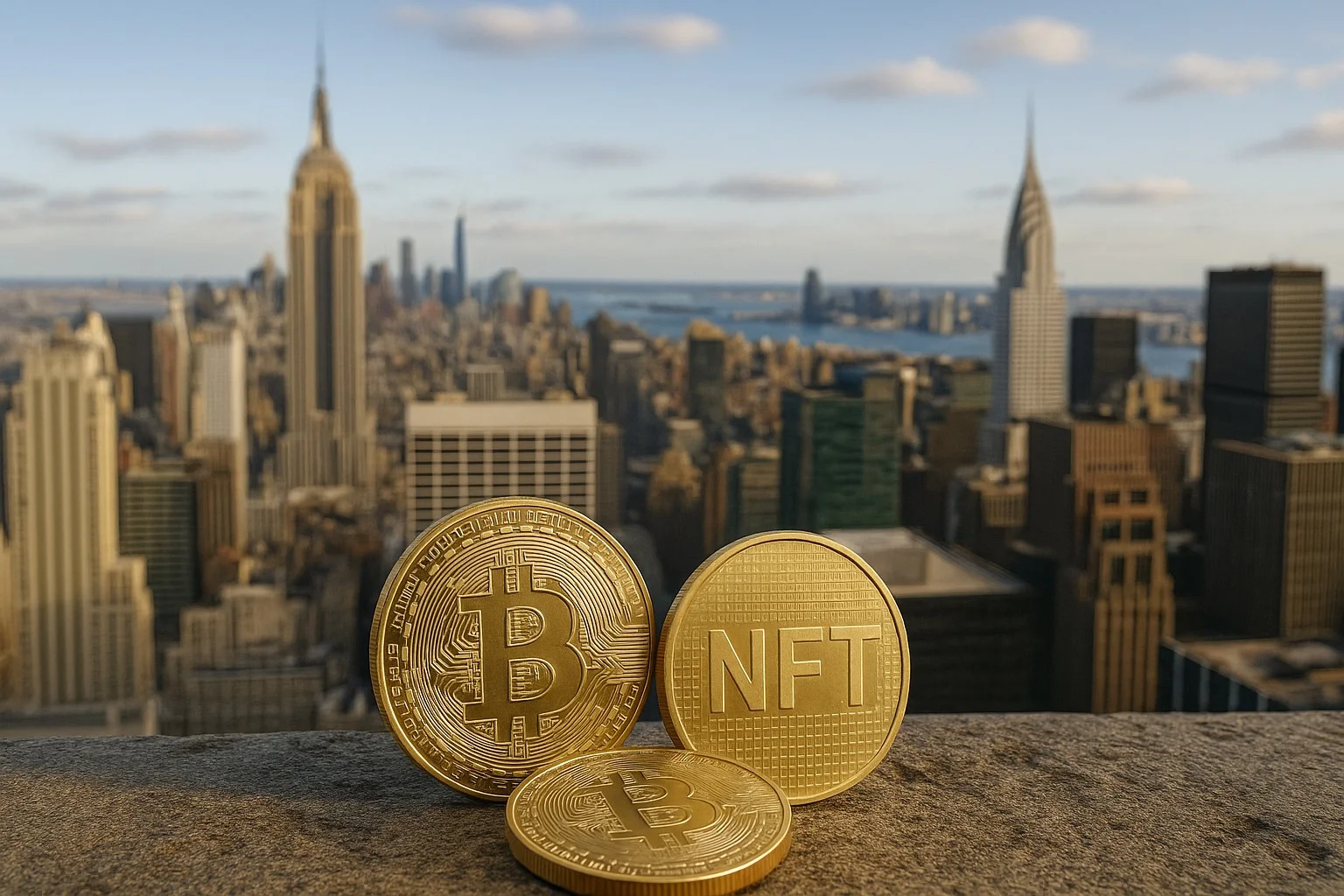
New York State Assembly member Phil Steck has introduced a new bill that would impose a 0.2% excise tax on all digital asset transactions (including cryptocurrencies and NFTs). The proposal, codenamed "Assembly Bill A08966," was introduced on August 13 and referred to the Ways and Means Committee. If approved, the bill would take effect on September 1, 2025. According to the bill, the proceeds would be used to expand substance abuse prevention and treatment programs in schools in northern New York. The bill covers all digital assets created or transferred using distributed ledger or blockchain technology. This definition includes cryptocurrencies such as Bitcoin and Ethereum, as well as stablecoins and NFTs.Who is responsible for the tax?The law defines tax liability as the "person or persons making the sale or transfer." This could create compliance issues, particularly for exchanges, individual investors, and DeFi protocols. For example, if $10,000 of Bitcoin is sold, a $20 tax will be payable. However, the amount is not considered astronomical.New York's strict stance on the crypto market has been a topic of discussion before. The implementation of the BitLicense in 2015 led to the withdrawal of many companies from the state. This new tax proposal could push New York closer to being one of the strictest states in the US in terms of crypto regulations.Crypto Taxation Approaches Around the WorldCrypto taxation policies vary considerably around the world. While China completely bans cryptocurrency transactions, countries like Switzerland and Singapore offer flexible legal frameworks that encourage innovation. In the European Union, the MiCA regulation, which came into effect in 2025, imposes strict licensing and compliance requirements on crypto asset service providers.Some countries, however, are implementing different tax incentive methods. For example, Thailand exempts crypto profits earned on licensed platforms from income tax from 2025 until 2029. While not directly taxed, over 1 billion baht in additional revenue is expected from indirect economic activities.Meanwhile, Indonesia generated $38 million in revenue from crypto taxes in 2024, but this figure decreased to $6.97 million in the first seven months of 2025 due to market volatility. Japan, on the other hand, imposes an income tax of up to 55% on crypto earnings. According to research by the Japan Blockchain Association, 84% of existing investors say they would invest more if the tax were reduced to a flat 20%.The Trump administration pursued a crypto-friendly policy by removing DeFi broker rules in 2025 and easing strict oversight during the Biden administration. However, since tax policies in the US are largely at the discretion of individual states, New York's move could serve as a model for other states.
Stablecoin Partnership from Animoca and Standard Chartered
Animoca Brands, Standard Chartered, and HKT Launch Hong Kong's First Licensed StablecoinWeb3 investment giant Animoca Brands has formed a new joint venture called Anchorpoint Financial Limited, along with Standard Chartered Bank (Hong Kong) Limited and Hong Kong Telecom (HKT). The company aims to become one of the first licensed stablecoin companies in Hong Kong under the Stablecoin Regulation, which came into effect on August 1.The joint venture submitted its formal application to the Hong Kong Monetary Authority (HKMA) on August 1, the same day the Stablecoin Regulation came into effect. This move establishes them as the "first movers" among stablecoin companies operating under Hong Kong's new regulatory framework.Pre-regulation Preparation ProcessAnchorpoint has been shaped by the participation of all three companies in the HKMA's stablecoin sandbox program for over a year. During this period, the parties tested how stablecoins could connect traditional finance and the Web3 ecosystem. According to HKMA CEO Eddie Yue, approximately 40 companies could apply for licenses, but fewer than 10 are expected to receive approval.Stablecoins are generally known as crypto assets pegged to fiat currencies like the US dollar. Both regulators and financial institutions worldwide view stablecoins as one of the most critical components of the digital asset ecosystem. Regulation of stablecoins has also accelerated in the US under the GENIUS Act.The Strategic Importance of the Partnership“Stablecoins are one of the strongest use cases in the Web3 space, and we are just at the beginning of widespread adoption on both institutional and retail levels,” said Evan Auyang, Group Chairman of Animoca Brands. Hong Kong’s new regulations pave the way for stablecoin alternatives other than USD to enter the market in the city. This creates new opportunities that could challenge the dollar’s dominance in regional payment and clearing systems.Hong Kong’s Stablecoin Regulation introduces a comprehensive licensing system for the issuance of stablecoins pegged to fiat assets. Under this system, companies are required to:Conduct transparent reserve asset management,Keep client assets segregated,Operate stability mechanisms,Meet redemption requests at par value,Comply with AML (anti-money laundering) standards.The HKMA published its oversight guidelines and AML procedures on July 29. The application deadline for early-stage feedback is August 31, and the deadline for full applications is September 30. It was announced that misleading license statements will be subject to criminal penalties.Hong Kong experienced a notable increase in capital inflows into the digital asset market following the new regulations. In July, at least 10 publicly listed companies raised over US$1.5 billion for blockchain and digital currency projects. During this period, stablecoin-related stocks have gained 65% since the beginning of the year.Tether maintains its leadership with a market capitalization of $164 billion, while USD Coin grew 3.78% to $63.6 billion. Ethena USD saw a record 43.5% increase to $7.6 billion.If Anchorpoint successfully completes the licensing process, it is expected to become one of the first major players in Hong Kong's stablecoin market to be licensed and regulated.

SEC and Ripple Case Over: XRP Price Rises
The long-running legal battle between the U.S. Securities and Exchange Commission (SEC) and Ripple Labs has officially concluded. The parties have mutually agreed to withdraw their appeals, closing one of the crypto world's most controversial cases. According to a joint waiver filed with the U.S. Court of Appeals for the Second Circuit, each side will bear its own litigation costs and attorney fees.With this development, the July 2023 decision by Judge Analisa Torres in New York federal court will become final. According to the ruling, Ripple's sale of hundreds of millions of dollars in XRP to institutional investors was considered an "unregistered security sale," while retail transactions conducted through exchanges where the investor's identity is unknown were not considered securities.It's time for Ripple to "get back to work"Ripple CEO Brad Garlinghouse announced in June that they would drop the appeal, saying, "We are closing this chapter completely; we are now focusing on what matters most: building the Internet of Value." Ripple's Chief Legal Officer, Stuart Alderoty, posted on social media on August 7th, saying, "Following the Commission's vote today, the SEC and Ripple have officially withdrawn their appeals. The end... and it's time to get back to work." In December 2020, the SEC filed a lawsuit against Ripple Labs and its senior executives, Brad Garlinghouse and Chris Larsen, characterizing the company's XRP sales as an "unregistered securities offering." The litigation centered on cross-appeals, millions of dollars in legal fees, and the debate over whether crypto assets are securities or commodities.Much of the case unfolded under the shadow of the Biden administration's harsh regulatory measures against crypto and then-SEC Chairman Gary Gensler's policy of "regulation by enforcement." A partial ruling in 2023 proved a turning point. The court ruled that the version of XRP sold on exchanges was not a security, while the institutional sales were unregistered. Accordingly, Ripple was ordered to pay a $125 million fine to the SEC. This figure fell well short of the $2 billion requested by the regulator.Following the ruling, the price of XRP surged. Trading at around $3.04 before the news, it quickly gained more than 7 percent to $3.27. The price climbed by 13 percent during the day, reaching $3.37. This put the token at its highest level since July 23rd and 8 percent shy of its all-time high of $3.65, broken on July 18th. This development officially closed the case, which had lasted nearly five years and was symbolic for the future of the crypto industry. Market participants believe the Ripple decision could set a precedent for the legal status of crypto assets in the future.
Trump's Crypto Step in Retirement Plans: He Will Sign Today
US President Donald Trump continues his efforts to more strongly integrate cryptocurrencies into the national economy. To this end, he is preparing to sign a notable executive order. According to Bloomberg, this new order aims to pave the way for the US Department of Labor to include alternative assets such as cryptocurrency, private equity, and real estate in 401(k) retirement plans. The order is expected to be signed on Thursday.Crypto era in 401(k) accountsWith Trump's executive order, Labor Secretary Lori Chavez-DeRemer will reassess existing rules under the 1974 Employer Retirement Income Security Act (ERISA). She will also coordinate with agencies such as the Treasury Department and the Securities and Exchange Commission (SEC) to examine regulatory changes regarding how crypto assets and other alternative investment vehicles can be safely integrated into defined contribution plans like 401(k)s. This initiative could open approximately $12.5 trillion in defined contribution accounts to new investment options. This would make alternative products, such as crypto and private equity, available only to accredited investors, available to mainstream savers.Call to the SECThe executive order also calls on the SEC to facilitate access to alternative assets. This could allow individual retirement investors direct access to digital asset products like spot Bitcoin ETFs. However, these steps would require careful consideration by plan sponsors regarding risks such as custody, pricing, and volatility.This move stands out as the Trump administration's most aggressive move yet in integrating crypto into the US financial system. In May, the Trump administration formally withdrew guidance introduced under the Biden administration that discouraged crypto in retirement plans. At the time, the Department of Labor stated that the previous administration "intentionally tipped the scales."Trump's crypto expansionWith this decision, the Trump administration is implementing part of a broader crypto vision. A 166-page crypto report published earlier this year outlined strategic objectives for the US's role in the digital asset economy. This document aimed to simplify regulations, facilitate adoption, and maintain US global leadership.Furthermore, during the White House's "Crypto Week" event, Trump signed the first federal stablecoin regulatory bill. Around the same time, steps were taken to establish a "Strategic Bitcoin Reserve" for the US.As a result, 401(k) plans, traditionally limited to assets like stocks and bonds, will now be able to include higher-risk but potentially high-return assets like cryptocurrencies and private equity. This could offer American investors the opportunity to make their retirement portfolios more flexible and diversified.Of course, this change will require time and detailed regulations to materialize. However, the community is quite excited for one reason: once the executive order becomes official, the crypto sector could see billions of dollars in new funds flow into the crypto sector in the coming years.

SEC Greenlights Liquid Staking: Criticism Ensues
The U.S. Securities and Exchange Commission (SEC) has presented a new roadmap on a long-awaited issue in the cryptocurrency world. The agency has provided significant relief to the industry by clarifying that some liquid staking activities do not fall under securities laws. This development is considered a critical step toward the approval of staking functionality in spot Ethereum ETFs.Historic Statement from the SECNew guidance published by the SEC's Division of Corporate Finance states that "liquid staking receipt tokens" issued under certain circumstances may not be considered securities. Staking services offered by decentralized protocols such as Lido, Marinade Finance, JitoSOL, and Stakewise are particularly considered within this scope. SEC Chairman Paul Atkins stated, "Today's announcement is a major step toward clarifying the aspects of crypto asset activities that fall outside the SEC's jurisdiction," emphasizing that the agency's newly launched "Project Crypto" initiative is already yielding tangible results. Is the door to staking opening in Ethereum ETFs?According to Nate Geraci, President of NovaDius Wealth, this announcement may have cleared one of the SEC's final obstacles to allowing staking in spot Ethereum ETFs. "Liquid staking tokens could facilitate liquidity management in ETFs," Geraci said in a post on the social media platform X.Large investment firms like BlackRock are also known to be considering revising their Ethereum ETF applications to include staking. This new SEC clarification could pave the way for such strategies.Discussions continue: Are there parallels to the 2008 crisis?However, not everyone is happy with this announcement. Former SEC chief Amanda Fischer heavily criticized liquid staking, comparing it to the rehypothecation practices that led to the collapse of Lehman Brothers in 2008. Fischer stated, “This practice allows clients to make risky transactions using their assets. The SEC’s decision to leave this unregulated demonstrates that the lessons of the 2008 crisis have not been learned.”However, these comments drew significant backlash from the crypto community. Matthew Sigel, VanEck’s head of digital asset research, countered Fischer, saying, “You’re saying the SEC approves crypto and yet you’re saying it’s unregulated. These two statements contradict each other.” Helius Labs CEO Mert Mumtaz argued that Fischer either doesn’t understand the system or is deliberately distorting it.TVL Increases in DeFi SectorThe SEC’s announcement bolstered confidence in liquid staking, leading to a rise in total assets locked in the sector. According to DefiLlama data, the total amount of assets locked in liquid staking protocols has increased by 15% since the beginning of the year.Lido Finance dominates the sector with $31.88 billion in TVL. Binance’s ETH staking service grew by nearly 90%, from $6.05 billion at the beginning of the year to $11.4 billion.
Trump Shields Crypto Sector: Investigation Into "Debanking" Practices Underway
Former US President Donald Trump is preparing to take action against allegations that various sectors, particularly crypto companies, are being excluded from the financial system. According to The Wall Street Journal, Trump is about to sign a comprehensive executive order targeting banks' attempts to block individuals and institutions from accessing financial services for political reasons. The executive order is also expected to examine the "debanking" practices targeting crypto companies.Trump's draft executive order not only investigates whether banks discriminate based on political affiliation but also proposes fines and disciplinary procedures if violations are detected. It will also investigate whether financial institutions violate the Equal Credit Opportunity Act, antitrust laws, and consumer protection regulations. It is rumored that the executive order could be signed this week."Choke Point 2.0" DebatesIt has been frequently stated that the crypto sector has been under intense regulatory pressure, especially during the Biden administration. This process has become known within the industry as "Operation Choke Point 2.0." This operation, first implemented during the Obama administration, aimed to exclude sectors deemed high-risk from the financial system. However, over time, this practice evolved into the exclusion of individuals and institutions deemed politically unsuitable. Especially after 2022, crypto companies and conservative groups argue that they are direct targets of this policy. Trump's executive order aims to end discriminatory policies against crypto companies and conservatives. The executive order will also review the Small Business Administration's lending partnerships, and some cases will be referred to the Department of Justice.Crypto industry voices riseTrump is known to have increasingly adopted a crypto-friendly stance during the campaign. Prominent figures in the crypto industry (such as Coinbase CEO Brian Armstrong, Gemini founders Tyler and Cameron Winklevoss, and Custodia CEO Caitlin Long) have publicly shared their past debanking experiences.Donald Trump's son, Eric Trump, has also stated that he has been subjected to this pressure. World Liberty Financial, one of the crypto projects he manages, and Bitcoin mining firm America Bitcoin stated that they were unable to receive service from banks. "Because my father was in politics, banks excluded us from the system. At that moment, I realized crypto was an alternative way to escape this system," he said, summing up his experience.Banks have begun taking precautionsWith the expectation that the Trump administration will approach crypto more favorably, some banks have begun reviewing their policies. In recent months, banks have even been known to meet with Republican attorneys general to prove they are not politically discriminated against. Trump-appointed regulators (the Fed, the OCC, and the FDIC) have also announced that abstract reasons like "reputational risk" will no longer be considered in customer relationships.