
The US Producer Price Index (PPI) rose 1.3% in September from the previous month, exceeding expectations. Annual producer inflation reached 6.3%. The figures brought inflation pressures back into focus for Federal Reserve policy, with implications for Bitcoin and altcoins.
The report, released on October 15, showed the largest monthly increase in producer prices since March 2022. Economists surveyed by The Wall Street Journal had expected a 0.6% rise. The monthly increase was therefore more than double that forecast.
Weekly initial jobless claims, released the same day, came in at 199,000. While the labor market figure was close to expectations, producer inflation delivered the most significant surprise.
US PPI Data Shows Persistent Inflation Pressure
According to the Bureau of Labor Statistics, prices for final demand goods rose 2.6%. Services prices increased 0.8% month over month. The breakdown showed that price pressures persisted across both goods and services.
PPI measures changes in the prices producers receive for their goods and services. The report therefore offers early signals about corporate pricing trends. However, increases in producer prices do not always pass through to consumer prices immediately or at the same rate.
Companies can absorb some cost increases depending on demand and competition. Businesses that pass higher prices on to their customers, meanwhile, can contribute to persistent consumer inflation.
For the crypto market, the main connection runs through monetary policy. Persistent inflation can make it harder for the conditions needed for rate cuts to emerge. This creates an unfavorable scenario for investors expecting a rapid easing of liquidity conditions.
The Fed’s Response Matters for Bitcoin
The Fed uses the Personal Consumption Expenditures Price Index, or PCE, to track its inflation target. Some components of the PPI report also feed into that measure. As a result, the report’s underlying details can influence expectations for upcoming inflation releases.
An extended period of high interest rates can make interest-bearing assets more attractive. It can also limit demand for riskier investments by keeping borrowing costs elevated.
Bitcoin and altcoins are among the assets that can be affected by these conditions. Changes in interest rate expectations can amplify price swings, particularly when leveraged trading is heavy. However, this relationship does not guarantee that prices will move in the same direction after every inflation release.
Expectations formed before the announcement also shape the market’s response. If investors have already priced in high inflation, a strong reading may trigger only a limited reaction. An unexpected deterioration, however, can have a more pronounced effect on risk appetite.
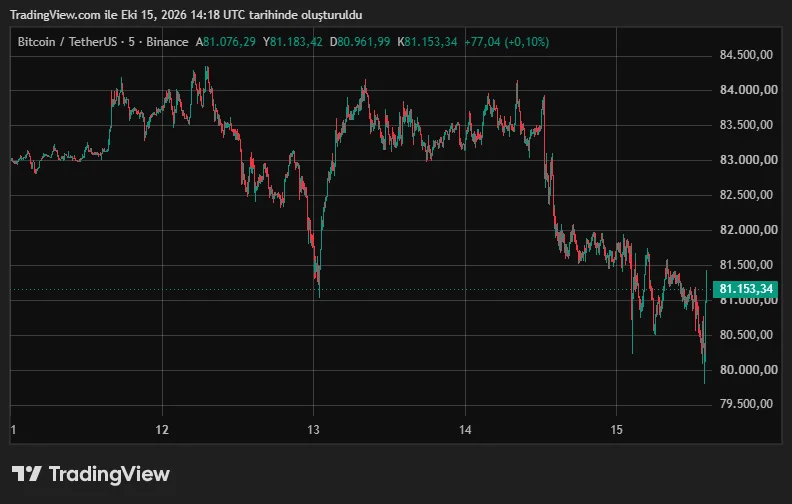
At the time of writing, Bitcoin is trading lower, partly reflecting the impact of the previous day’s inflation data.
Jobless Claims Deliver Little Surprise
The number of Americans filing initial claims for unemployment benefits rose to 199,000. With the previous week’s figure revised to 198,000, the weekly increase was limited to 1,000. Reuters reported that claims remained consistent with a low level of layoffs.
Low claims do not point to a sudden deterioration in the labor market. However, weekly applications are not a direct measure of total employment or new hiring.
The Fed considers inflation and employment data together. The absence of a significant labor market slowdown may reduce the need for rapid rate cuts to support the economy. Combined with elevated inflation, this could strengthen the case for maintaining tight monetary policy.
For the crypto market, upcoming PCE data, Fed communications and Treasury yields will be key to assessing the outlook. The dollar’s performance will also provide additional signals about global risk appetite.
The September PPI report points to greater interest rate and liquidity risks for Bitcoin. How much those risks affect prices will depend on Fed expectations alongside fund flows specific to the crypto market.