
February Producer Price Index (PPI) data from the US signaled a stronger-than-expected inflation trend, increasing volatility in risky assets. The higher-than-expected figures, in particular, triggered short-term selling pressure in both traditional markets and the cryptocurrency sector. According to the data, the US PPI rose 0.7% month-on-month in February. This significantly exceeded the market expectation of 0.3% and indicated an acceleration compared to the previous month's 0.5% increase. On an annual basis, the PPI rose to 3.4%, surpassing the 2.9% expectation. This picture reveals that the increase in production costs remains strong and inflationary pressures have not completely disappeared.
A similar picture was observed in the core PPI. The monthly core data rose 0.5%, exceeding the expectation of 0.3%, while the annual rate reached 3.9%, surpassing market forecasts. The upward trend in previous data indicates that cost-driven inflation remains resilient in the US economy. The Producer Price Index (PPI) is an inflation indicator that measures price changes in goods and services during the production phase; that is, it shows what happens on the cost side before products reach the consumer. This data is seen as a leading signal for future consumer inflation (CPI) because as production costs increase, this increase is often reflected in final prices. Therefore, a PPI above expectations increases concerns that inflation may be persistent and may lead central banks to postpone interest rate cuts. From a market perspective, high PPI data generally puts pressure on risky assets because it strengthens expectations of tighter monetary policy, which can lead to sell-offs in assets such as stocks and cryptocurrencies.
How did the markets react?
Markets, which followed a calmer course before the data release, saw sharp price movements after the announcement. Gold fell by 2.3% after the data, dropping below the $4,900 level to around $4,891. This movement is attributed to strong inflation data raising interest rate expectations and increasing demand for the dollar. A similar reaction was observed in the cryptocurrency market. Bitcoin, in particular, exhibited a more sideways trend before the data release, but experienced a sharp downward break after the PPI exceeded expectations. As seen in the chart below, the price quickly retreated and selling pressure intensified.
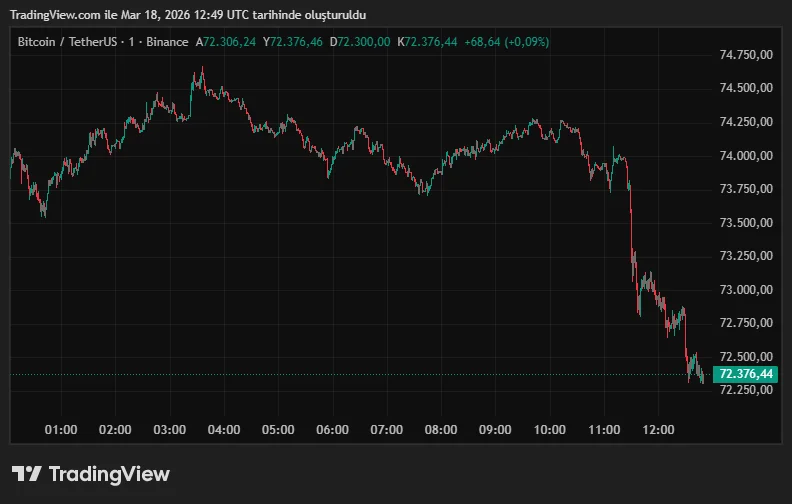
This short-term reaction from Bitcoin indicates that investors are repricing their expectations regarding interest rate policies. Higher-than-expected inflation data strengthens the view that the US Federal Reserve (Fed) may postpone its easing measures. This situation can trigger sell-offs in risky assets, causing short-term investors to reduce their positions.