
Bitcoin is trying to maintain its position around $80,000 following better-than-expected employment data from the US. The April non-farm payrolls data showed that the labor market remains resilient despite signals of an economic slowdown. This picture has brought expectations regarding both the Fed's interest rate path and risk appetite in the crypto market back into focus.
Critical data released in the US
According to data released by the US Bureau of Labor Statistics, the US economy recorded an increase of 115,000 jobs in April. Market expectations were around 62-65,000. Thus, the employment increase significantly exceeded expectations. However, the data was below the 185,000 employment increase in March. The March figure was previously announced as 178,000 and later revised upwards.
The unemployment rate remained stable at 4.3%, in line with expectations. This picture shows that the US economy has not completely cooled down, but has entered a more moderate pace of employment growth compared to previous months. The main question for the markets focuses on how the Fed will interpret this data. Strong employment figures could narrow the room for interest rate cuts, while signals of a slowdown in employment could keep alive the debate for a more cautious monetary policy in the coming months. Following the data release, Bitcoin initially traded around $79,900. However, the price came under renewed pressure during the day and fell below $80,000. According to the current data on the chart, BTC is currently priced around $79,553, having lost approximately 1.16% in the last 24 hours. The daily trading range is between $79,287 and $80,648. This suggests that Bitcoin is struggling to regain the $80,000 level in the short term.
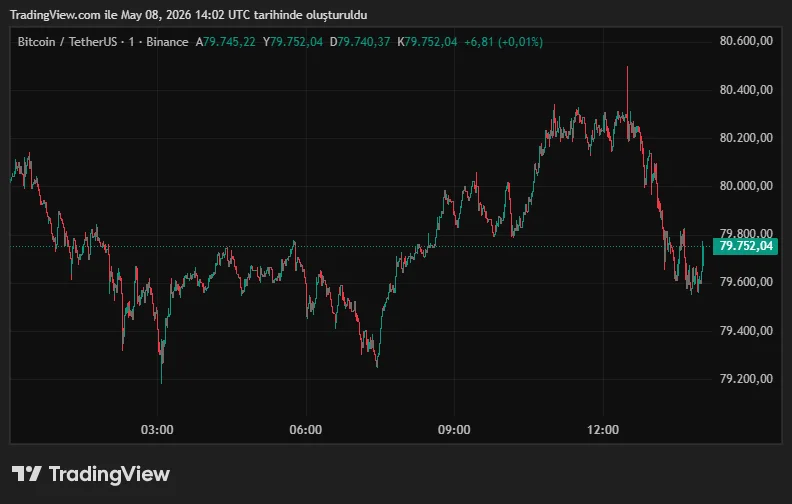
In recent days, Bitcoin's price movement isn't solely explained by macroeconomic data. Ongoing tensions between the US and Iran, particularly the risks surrounding the Strait of Hormuz, are putting pressure on global markets. Optimistic news flow regarding a potential agreement had previously pushed Bitcoin above $82,000. However, developments suggesting that tensions may continue weakened risk appetite and caused the BTC price to fall back below $80,000.
The high level of oil prices also continues to be a separate pressure factor for the markets. Uncertainty regarding energy flows through the Strait of Hormuz keeps crude oil prices sensitive. The increase in energy prices risks pushing headline inflation upwards. At the same time, it can put pressure on consumer spending and hinder economic growth. Therefore, investors are following geopolitical developments at least as closely as US macroeconomic data.
Uncertainty continues on the Fed side. The US central bank kept its policy interest rate stable in the 3.50-3.75 percent range last week. This decision showed that the Fed continues to seek a balance between slowing growth and persistent inflationary pressure. Better-than-expected employment data strengthened the view that the Fed may not rush into interest rate cuts.
Markets are also watching for a possible change in the Fed leadership. It is stated that Kevin Warsh is expected to go through the confirmation process for the Fed chairmanship in the coming period. Such a transition is a key topic for risky assets because it could directly impact expectations regarding monetary policy.