
While global markets continue to search for direction, macroeconomic data is further complicating the process. The latest inflation data released in the US added to this uncertain picture, reshaping pricing across a wide range of markets, from stocks and bonds to commodities and cryptocurrencies.
US Inflation Data Released
US Consumer Price Index (CPI) data for January came in slightly below expectations. Annual CPI was 2.4%, slightly below the expected 2.5%, while the monthly increase was 0.2%. On the core CPI side, the annual rate came in at 2.5%, in line with expectations, while the monthly increase was 0.3%. In particular, the fact that core inflation fell to its lowest level since March 2021 brought the possibility of interest rate cuts back to the forefront in the markets.
On the other hand, the previously released non-farm payroll data in the US came in above expectations, indicating that the labor market remains resilient. The concentration of job growth primarily in the healthcare sector and the limited recovery in manufacturing have not completely eliminated questions about the quality of economic growth. This situation has led to a cautious stance regarding expectations for the US Federal Reserve's (Fed) interest rate path.
Looking at pricing in money markets, the expectation that the Fed will keep its policy rate unchanged in March remains strong. The probability of a possible rate cut in June has decreased somewhat compared to previous weeks. Analysts state that despite the slowdown in inflation data, the Fed may not act hastily, and that developments in the labor market will be closely monitored.
As a result of these developments, the US 10-year Treasury yield fell to 4.09%, testing its lowest level in recent weeks. The dollar index remained relatively stable around 96.9. Driven by safe-haven demand, the price of gold recovered from the previous day's sharp drop to $4,965 per ounce, while silver also recouped some of its losses. On the technology stock side, fragility was noticeable. The reported delay in Apple's Siri update and accounting allegations concerning Meta increased selling pressure in the technology sector, already overshadowed by "high valuation" discussions. Apple shares closed the day down nearly 5%, while leading companies such as Meta, Nvidia, and Palantir also saw losses. These developments led to significant declines in the S&P 500 and Nasdaq indices.
How did the cryptocurrency markets react?
The cryptocurrency market also felt the effects of this global volatility. Bitcoin (BTC), which had stabilized around $67,000, rose to $67,700 shortly before the data release. Immediately after the data was released, it fell back to $66,000.
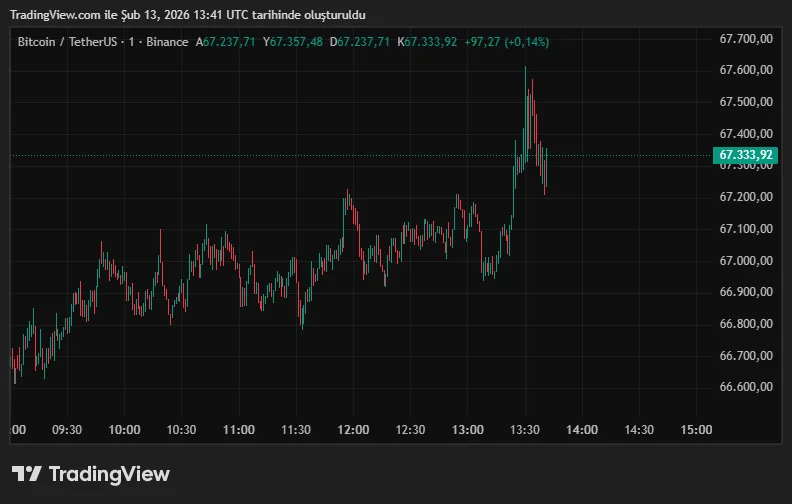
While the lower-than-expected inflation data supported risk appetite in the short term, investors' cautious stance caused volatility to continue.