U.S. President Donald Trump’s softer tone on the Middle East triggered a strong rebound across the cryptocurrency market in a short period. Bitcoin climbed rapidly from around $68,500 during the day to above $71,000. Signals suggesting a potential, even temporary, easing of geopolitical tensions pushed investors back toward risk assets.
Trump statements take center stage
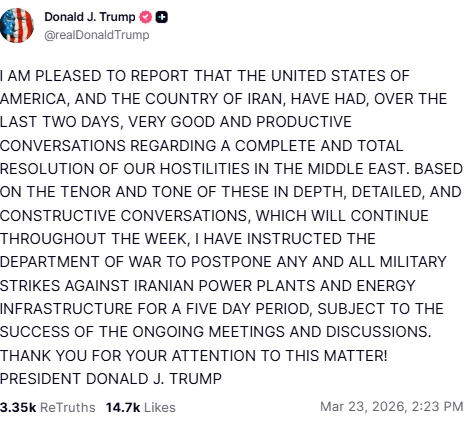
In his remarks, Trump said the United States and Iran had held “very good and productive conversations.” He also noted that planned military operations targeting Iran’s energy infrastructure had been postponed for five days. The decision was said to be contingent on progress in ongoing diplomatic talks. Markets interpreted the development as a sign that tensions could ease in the near term.
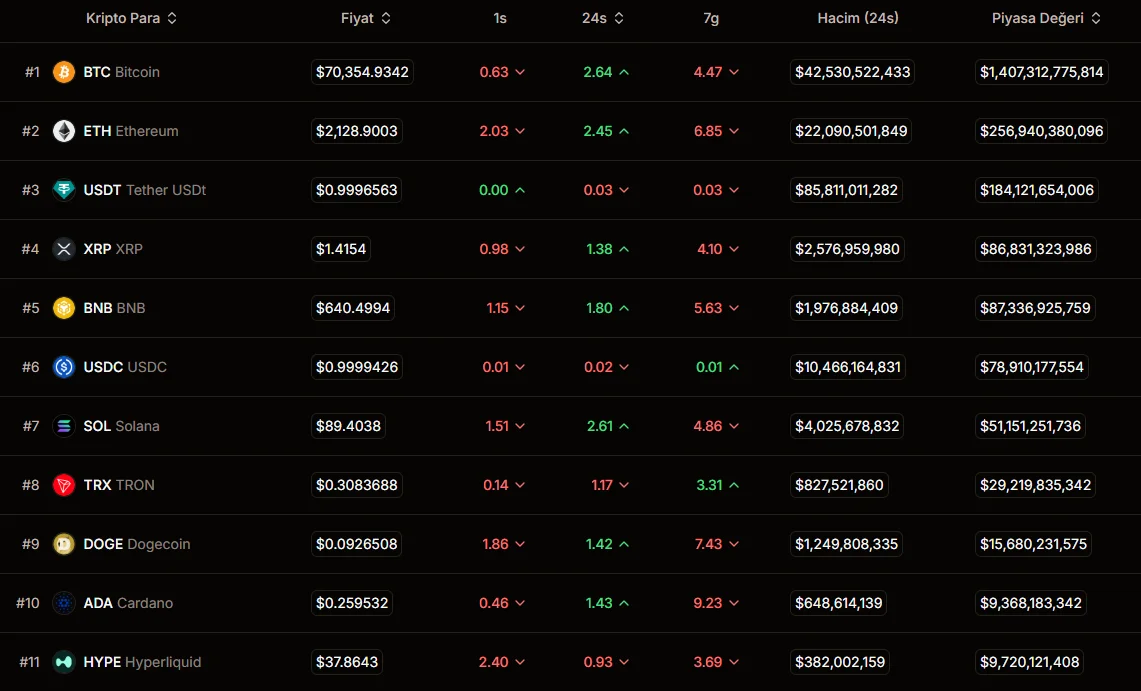
Following the announcement, Bitcoin gained more than 4%, rising to as high as $71,500 before stabilizing around the $70,000 level. Ethereum saw a similar move, climbing from just above $2,000 to $2,190 and holding near the $2,150 range. Overall, a broad-based recovery was observed across digital assets.
However, the drivers behind this rally are not limited to crypto. Global markets continue to be shaped by macroeconomic uncertainty, particularly through energy prices and interest rate expectations. Concerns that a potential conflict in the Middle East could disrupt global energy supply via the Strait of Hormuz had recently triggered sharp sell-offs. As a result, any signal of de-escalation is prompting swift reactions across asset classes.
On the macro side, volatility in U.S. Treasury markets has increased, with investors frequently repricing rate expectations. In some scenarios, the possibility of further rate hikes this year has even re-entered the conversation. A stronger U.S. dollar and rising bond yields have put pressure on traditional safe-haven assets like gold, while also weighing on equities.
Within this environment, crypto continues to play a dual role as both a risk asset and an alternative store of value. According to analysts, Bitcoin’s latest move appears to be driven more by traditional risk appetite dynamics rather than acting as a geopolitical hedge. This suggests that prices are likely to remain highly sensitive to macro developments in the near term.
Meanwhile, significant liquidations were recorded in derivatives markets during the rally. Data shows that approximately $791 million in leveraged positions were wiped out, with a large portion consisting of long positions. This highlights the elevated volatility in the market and the strong impact sudden price swings can have on traders.
Oil rebounds
Energy markets also experienced notable fluctuations. Brent crude fell from above $113 to as low as $98 before recovering, while U.S. crude (WTI) dropped more than 10% before stabilizing. Gold initially declined sharply but later showed signs of recovery. These movements underline how strongly geopolitical risks continue to influence global markets.
Update: Despite the U.S. emphasizing diplomacy, Iran said there are currently no negotiations taking place, according to FARS and Tasnim news agencies, and described Trump’s statements as “psychological warfare.” Officials also stressed that the Strait of Hormuz will not return to pre-conflict conditions unless tensions fully subside.