Politics
This page lists the latest Politics news and market analysis. Browse articles, expert insights, and updates in this category on JrKripto. Stay informed with in-depth coverage of cryptocurrency trends and developments.
News
Politics News
Politics News
Browse all Politics related articles and news. The latest news, analysis, and insights on Politics.
Daily Market Summary with JrKripto July 7, 2025
You can find today’s edition of “Daily Market with JrKripto” below, featuring a roundup of the most important developments from both global and local markets. Let’s analyze the broader market sentiment and latest insights together.Bitcoin continued its high-volume structure from last week into the weekend, closing the stable Sunday with an increase at the $109,200 level. BTC, which experienced a strong upward breakout from the downtrend that began in May, is now consolidating above this structure. The $108,900 resistance level is a key threshold at this point. As long as the price stays above this level, it will aim to break through the $110,600 peak. In case of pullbacks, the $108,900 level we mentioned earlier, followed by the trend support we saw at the average $108,000 point, could keep the price in this region. In an upward scenario, if the $111,920 peak is surpassed, the first targets after the new ATH will be the $114,000 and $120,000 levels.Ethereum also followed Bitcoin, closing the week with a volume-driven rise. When we look at ETH from a broader perspective, we observe that it continues to trade within the range. The $2,465 level plays a key role at this point. After last week's significant rise, it is positive that the price remains above this level. It is also trading in a critical area in the short term. The $2,595–$2,550 area stands out as a broad resistance area. We have reached the $2,600 target we gave in previous bulletins. However, if this region is breached, the price could rise as high as the $2,700 region.Crypto NewsAuthorities have announced that there is no golden visa for digital currency investors in the UAE.White House Economic Advisor Hassett stated that the likelihood of a recession is zero.Kazakhstan plans to establish a Bitcoin and crypto reserve.Toncoin has partnered with the UAE and started offering 10-year golden visas to TON stakers.A Bitcoin whale that has been dormant since 2011 moved 60,000 BTC today. The investor holds a total of 80,009 BTC ($8.69 billion).CryptocurrenciesTop Gainers:TIA → Increased by 13.2% to $1.67B → Increased by 13.1% to $0.39170547SPX → Increased by 13.1% to $1.37KTA → Increased by 10.8% to $0.68357771IP → Increased by 8.6% to $3.19Top Losers:TKX → Declined by 42.6% to $9.04PENGU → Declined by 6.3% to $0.01521971TON → Declined by 6.2% to $2.82USELESS → Declined by 4.8% to $0.27979579SAFE → Declined by 2.3% to $0.42950742Fear Index:Bitcoin: 70 (Greed)Ethereum: 57 (Greed)Dominance:Bitcoin: 65.27% ▼ 0.05%Ethereum: 9.34% ▲ 0.13%Global MarketsThe US non-farm payrolls data for June came in at 147,000, above expectations. The unemployment rate fell from 4.3% to 4.1%. However, we observed a decline in working hours and hourly earnings. After the strong employment data, expectations for interest rate cuts weakened, and sales were seen in the bond market. US stock markets were closed on Friday due to a holiday.Global markets started the new week on a bearish note with tariff news from the US. President Trump announced that tariffs would take effect on August 1 instead of July 9 and signaled a 10% additional tariff on BRICS countries. On Friday, the VIX index rose 1.1 points to 17.5 amid low liquidity and trade uncertainty, indicating a decline in risk appetite.Most Valuable Companies and Stock PricesNVIDIA (NVDA) → Market capitalization of $3.89 trillion, share price of $159.34, up 1.33%Microsoft (MSFT) → Market capitalization of $3.71 trillion, share price of $498.84, up 1.58%Apple (AAPL) → Market capitalization of $3.19 trillion, share price of $213.55, up 0.52%Amazon (AMZN) → Market value of $2.37 trillion, share price of $223.41, up 1.59%Alphabet (GOOG) → Market value of $2.18 trillion, share price of $180.55, up 0.44%Borsa IstanbulInflation data declined slightly in June. Monthly inflation was 2.04%. Prices rose slightly faster in services, while the rate of increase slowed in goods. Today, the Treasury's cash balance will be announced. In addition, throughout the week, the government is also set to hold bond and bill auctions with various maturities.The Borsa Istanbul ended last week with a 9% gain, driven by expectations of an interest rate cut. This week, attention will turn to domestic economic data and developments related to U.S. tariff policies. Key items on the economic calendar include today’s cash budget, Thursday’s industrial production and retail sales data, and Friday’s balance of payments report. Additionally, corporate earnings announcements are set to begin. We anticipate the stock market will start the week with a slight pullback.Companies with the Highest Market Value on the Istanbul Stock ExchangeQNB Finansbank (QNBTR) → Market value of 922.93 billion TL, share price of 266.50 TL, experienced a 3.27% declineAselsan Elektronik Sanayi (ASELS) → Market value of 689.47 billion TL, share price of 149.10 TL, down 1.39%Türkiye Garanti Bankası (GARAN) → Market value of 577.08 billion TL, share price of 137.50 TL, up 0.07%Koç Holding A.Ş. (KCHOL) → Market value of 410.05 billion TL, share price of 157.50 TL, a 2.60% declineTurkish Airlines A.O. (THYAO) → Market value of 404.00 billion TL, share price of 288.75 TL, experienced a 1.37% declinePrecious Metals and Currency PricesGold: 4,243 TLSilver: 47.21 TLPlatinum: 1,766 TLDollar: 39.94 TLEuro: 47.05 TLWe look forward to bringing you the latest updates again tomorrow.

Daily Market Summary with JrKripto 4 July 2025
You can find today’s edition of “Daily Market with JrKripto” below, featuring a roundup of the most important developments from both global and local markets. Let’s analyze the broader market sentiment and latest insights together.Bitcoin continues its high-volume structure that it has maintained for several days. The downward trend it started in May experienced a strong upward breakout and then successfully retested the $108,500 level. As we mentioned in yesterday's bulletin, the $110,600 and $111,920 levels are currently short-term targets. Our $110,600 target has been achieved. The next target is $111,920, which is noteworthy as it represents the highest point BTC has reached. If a new all-time high (ATH) is achieved, the $114,000 and $120,000 levels will be closely monitored. In the event of a pullback, the trend zone — the $108,000 area — will be the first area to react. Below that, the $107,100 level will come into focus.Ethereum is currently trading in the middle of the narrowing triangle pattern we observed when looking at the broader picture. Staying above the $2,420 level was important in the short term. It has now returned to the previous range. As with Bitcoin, volume remains high here, and a rise toward the recently tested $2,680 and $2,900 levels can be expected. In pullbacks, the $2,275–$2,400 support range will be monitored.Crypto NewsThe US House of Representatives declared July 14–18 as “Crypto Week.”Tether minted $1 billion worth of USDT.The SPK imposed an access ban on PancakeSwap on the grounds that it was conducting unauthorized crypto asset service provider activities.The US House of Representatives approved Trump’s “Big and Beautiful Plan.”Ondo Finance and Pantera Capital allocated $250 million to RWA tokenization.US Treasury Secretary Bessent: US Trade Representative Greer will hold talks with the EU over the weekend.U.S. Senator Lummis introduced a bill that would exempt crypto transactions under $300 from taxation.CryptocurrenciesTop Gainers:TOSHI → +7.4% → $0.00050795PLUME → +4.3% → $0.1076886ZEC → +3.7% → $40.79AMP → +2.5% → $0.00351222AKT → +2.2% → $1.11Top Losers:KTA → –15.0% → $0.58735564USELESS → –11.2% → $0.22904396MOG → –9.2% → $0.09954781AIOZ → –9.0% → $0.3033793BRETT → –9.0% → $0.04279332Fear Index:Bitcoin: 71 (Greed)Ethereum: 57 (Greed)Dominance:Bitcoin: 65.30% ▲ 0.04%Ethereum: 9.35% ▼ 0.18%Daily Total Net ETF InflowsBTC ETFs: $601.80 millionETH ETFs: $148.50 millionGlobal MarketsFollowing yesterday’s strong non-farm payrolls data, the likelihood of a July interest rate cut by the Federal Reserve — which had been increasingly expected in recent days — has diminished. As of this morning, the total amount of rate cuts priced in by year-end has decreased from 65 basis points to 53 basis points. Despite downside risks to growth from high tariff policies and global volatility, robust employment figures signal resilience in the U.S. economy, thereby supporting risk appetite. The VIX fear index dropped by 0.3 points to 16.4 yesterday, indicating that the improvement in market sentiment has extended into July.Most Valuable Companies and Stock PricesNVIDIA (NVDA) → $3.89 trillion, $159.34 ▲ 1.33%Microsoft (MSFT) → $3.71 trillion, $498.84 ▲ 1.58%Apple (AAPL) → $3.19 trillion, $213.55 ▲ 0.52%Amazon (AMZN) → $2.37 trillion, $223.41 ▲ 1.59%Alphabet (GOOG) → $2.18 trillion, $180.55 ▲ 0.44%Borsa IstanbulIn Türkiye, the monthly inflation rate for June was 1.37%, below the 1.45% forecast. Annual inflation dropped from 35.41% to 35.05%. Thus, after a long interval, inflation remained under 2% for two consecutive months. The ongoing decline in the main trend of monthly inflation and the retreat in annual inflation have raised expectations for an interest rate cut by the CBRT this month.Yesterday, banking stocks saw profit-taking following the lower-than-expected inflation data. However, strong buying in Aselsan enabled the index to close positively. Today, trading volume on the BIST may remain low as US markets are closed. The main focus will be on the US tariff announcement scheduled for July 9 next week.Companies with the Highest Market Value on Borsa IstanbulQNB Finansbank (QNBTR) → 948.05 billion TL, 280.00 TL ▼ 1.06%Aselsan Electronics Industry (ASELS) → 683.09 billion TL, 150.00 TL ▲ 0.13%Türkiye Garanti Bankası (GARAN) → 569.52 billion TL, 135.20 TL ▼ 0.29%Koç Holding A.Ş. (KCHOL) → 410.05 billion TL, 160.70 TL ▼ 0.62%Turkish Airlines A.O. (THYAO) → 402.27 billion TL, 292.50 TL ▲ 0.34%Precious Metals and Currency PricesGold: 4,273 TLSilver: 47.21 TLPlatinum: 1,766 TLDollar: 39.84 TLEuro: 46.99 TLWe look forward to bringing you the latest updates again tomorrow!

Eyes on the Fed After US Employment Data: Expectations for Interest Rate Cuts Weaken
The June non-farm payroll and unemployment rate data released in the US at 3:30 p.m. Turkish time triggered significant price movements in the markets. The higher-than-expected employment data and falling unemployment rate dampened investors' hopes that the US Federal Reserve (Fed) would cut interest rates in July. The latest data reinforced expectations that the Fed will continue its “wait-and-see” policy on interest rate decisions.Employment data exceeded expectationsAccording to data released by the US Department of Labor, non-farm employment increased by 147,000 in June. This figure far exceeded economists' expectations of 111,000. The previous month's figure was recorded as 139,000. During the same period, the unemployment rate fell to 4.1%, compared to the 4.3% expectation. This improvement demonstrated that the US labor market is still strong. Source: CME FedWatch Following the release of the data, expectations in the futures markets that the Fed would cut interest rates at its July meeting fell sharply. Futures contracts tracked by CME FedWatch priced the likelihood of an interest rate cut at the end of July at just 4.7%. This rate had risen to 25% in recent weeks.Powell's cautious statements had an impactAs we reported earlier, Fed Chairman Jerome Powell emphasized in a speech at a forum organized by the European Central Bank earlier this week that the possibility of an interest rate cut in July had not completely disappeared, but that the decision would depend on “incoming data.” However, the strong employment figures indicate that there is no urgency for the Fed to cut interest rates.Powell stated that they need time to assess the effects of the new tariffs that the Trump administration plans to implement and that they want to see inflation decline permanently. When evaluated together with the employment data, these statements indicate that the Fed will maintain its cautious stance.The view that interest rates will remain unchanged in July prevails in the marketsAccording to data from the crypto market prediction platform Polymarket, the probability of interest rates remaining unchanged at the FOMC (Federal Open Market Committee) meeting on July 30 has risen to 94%. This data indicates that investors have largely abandoned their positions in favor of interest rate cuts.Investors had been thinking for some time that the Fed might bow to Trump's political pressure and cut interest rates if employment weakened. However, the strong picture seen on the employment front suggests that such a move will be postponed for now.As a result, the fact that the non-farm payrolls data, one of the most important indicators of the US economy, exceeded expectations has significantly weakened the likelihood of an interest rate cut in July. As Powell also pointed out, the Fed is not expected to make a hasty move. On the contrary, current economic indicators provide a strong basis for keeping interest rates unchanged. The data released ahead of the FOMC meeting at the end of July will be decisive in determining the sustainability of this strategy.
Daily Market Summary with JrKripto 3 July 2025
You can find today’s edition of “Daily Market with JrKripto” below, featuring a roundup of the most important developments from both global and local markets. Let’s analyze the broader market sentiment and latest insights together.Bitcoin continues its high-volume structure that it has maintained for several days. After breaking out strongly from the downward trend it started in May, it successfully retested the $108,500 level. The $110,600 and $111,920 levels are currently short-term targets. If a new ATH is reached, the $114,000 and $120,000 levels will be closely monitored. In the event of a pullback, the trend zone, i.e., the $108,000 area, will be the first region to react. Below that, the $107,100 level will come into focus.Ethereum is currently trading near the midpoint of a narrowing triangle pattern when viewed from a broader perspective. Holding above the $2,420 level was significant in the short term, but the price has since returned to its previous range. As with Bitcoin, trading volume remains high, and a move toward the previously tested $2,680 and $2,900 levels may be anticipated. In case of a pullback, the $2,275–$2,400 support range will be closely monitored.Crypto NewsCoinbase acquired Liquify.Trump signed a trade agreement with Vietnam.SEC Chairman Paul Atkins said the agency is committed to advancing tokenization.The US Federal Housing Finance Agency (FHFA) has requested an urgent congressional investigation into Fed Chairman Powell for alleged misuse of his position.Ripple is seeking a national banking license, joining other cryptocurrency companies seeking integration with traditional financial systems.U.S. Treasury Secretary Faulkender: I expect a series of agreements to be announced next week.CryptocurrenciesTop Gainers:MOODENG → Increased by 42.3% to $0.19902918NEIRO → Increased by 27.4% to $0.00048296BONK → Increased by 20.7% to $0.00001718USELESS → Increased by 19.8% to $0.25870575KTA → Increased by 17.3% to $0.69341888Top Losers:KAITO → Declined by 5.8% to $1.61KET → Declined by 2.7% to $0.38153133AB → Declined by 1.5% to $0.00829551ZBCN → Declined by 1.2% to $0.00326608WBT → Declined by 0.7% to $43.75Fear Index:Bitcoin: 68 (Greed)Ethereum: 55 (Greed)Dominance:Bitcoin: 65.19% ▼ 0.12%Ethereum: 9.34% ▼ 0.22%Daily Total Net ETF InflowsBTC ETFs: $407.80 millionETH ETFs: –$1.90 millionKey Data to Watch TodayUS – Independence Day – Early close at 1:00 PM3:30 PM – Average Hourly Earnings (Monthly) (June) Expected: 0.3% | Previous: 0.4%3:30 PM – Initial Jobless Claims Forecast: 240K | Previous: 236K3:30 PM – Nonfarm Payrolls (June) Forecast: 111K | Previous: 139K3:30 PM – Unemployment Rate (June) Expectation: 4.3% | Previous: 4.2%4:45 PM – Services Purchasing Managers' Index (PMI) (June) Expectation: 53.1 | Previous: 53.15:00 PM – ISM Non-Manufacturing Purchasing Managers' Index (PMI) (June) Expectation: 50.8 | Previous: 49.9Global MarketsU.S. indices closed higher ahead of the upcoming non‑farm payrolls report. The S&P 500 gained 0.47%, the Nasdaq rose 0.94%, while the Dow Jones ended the session flat. The trade agreement between the U.S. and Vietnam was positively received by markets, as it is expected to help mitigate the inflationary impact of high tariffs. In response to these developments, the VIX fear index declined to 16.6.June’s ADP private sector employment data showed an unexpected decline of 33,000 jobs, marking the first drop since March 2023. Job losses were concentrated in small and medium-sized businesses, while large firms continued to add workers. Today, markets will closely follow non‑farm payrolls, the ISM services index, and weekly jobless claims in the U.S.Most Valuable Companies and Stock PricesNVIDIA (NVDA) → Market capitalization of $3.84 trillion, share price of $157.25, up 2.58%.Microsoft (MSFT) → Market capitalization of $3.65 trillion, share price of $491.09, down 0.20%.Apple (AAPL) → Market capitalization of $3.17 trillion, share price of $212.44, up 2.22%.Amazon (AMZN) → Market capitalization of $2.33 trillion, share price of $219.92, down 0.24%.Alphabet (GOOG) → Market capitalization of $2.17 trillion, share price of $179.76, up 1.61%.Borsa IstanbulWhile Borsa Istanbul continues to hold above 10,000 points, cash inflows and trading volume continue to increase. According to inflation data released today for June, the CPI rose 1.64% month‑on‑month, with annual inflation reaching 35.05%. The data came in slightly below the market expectation of 35.2%. The lower-than-expected inflation supports the upward trend in the BIST, particularly in interest rate‑sensitive sectors.According to provisional data from the Ministry of Trade, exports increased by 8% year‑on‑year to $20.5 billion in June, while imports increased by 15.3% to $28.7 billion. As a result, the trade deficit increased by $2.3 billion year‑on‑year to $8.2 billion. The total deficit for the first half of the year was $49.4 billion, while the 12‑month cumulative deficit was $89.2 billion. This indicates that the deterioration in the trade balance continues.Following a nearly 30% rise in the banking index over the past month, the likelihood of a stock shift has increased, while the CDS remaining at 280 basis points may limit the upward movement in the index. Today, we expect a volatile but generally positive trend on the BIST following the release of the data.Companies with the Highest Market Value on Borsa IstanbulQNB Finansbank (QNBTR) → Market value of 958.1 billion TL, share price of 284.75 TL, down 0.44%.Aselsan Elektronik Sanayi (ASELS) → Market value of 663.94 billion TL, share price of 150.20 TL, up 3.16%.Türkiye Garanti Bankası (GARAN) → Market value of 583.38 billion TL, share price of 136.20 TL, experienced a 1.94% decline.Koç Holding A.Ş. (KCHOL) → Market value of 410.82 billion TL, share price of 163.00 TL, saw a 0.62% increase.Turkish Airlines A.O. (THYAO) → Market value of 401.58 billion TL, share price of 291.75 TL, increase of 0.26%.Precious Metals and Currency PricesGold: 4,293 TLSilver: 46.17 TLPlatinum: 1,739 TLDollar: 39.91 TLEuro: 47.06 TLWe look forward to bringing you the latest updates again tomorrow.

Daily Market Summary with JrKripto 2 July 2025
You can find today’s edition of “Daily Market with JrKripto” below, featuring a roundup of the most important developments from both global and local markets. Let’s analyze the broader market sentiment and latest insights together.Bitcoin tested the $108,860 level over the weekend with strong volume, marking a sharp contrast to the recent downward trend. This area represents the intersection of both descending trendline resistance and horizontal resistance. After facing rejection at this level, BTC pulled back to the $105,000–$106,600 support zone, from which it has since rebounded. The price is currently hovering around $107,300. A daily close above $108,800 could pave the way toward a new all-time high (ATH). On the downside, if the $106,600 support fails to hold, attention will shift to the $104,900 level as the next key support.Ethereum also saw a notable rally over the weekend. After breaking through the $2,465 resistance on strong volume, it climbed toward the $2,525 resistance level. However, ETH has faced multiple rejections from this area over the past week and subsequently retreated to the $2,370 support. It is currently retesting the $2,465 resistance, and a successful breakout could lead to a move toward the $2,600 level. In case of a pullback, the $2,410 level is expected to act as key support. Should this level break, the $2,350–$2,370 zone will be closely watched for further support.Crypto NewsDeFi Development plans to issue $100 million in convertible bonds maturing in 2030 to purchase Solana and repurchase shares.Popular design app Figma disclosed in its IPO filing that it holds a $70 million Bitcoin ETF investment. It was also revealed that the company's board of directors approved an additional $30 million in Bitcoin purchases.The SEC has approved the conversion of the Grayscale Digital Large Cap Fund into an ETF (BTC, ETH, XRP, SOL, and ADA).The SEC is evaluating standard listing criteria to expedite the approval process for crypto ETFs.US Treasury Secretary Bessent: We are moving toward a vote today on a significant and important piece of legislation.Deutsche Bank plans to launch a crypto custody service in 2026.CryptocurrenciesTop Gainers:AIC → Increased by 18.8% to $0.17643453.USELESS → Increased by 17.1% to $0.22494803.VENOM → Increased by 9.4% to $0.19972119.KET → Increased by 9.3% to $0.39385646.KAITO → Increased by 8.6% to $1.70.Top Losers:ALGO → Declined by 5.9% to $0.17567776.CFX → Declined by 4.7% to $0.07452071.TEL → Declined by 4.5% to $0.00388872.KAIA → Declined by 4.0% to $0.15905976.MOVE → Declined by 3.9% to $0.16701015.Fear Index:Bitcoin: 64 (Greed)Ethereum: 50 (Neutral)Dominance:Bitcoin: 65.42% ▼ 0.12%Ethereum: 9.11% ▲ 0.64%Daily Total Net ETF InflowsBTC ETFs: -$342.20 millionETH ETFs: $40.70 millionData to Watch Today• 3:15 PM – ADP Nonfarm Employment (June) Expectation: 99K | Previous: 37K• 5:30 PM – Energy Information Administration Crude Oil Inventories Expectation: -3,500M | Previous: -5,836MGlobal MarketsWe are starting the new day with a positive tone across global markets. Former President Trump’s renewed pressure on the Federal Reserve to cut interest rates, combined with ongoing tax cut proposals and progress in trade negotiations, is helping to lift risk appetite. The VIX fear index edged up slightly to 16.8, reflecting a market environment that remains cautious yet optimistic.In macroeconomic data, the U.S. ISM Manufacturing Index rose to 49.0 in June. While production showed improvement, both new orders and employment components continued to soften. The S&P Global Manufacturing PMI remained in the growth zone at 52.9.Most Valuable Companies and Stock PricesNVIDIA (NVDA) → Market capitalization of $3.74 trillion, share price of $153.30, down 2.97%.Microsoft (MSFT) → Market capitalization of $3.66 trillion, share price of $492.05, down 1.08%.Apple (AAPL) → Market capitalization of $3.10 trillion, share price of $207.82, up 1.29%.Amazon (AMZN) → Market capitalization of $2.34 trillion, share price of $220.46, up 0.49%.Alphabet (GOOG) → Market value of $2.14 trillion, share price of $176.91, down 0.27%.Borsa IstanbulThe ISO PMI data declined to 46.7, remaining in the contraction zone. The slowdown in demand is also limiting companies' pricing power. In Istanbul, June inflation was 1.77% monthly and 44.38% annually. Consumer confidence rose to 77.The BIST-100 index closed the day above 10,000 points with a gain of over 1%, driven by expectations of interest rate cuts and foreign investor interest. If today's bank earnings reports come in lower than expected, there could be limited profit-taking in banking stocks. However, the main focus is on tomorrow's inflation data. A flat trend is expected in the index today.Companies with the Highest Market Value on Borsa IstanbulQNB Finansbank (QNBTR) → Market value of 914.55 billion TL, share price of 274.00 TL, increased by 0.37%.Aselsan Electronics Industry (ASELS) → Market value of 676.7 billion TL, share price of 148.50 TL, saw a 0.07% increase.Türkiye Garanti Bankası (GARAN) → Market value of 574.98 billion TL, share price of 137.30 TL, increased by 0.29%.Enka Construction and Industry (ENKAI) → Market value of 400.95 billion TL, share price of 67.85 TL, experienced a 0.80% decrease.Turkish Airlines A.O. (THYAO) → Market value of 400.89 billion TL, share price of 291.50 TL, up 0.34%.Precious Metals and Currency PricesGold: 4,282 TLSilver: 46.17 TLPlatinum: 1,739 TLDollar: 39.85 TLEuro: 47.07 TLWe look forward to bringing you the latest updates again tomorrow.

Daily Market Summary with JrKripto 1 July 2025
You can find today’s edition of “Daily Market with JrKripto” below, featuring a roundup of the most important developments from both global and local markets. Let’s analyze the broader market sentiment and latest insights together.Bitcoin tested the $108,860 level over the weekend with strong volume, marking a notable move contrary to the downward trend observed in recent weeks. This zone represents the intersection of both descending trendline resistance and horizontal resistance. Should the trend continue, BTC will encounter support in the $106,600–$107,200 range. A daily close above $108,800 could pave the way toward a new all-time high (ATH). Conversely, if the $106,600 support level is breached, attention will shift to the $104,900 level as the next key area.Ethereum also saw a notable rally over the weekend. After breaking above the $2,465 resistance with strong volume, ETH extended its move to the $2,525 resistance level. However, this area has acted as a barrier, with multiple rejections observed over the past week. A decisive breakout above $2,525 could open the path to the $2,600 level. In the event of a pullback, $2,465 is expected to act as strong support. If this level fails to hold, the $2,370–$2,400 zone will be closely monitored.Crypto NewsThe SEC has delayed staking for the BITWISE Spot ETH ETF.The EU will accept Trump's universal customs duty but will demand some important exemptions.The White House announced that Trump sent a handwritten note to Fed Chairman Powell asking him to lower interest rates.Goldman Sachs moved the Fed's interest rate cut from December to September.REX‑OSPREY’s staking‑enabled Solana ETF will begin trading on Wednesday, the CEO announced.Advent purchased $1 billion worth of shares from LayerZero (#ZRO) to support the expansion of artificial intelligence data centers.U.S. Treasury Secretary Bessent: The stablecoin law will be ready by mid‑July. This will also increase demand for U.S. Treasury bonds.Robinhood EU will launch tokenized stocks, including private equity such as $OPAI.Strategy purchased 4,980 BTC.Metaplanet purchased 1,005 Bitcoin and issued $208 million in bonds to purchase more BTC.CryptocurrenciesTop Gainers:TNQ → Increased by 28.1% to $1.85.PLUME → Increased by 12.6% to $0.09251397.BCH → Increased by 5.6% to $525.97.SUN → Increased by 4.1% to $0.01712809.TEL → Increased by 2.1% to $0.0040765.Top Losers:BSV → Declined by 21.3% to $24.30.KTA → Declined by 20.8% to $0.58079237.GRASS → Declined by 15.3% to $0.98806251.TKX → Declined by 13.2% to $23.97.ARB → Declined by 12.6% to $0.32513715.Fear Index:Bitcoin: 65 (Greed)Ethereum: 56 (Greed)Dominance:Bitcoin: 65.33% ▲ 0.17%Ethereum: 9.13% ▼ 0.56%Daily Total Net ETF Inflows:BTC ETFs: $102.10 millionETH ETFs: $31.80 millionToday's Key Data Points:• 4:30 PM – Fed Chair Powell's Speech• 4:45 PM – Manufacturing Purchasing Managers' Index (PMI) (June) Expectation: 52.0 | Previous: 52.0• 5:00 PM – ISM Manufacturing Purchasing Managers' Index (PMI) (June) Expectation: 48.8 | Previous: 48.5• 5:00 PM – Job Openings and Labor Turnover Survey (JOLTS) (May) Expectation: 7.320 M | Previous: 7.391 MGlobal MarketsIn global markets, the U.S.’s conciliatory stance on tariffs and tax‑cut plans are supporting stock markets, while risk appetite remains balanced. Statements regarding interest rate cuts have boosted expectations, pushing stock prices higher while also increasing the price of gold.Although equity markets ended June at record highs, uncertainties surrounding ongoing tariff negotiations in certain countries continue to linger. The VIX fear index rose by 0.4 points, reflecting this cautious sentiment.Trump again strongly reiterated his call for interest rate cuts to Powell. As of July 1, markets are expecting a 67‑basis‑point interest rate cut by the end of the year.Most Valuable Companies and Stock Prices:NVIDIA (NVDA) → Market value of $3.85 trillion, share price of $157.99, up 0.15%.Microsoft (MSFT) → Market capitalization of $3.70 trillion, share price of $497.41, up 0.30%.Apple (AAPL) → Market capitalization of $3.06 trillion, share price of $205.17, up 2.03%.Amazon (AMZN) → Market capitalization of $2.33 trillion, share price of $219.39, down 1.75%.Alphabet (GOOG) → Market capitalization of $2.14 trillion, share price of $177.39, down 0.49%.Borsa IstanbulIn May, the foreign‑trade deficit was close to expectations at $6.65 billion. Exports increased by 2.6%, while imports rose by 2.7%. In the first five months of the year, the foreign deficit grew by 13% to $41.3 billion, while the unemployment rate fell to 8.4% in May.According to TÜRK-İŞ data, the poverty line rose to 26,115 TL in June. The Treasury will make a total of 906 billion TL in domestic debt payments between July and September.Yesterday, the BIST index rose by 6%. The CDS falling below 300 basis points increased risk appetite. Purchases are expected to continue today. This week’s key agenda items include Thursday’s inflation data and the Central Bank of Turkey’s interest rate decision, scheduled for July 24.Companies with the Highest Market Value on the Istanbul Stock Exchange:QNB Finansbank (QNBTR) → 904.5 billion TL market value, share price 270.00 TL, 0.00% change.Aselsan Electronics Industry (ASELS) → Market value of 687.65 billion TL, share price of 150.80 TL, 0.00% change.Türkiye Garanti Bankası (GARAN) → Market value of 567 billion TL, share price of 137.80 TL, 2.07% increase.Turkish Airlines A.O. (THYAO) → Market value of 391.23 billion TL, share price of 288.00 TL, 1.59% increase.Koç Holding A.Ş. (KCHOL) → Market value of 390.53 billion TL, share price of 156.90 TL, increase of 1.88%.Precious Metals and Currency Prices:Gold: 4,264 TLSilver: 46.35 TLPlatinum: 1,718 TLDollar: 39.89 TLEuro: 47.03 TLWe look forward to bringing you the latest updates again tomorrow.

Fed Chair Powell Speaks: Critical “Interest Rate Cut” Messages Delivered
Signs of a slowdown in the US labor market began to be felt more clearly in June. According to economists' expectations, it is estimated that 110,000 jobs were created in the country in June. This figure falls short of the 139,000 increase in May, while the unemployment rate is expected to rise from 4.2% to 4.3%. This rate will mark the highest level since October 2021.Although this weakening in employment does not directly indicate a crisis, there are increasing signs of a “gradual cooling” in the job market. Fed Chairman Jerome Powell also confirmed this picture in his speech, which began at 4:30 p.m. today. Powell: Interest rate cuts may come this yearFed Chairman Powell stated in his speech that the overall outlook for the US economy is good and that inflation continues to decline. However, the key point was the uncertainty surrounding trade policies and the impact of tariffs on monetary policy.Powell said, “The US economy is in good shape and inflation continues to decline. If we set tariffs aside, we can say that inflation is moving in the direction we targeted.”Even more striking were his comments on interest rate policy. When asked, “Would you have cut rates if there were no tariffs?” Powell replied, “Yes, we would have.” He also defended the Fed's cautious stance, saying, “When the tariff discussions began, we thought it was right to wait.”Powell also noted that the majority of FOMC members believe that an interest rate cut would be appropriate toward the end of this year, adding that no meeting is “off the table” in terms of interest rate cuts and that decisions will be shaped by incoming data.When asked, “Is an interest rate cut in July too early?” Powell avoided giving a direct answer, saying, "I can't say whether July is too early for an interest rate cut. I am not taking any meeting off the agenda."S&P manufacturing data exceeded expectationsWhile cooling in the labor market and expectations of interest rate cuts remained on the agenda, the latest PMI data from the US continued to produce mixed signals for the economy. The Manufacturing PMI data released by S&P Global rose from 52.0 in June to 52.9, exceeding expectations. This data points to expansion in the manufacturing sector, but when read alongside employment data, it paints an uneven but resilient economic picture.Uncertainty persistsJune data points to a controlled slowdown rather than a rapid contraction in the labor market. On the Fed front, the idea of interest rate cuts is now being voiced more loudly. In particular, Powell's statements clearly expressing the impact of tariffs on monetary policy have brought the possibility of an interest rate cut in the fall seriously to the fore.The official non-farm payroll data to be released on Thursday will play a critical role in the trajectory of this process. Markets are preparing to make new price adjustments based on the Fed's “data-dependent” stance.
US Inflation Indictor Announced: How Did Bitcoin React?
The core PCE (Personal Consumption Expenditures), published by the US Department of Commerce on June 27, came in above expectations as one of the critical economic inflation indicators on the markets' radar. The announcement of annual inflation of 2.7 percent exceeded the market expectation of 2.6 percent and once again threw investors' hopes regarding the US Federal Reserve's (FED) interest rate policy into uncertainty. The Bitcoin (BTC) price initially experienced slight fluctuations after the data.Inflation indicator above expectationsThe core PCE price index, known as the FED's favorite inflation indicator, rose to 2.7 percent on an annual basis in May. On a monthly basis, inflation was announced as 0.2 percent. This measurement, which excludes volatile items such as food and energy, is considered a critical reference in the FED's monetary policy decisions. Accordingly, it is noteworthy that the core PCE has been above the FED's 2 percent target for 51 months. It is stated that the tariffs implemented by President Donald Trump after his re-election put pressure on import costs in particular. According to data from Yale University's Budget Lab, the average effective tariff rate rose from 2.2 percent in 2024 to 15.8 percent by 2025, reaching its highest level since 1936. Although the impact of this situation on inflation seems to be limited, experts point out the possibility that companies will pass these costs on to consumers in the coming months.How did the Bitcoin market react?With the announcement of the data, there were short-term fluctuations in the price of the leading cryptocurrency Bitcoin. According to market data, BTC, which was around $ 107,200 during the day, fell to $ 106,800 after the data. While volumes in the market increased in general, there was a temporary weakening in investors' risk appetite. As can be seen in the image, BTC, which was horizontal until the morning of June 27 before the price data, turned downward as inflation figures exceeded expectations. The subsequent recovery attempts were weak.Will there be a rate cut?After the FED passed on the expected rate cut in June, markets are focused on September. However, an upward surprise in inflation could undermine these expectations. Bank of America economists warn that core PCE inflation could reach 3.1 percent by the end of the year, and comments are being made that this situation could delay interest rate cut expectations.However, the same experts predict that this increase in inflation could be temporary and will fall back to around 2 percent by the end of 2026. These estimates indicate that the FED will continue to be “patient but cautious” in its interest rate decisions.The employment and growth data to be released in the coming weeks will determine the course of both the FED and crypto investors. In particular, the impact of President Trump’s economic policies on inflation seems to be one of the main dynamics determining the course of the markets for the rest of the year.

Daily Market Summary with JrKripto 26 June 2025
You can find today’s edition of “Daily Market with JrKripto” below, featuring a roundup of the most important developments from both global and local markets. Let’s analyze the broader market sentiment and latest insights together.Bitcoin briefly dipped below the $100,000 mark at the height of geopolitical tensions over the weekend, following the U.S. intervention in the Iran–Israel conflict. However, fueled by strong buying momentum at the start of the new week, BTC quickly reclaimed this critical psychological threshold. The price surged from a low of $98,000 to as high as $108,000. A pullback after such a sharp rally is considered natural, while holding above the $100,000 level continues to serve as a key confidence line, both technically and psychologically.As for Ethereum, as highlighted in our previous analysis, the $2,100 region has proven to be a solid support zone. Renewed buying interest in this area has propelled ETH toward the short-term target of $2,400. The $2,430 level is currently being monitored as support, while $2,600 stands as the next resistance to watch.Crypto NewsInvesco Galaxy submitted the S-1 form for the Solana ETF.Canary filed an application with the CBOE for the PENGU ETF.The US Federal Housing Finance Agency (FHFA) decided to accept cryptocurrencies as collateral (mortgage) for those wishing to buy a home.The FHFA directed Fannie Mae and Freddie Mac to consider crypto assets in their mortgage evaluations.NVIDIA reached a new ATH level.Powell: At some point, we will resume interest rate cuts.The Nasdaq 100 reached a new ATH, hitting an all-time high.CryptocurrenciesTop Gainers:MOVE → Increased by 33.5% to $0.19715073.MOCA → Increased by 11.1% to $0.07644085.XCN → Increased by 10.4% to $0.01645214.KAS → Increased by 7.6% to $0.07954247.DOG → Increased by 7.3% to $0.00407479.Top Losers:FRAX → Declined by 11.4% to $2.02.POPCAT → Declined by 9.0% to $0.27353041.CRV → Down 8.9% to $0.52128798.FARTCOIN → Down 8.5% to $0.9840403.SEI → Down 8.2% to $0.28035777.Fear Index:Bitcoin: 70 (Greed)Ethereum: 57 (Greed)Dominance:Bitcoin: 65.61% ▼ 0.17%Ethereum: 9.16% ▲ 1.90%Daily Total Net ETF InflowsBTC ETFs: $547.70 millionETH ETFs: $60.40 millionGlobal MarketsGlobal risks continue to take a back seat as the Israel–Iran ceasefire continues, and the positive mood in global markets is maintained. The calm course of oil prices and the improvement in risk perception are providing stability to the stock markets. The VIX volatility index fell 0.7 points yesterday to 16.8, its lowest level since February.Today's data calendar is busy in the US. The May trade balance, durable goods orders, pending home sales, and the final estimate of first-quarter growth will be monitored. According to the second estimate, the US economy contracted by 0.2% in the first quarter of the year. During this period, imports of goods and services increased by 43%, while growth in consumer spending was 1.2%, the lowest level in the last five quarters.Most Valuable Companies and Stock PricesNVIDIA (NVDA) → Market capitalization of $3.77 trillion, share price of $154.31, up 4.33%.Microsoft (MSFT) → Market capitalization of $3.66 trillion, share price of $492.27, up 0.44%.Apple (AAPL) → Market capitalization of $3.01 trillion, share price of $201.56, up 0.63%.Amazon (AMZN) → Market capitalization of $2.25 trillion, share price of $211.99, down 0.37%.Alphabet (GOOG) → Market value of $2.08 trillion, share price of $171.49, up 2.24%.Borsa IstanbulAccording to a report published by the Central Bank of the Republic of Turkey (CBRT) in June, inflation expectations declined across all sectors. Inflation expectations for the next 12 months fell to 24.6% among market participants, 39.8% in the real sector, and 53% among households. This is the lowest level since November 2021.There was strong demand for the Treasury's 5-year $2.5 billion lease certificate issuance. The lease rate was set at 6.75%. Thus, a total of $7 billion in external funding has been secured since the beginning of the year.The BIST 100 closed yesterday with a 0.3% decline. Holding, retail, and refinery stocks retreated, while Aselsan and Turkcell remained strong. The Monetary Policy Committee (MPC) summary will be announced today. If there are no significant developments on the global front, the market may remain flat.Top Companies by Market Capitalization on the Istanbul Stock ExchangeQNB Finansbank (QNBTR) → Market capitalization of 866.81 billion TL, share price of 265.00 TL, up 2.42%.Aselsan Elektronik Sanayi (ASELS) → Market value of 676.7 billion TL, share price of 147.10 TL, down 0.88%.Türkiye Garanti Bankası (GARAN) → Market value of 502.32 billion TL, share price of 121.00 TL, up 1.17%.Turkish Airlines A.O. (THYAO) → Market value of 374.67 billion TL, share price of 272.00 TL, saw a 0.18% increase.Enka Construction and Industry (ENKAI) → Market value of 369.3 billion TL, share price of 64.30 TL, increase of 2.06%.Precious Metals and Currency PricesGold: 4,266 TLSilver: 46.47 TLPlatinum: 1,778 TLDollar: 39.76 TLEuro: 46.56 TLWe look forward to bringing you the latest updates again tomorrow.

Fed's Interest Rate Message: Barkin Emphasizes 'Patience'
The governors of the United States Federal Reserve (Fed) are taking a cautious stance on interest rate cuts due to the ongoing uncertainty about the course of inflation. While Richmond Fed President Thomas Barkin’s statements emphasize the need to be patient about the direction of monetary policy, President Donald Trump’s early announcement of the name that will replace Fed Chair Jerome Powell is increasing concerns about the bank’s independence.Critical statements from Thomas BarkinThomas Barkin said in a speech at the New York Business Economics Association that he expects the impact of tariffs on inflation to be limited. Barkin, who stated that they still cannot fully see the future effects of tariffs and budget policies, said, “Given the strength in today’s economy, we have time to patiently monitor developments and allow visibility to improve.” According to Barkin, there is little benefit in making hasty policy changes in any direction at the moment.The latest statements show a common cautious stance among Fed officials. San Francisco Fed President Mary Daly also stated that a promising period for interest rate cuts is approaching, but emphasized that the price pressure that tariffs could create would be limited. Daly argued that the Fed should maintain the current interest rate level until it sees the effects on inflation more clearly.Another factor that affects the Fed's interest rate decisions is President Trump's political pressure. According to the Wall Street Journal, Trump's consideration of announcing Powell's successor earlier than the official calendar has raised questions among investors about the Fed's political independence. These developments caused the dollar to fall to its lowest levels in recent years against the euro and the Swiss franc.Cryptocurrencies are closely following the developmentsOn the other hand, macroeconomic data also support the Fed's cautious stance. Quarterly GDP data in the US fell below expectations, showing a contraction of 0.5 percent. At the same time, there was a surprising increase of 16.4 percent in durable goods orders, while the decrease in initial unemployment applications was also striking. This complex picture reveals the risks the Fed faces in terms of both employment and inflation targets.The new tariffs, expected to go into effect on July 9, could be a significant turning point in the Fed's monetary policy decisions. Barkin and other Fed officials think it makes sense to take interest rate decisions slowly in order to observe the effects of such developments more clearly.Cryptocurrency markets are following these developments closely. While Bitcoin is hovering above $107,000 in anticipation of a rate cut, investors are eagerly waiting to see how the PCE data to be released tomorrow will affect the markets. If uncertainties ease in July in particular, a new wave of rise could begin for cryptocurrencies.
Trump Signals FED Intervention: Search Begins for New Name to Replace Powell
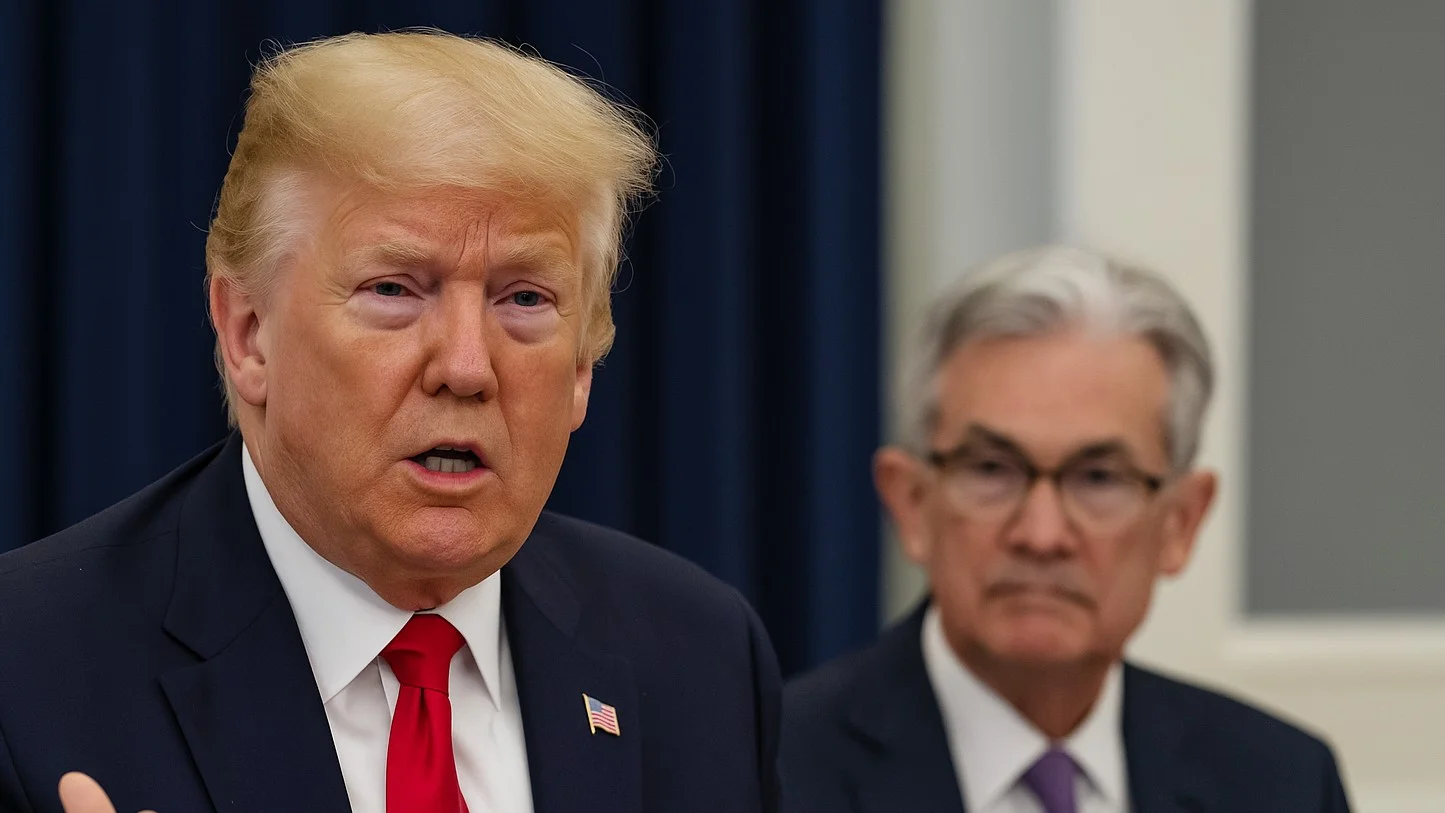
US President Donald Trump has announced that he has begun work to determine the successor to US Federal Reserve (FED) Chair Jerome Powell, whose term ends in 2026. While Trump’s move is being closely monitored in markets and political circles, it appears that the long-standing criticisms against Powell have now turned into a concrete change process.While answering questions from reporters at the NATO Summit held recently, Trump said the following about the FED Chair: “Change may be imminent. I have narrowed down who I will choose to three or four people.” This statement indicates that although Powell’s term officially ends in 2026, Trump plans to announce the change earlier.“He is not lowering interest rates fast enough”Trump’s criticisms of Powell are based on interest rate policy. The US President argues that current interest rates are high and are slowing down economic growth. Powell, on the other hand, adopts a more cautious and data-driven approach in interest rate decisions. Powell, who particularly emphasizes that the new tariffs Trump wants to implement could trigger inflation, does not look favorably on rapid interest rate cuts.This disagreement strengthens Trump’s desire to bring a more compatible name to the head of the FED in the new term. According to sources close to Trump, former FED governor Kevin Warsh, former White House economic advisor Kevin Hassett, current FED member Christopher Waller and former World Bank President David Malpass are among the candidates. In addition, billionaire investor Scott Bessent’s name is frequently mentioned behind the scenes.There are legal obstaclesHowever, Trump faces certain obstacles to making this change. According to a previous decision by the US Supreme Court, the FED Chair cannot be removed from office due to political pressure. The institution’s independence is constitutionally guaranteed. Trump is also aware of this fact. In a previous NBC interview, he stated that he did not plan to dismiss Powell before her term ends: “Why would I do that? I will have the right to replace her very soon anyway,” he said. However, Trump’s latest statements on the subject show that he is turning to a strategy of creating pressure on the markets by announcing his decision early and declaring Powell “undesirable.” This situation both brings the discussions about the independence of the FED back to the agenda and reveals that Trump is preparing to follow a more aggressive path in economic policies before the upcoming elections. While Trump’s official candidate announcement is expected in the coming weeks, the impact of this move on the markets and Powell’s attitude will be closely monitored. While the search for direction in cryptocurrencies and the traditional economy continues, the FED chairmanship has become one of the hottest agendas of 2025.
Daily Market Summary with JrKripto 25 June 2025
You can find today’s edition of “Daily Market with JrKripto” below, featuring a roundup of the most important developments from both global and local markets. Let’s analyze the broader market sentiment and latest insights together.Bitcoin fell below $100,000 at the height of weekend tensions, as the U.S. entered the Iran-Israel conflict. However, supported by strong buying momentum at the start of the new week, it managed to reclaim this critical psychological resistance level. BTC surged from a low of $98,000 to as high as $106,700. A pullback following such a sharp rise is considered normal. Holding above the $100,000 mark continues to serve as both a technical and psychological confidence threshold.As for Ethereum, as highlighted in our previous analysis, the $2,100 region remains a strong support zone. With renewed buying interest around this level, ETH quickly rallied toward the short-term target zone near $2,400. The $2,380 level is currently being monitored as support, while $2,460 stands as the next key resistance point.Crypto NewsPompliano's Procap purchased 3,724 BTC.US House Speaker Johnson: We aim to pass the tax bill by July 4.Powell: Expect interest rate cuts to continue when the time comes.Truth Social files with the NYSE for a Bitcoin and Ethereum ETF.CryptocurrenciesTop Gainers:SYRUP → Increased by 19.1% to $0.60408863.PI → Increased by 16.8% to $0.61875017.DEXE → Increased by 11.8% to $8.72.APT → Increased by 9.9% to $4.74.DOG → Increased by 7.8% to $0.00373852.Top Losers:TEL → Declined by 7.3% to $0.00396176.LPT → Declined by 6.8% to $5.89.MOCA → Declined by 6.6% to $0.06969272.VIRTUAL → Declined by 6.0% to $1.55.PLUME → Declined by 5.9% to $0.08499106.Fear Index:Bitcoin: 62 (Greed)Ethereum: 46 (Neutral)Dominance:Bitcoin: 65.33% ▲ 0.07%Ethereum: 9.13% ▼ 0.17%Daily Total Net ETF InflowsBTC ETFs: $588.60 millionETH ETFs: $71.30 millionData to Watch Today5:00 PM – Fed Chair Powell's Comments5:00 PM – New Home Sales (May): Expectation 694K, Previous 743K5:30 PM – Energy Information Administration Crude Oil Inventories: Expectation -1,200M, Previous -11,473MGlobal MarketsThe prevailing sentiment in global markets appears to be that no news is good news. The easing of global risks, the lack of escalation following the Iran-Israel ceasefire, and the diminishing likelihood of existing threats materializing have all had a positive effect on currency markets.We are following this positive atmosphere in US and European futures and Asian stock markets with a bullish trend. The VIX fear index fell to 17.5 points, indicating a sharp decline in risk perception. The S&P 500 closed the day up 1.1% and the Nasdaq up 1.4%.Federal Reserve Chair Jerome Powell delivered key remarks during his presentation to the House of Representatives, emphasizing the strength of the U.S. economy and the resilience of the labor market. He acknowledged that inflation has come down but remains above the Fed’s 2% target.Most Valuable Companies and Stock PricesMicrosoft (MSFT) → Market capitalization of $3.64 trillion, share price of $490.11, up 0.85%.NVIDIA (NVDA) → Market capitalization of $3.61 trillion, share price of $147.90, up 2.59%.Apple (AAPL) → Market capitalization of $2.99 trillion, share price of $200.30, down 0.60%.Amazon (AMZN) → Market capitalization of $2.26 trillion, share price of $212.77, up 2.06%.Alphabet (GOOG) → Market capitalization of $2.03 trillion, share price of $167.74, up 1.04%.Borsa IstanbulBorsa Istanbul recorded its highest close since June 13, ending the day with a gain of over 3%. We believe this positive momentum is likely to continue. The index will be closely watched at resistance levels of 9,550 and 9,800, while 9,250 and 9,100 are key support zones. The recent ceasefire in the Middle East also triggered strong buying activity on the BIST.From a broader perspective, however, economic indicators continue to point toward a slowdown. The Real Sector Confidence Index declined again in June. Looking ahead, sectoral inflation expectations will be released today, followed by the CBRT Monetary Policy Committee meeting summary tomorrow, and the Economic Confidence Index on Friday. Despite the macro headwinds, we expect buying sentiment in the equity market to persist in the short term.Companies with the Highest Market Value on the Istanbul Stock ExchangeQNB Finansbank (QNBTR) → Market value of 847.55 billion TL, share price of 258.75 TL, 0.00% change.Aselsan Electronics Industry (ASELS) → Market capitalization of 650.26 billion TL, share price of 149.50 TL, 4.84% increase.Türkiye Garanti Bankası (GARAN) → Market value of 483.84 billion TL, share price of 120.10 TL, 0.08% increase.Koç Holding A.Ş. (KCHOL) → Market value of 366.18 billion TL, share price of 146.70 TL, experienced a 0.81% decrease.Enka Construction and Industry (ENKAI) → Market value of 354.06 billion TL, share price of 63.35 TL, up 0.72%.Precious Metals and Currency PricesGold: 4,234 TLSilver: 45.85 TLPlatinum: 1,673 TLDollar: 39.62 TLEuro: 46.03 TLWe look forward to bringing you the latest updates again tomorrow.

Fed Chair Powell’s Message to Markets Minutes Before Congressional Presentation
US Federal Reserve (Fed) Chairman Jerome Powell reiterated in his statements ahead of his presentation to the House Financial Services Committee today that they will wait for the economic course to become clear before making changes to monetary policy. Powell’s speech came at a time when markets were pricing in the possibility of a rate cut as of July. However, the Fed Chairman went ahead of expectations by signaling that no hasty steps would be taken.According to Powell’s speech text, which was previously shared with the press, the Fed’s current policy will continue to be shaped in light of economic data and considering the balance of risks. “We need to have more information about the direction of the economy before we make any changes to our policy stance,” Powell said. This statement underlined the uncertainties regarding the effects of factors such as Trump’s new tariffs, which have been on the agenda recently, on inflation.Trump tariffs pose an inflation riskIn his presentation, Powell drew attention to the fact that the new tariffs proposed by Trump could also have an impact on the economic outlook. In particular, the tariff increases planned to be implemented this year are expected to push prices up and suppress economic activity. Powell emphasized that this situation could have temporary or permanent effects on inflation, and said, “The final level of tariffs and market expectations will determine the direction of this effect.”On the other hand, Powell said that increasing tariffs could directly affect consumer prices and that this could have restrictive effects on household spending. However, the Fed Chair stated that these developments have not yet produced clear results, and therefore it is too early to revise the central bank’s policies.Markets expect a rate cut in July, but…After the Fed kept the interest rate constant at 4.25-4.50 percent in its last meeting, all eyes turned to the next step. Fed Governor Christopher Waller had recently stated that a rate cut could be possible in July. However, Powell’s statements today show that these expectations will not be realized immediately. The Chair maintained his cautious approach by saying, “Our policy stance will remain constant unless the data and outlook change.”Balanced strategy in the fight against inflationPowell also emphasized that the US economy is in a strong position in general. Low unemployment rates and a resilient outlook for consumer spending show that the economy's fundamental indicators are healthy. However, inflation is still above the Fed's target, which requires a delicate balance in monetary policy.As a result, the FED, which kept interest rates steady as expected, sent a cautious message to the markets. Following this decision, all eyes turned to FED Chairman Jerome Powell's presentation to Congress. Powell emphasized that hasty steps would be avoided regarding interest rate cuts, and drew attention to the possible effects of the recent tariffs on inflation. The statements in the speech text reveal that the central bank is waiting for more data for a possible interest rate cut.Bitcoins and altcoins are affected by Powell's speechThe markets experienced sharp fluctuations due to geopolitical developments just before Powell's speech. While the tension between the US and Iran was seen to have created a negative atmosphere in the cryptocurrency market, the ceasefire agreement between Iran and Israel revived risk appetite. While these developments pave the way for a recovery, especially for Bitcoin and leading altcoins, Powell’s messages continue to determine the direction of the market.Critical presentation today at 17:00Powell, who will present the “Six-Month Monetary Policy Report” to Congress today and tomorrow, will answer questions from members at the House Financial Services Committee as of 17:00 GMT. In the text published before the presentation even began, Powell is seen stating that increasing tariff uncertainty could weaken economic activity and create upward pressure on prices.
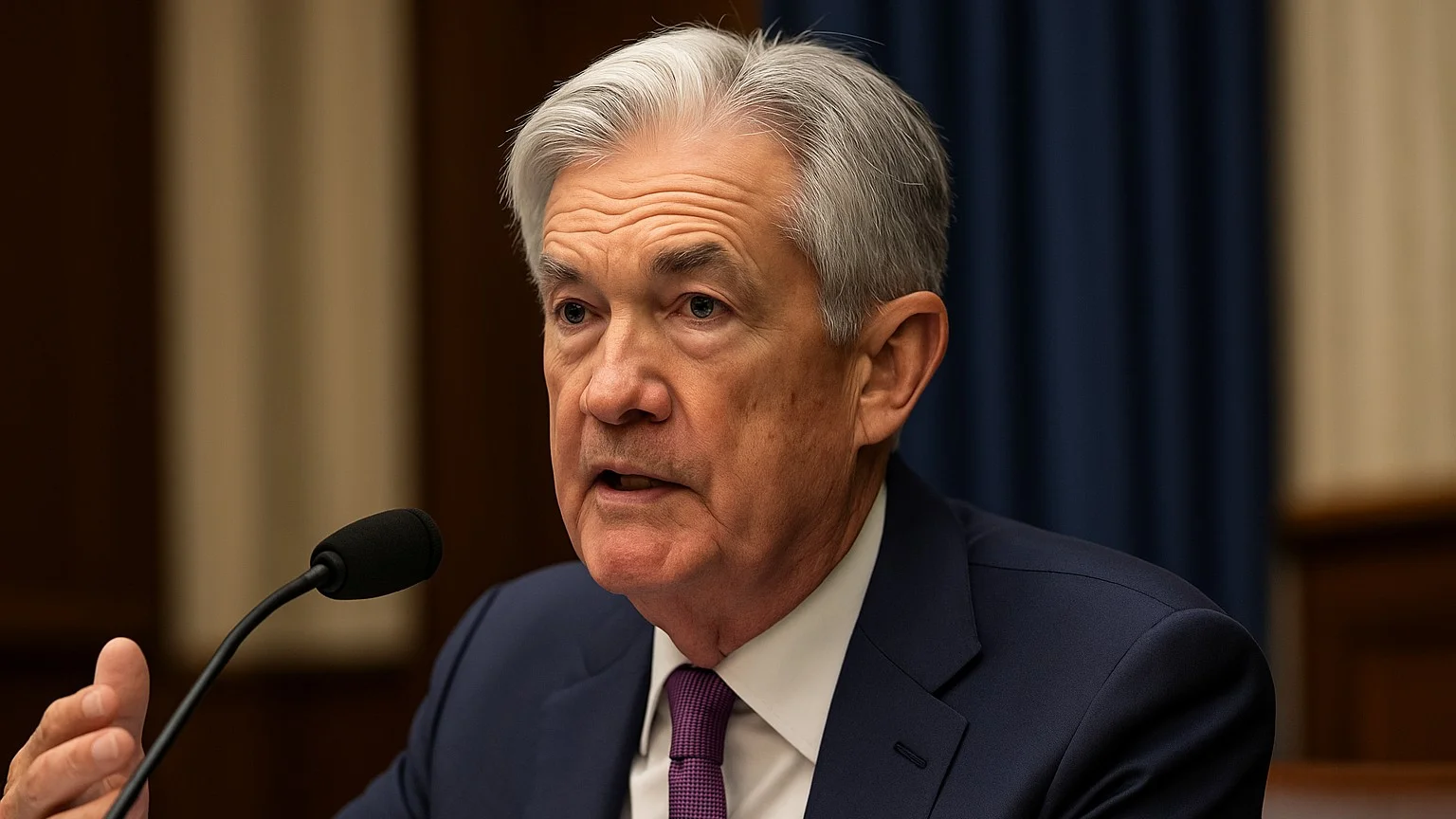
Daily Market Summary with JrKripto 24 June 2025
You can find today’s edition of “Daily Market with JrKripto” below, featuring a roundup of the most important developments from both global and local markets. Let’s take a closer look at the overall market sentiment and the latest insights together.Bitcoin dipped below the $100,000 mark at the height of geopolitical tensions over the weekend, following the U.S.'s entry into the Iran–Israel conflict. However, strong buying momentum at the start of the new week helped BTC reclaim this critical psychological threshold. After falling to a low of $98,000, Bitcoin surged to as high as $106,000. A brief pullback after such a sharp rally is considered natural. Holding above the $100,000 level continues to serve as both a technical and psychological support line.As for Ethereum, the $2,100 zone highlighted in our previous analysis has proven to be a solid support area. With buying interest emerging from this level, ETH quickly climbed to the short‑term target range around $2,400. The $2,380 mark is currently being watched as near‑term support, while $2,430 stands as the closest resistance level.Crypto NewsIran and Israel have declared a 12‑hour ceasefire.Trump on the Fed interest rate: “We should be at least two to three points lower.”Goolsbee: “If the uncertainty over tariffs is removed, we should continue to cut rates.”Hassett: “There is no reason for the Fed not to cut rates.”Trump Media has approved a $400 million share buyback.Strategy purchased 245 #Bitcoin at an average price of $105,856.CryptocurrenciesTop Gainers:SEI → increased by 38.5% to $0.28162748.KTA → increased by 31.4% to $0.76449666.TEL → increased by 24.4% to $0.00427768.JASMY → increased by 24.4% to $0.01407185.DOG → increased by 23.0% to $0.00340695.Top Losers:VENOM → declined by 2.6% to $0.16444289.USDB → declined by 1.8% to $0.98318051.LGCT → declined by 1.2% to $1.70.BTSE → declined by 1.2% to $1.67.XAUT → declined by 1.0% to $3,336.58.Fear Index:Bitcoin: 54 (Neutral)Ethereum: 35 (Fear)Dominance:Bitcoin: 65.36% ▲ 0.02%Ethereum: 9.06% ▼ 0.25%Daily Total Net ETF InflowsBTC ETFs: $350.60 millionETH ETFs: $100.70 millionData to Watch Today• 5:00 p.m. – Conference Board (CB) Consumer Confidence (June)Expectation: 99.4 | Previous: 98.0• 5:00 p.m. – Fed Chair Powell's CommentsGlobal MarketsU.S. stock markets closed the day in positive territory following a brief ceasefire between Iran and Israel. Iran’s retaliatory actions were perceived as largely symbolic and, as a result, were not fully priced in by the markets. These developments signaled that the conflict was unlikely to escalate further, helping ease investor anxiety.The S&P 500 rose by 0.96%, the Nasdaq gained 0.94%, and the Dow Jones advanced 0.89%.Meanwhile, the VIX fear index declined by 0.8 points to 19.8, further confirming our comments about the easing of market tension.Oil prices saw a sharp decline, dropping nearly 9%, while bullish sentiment took hold in the futures markets.Most Valuable Companies and Stock PricesMicrosoft (MSFT) → Market capitalization of $3.61 trillion, share price of $486.00, up 1.80%.NVIDIA (NVDA) → Market capitalization of $3.52 trillion, share price of $144.17, up 0.22%.Apple (AAPL) → Market capitalization of $3.01 trillion, share price of $201.50, up 0.25%.Amazon (AMZN) → $2.21 trillion, $208.47, down 0.58%.Alphabet (GOOG) → $2.01 trillion, $166.01, down 1.03%.Borsa İstanbulAccording to data released yesterday, the number of foreign tourists visiting Turkey in May declined by 1.8% year‑over‑year. In the first five months of the year, total foreign tourist arrivals dropped by 1% to 15.6 million.The spike in geopolitical tensions in the Middle East over the weekend appears to have eased in the short term, following recent statements and developments. If global tensions remain subdued, expectations for a potential interest rate cut by the Central Bank of the Republic of Turkey (CBRT) in July could gain traction. This could potentially support upward momentum on Borsa İstanbul.Today, attention will turn to the two‑day NATO Leaders Summit, which will also be attended by President Erdoğan. The BIST 100 index may attempt to move toward the 9,400 level during the session.Companies with the Highest Market Value on the Istanbul Stock ExchangeQNB Finansbank (QNBTR) → 854.25 billion TL, share price of 263.00 TL, up 3.95%.Aselsan Electronics Industry (ASELS) → 667.13 billion TL, share price of 141.10 TL, down 4.08%.Türkiye Garanti Bankası (GARAN) → 484.26 billion TL, share price of 119.80 TL, up 3.99%.Koç Holding A.Ş. (KCHOL) → 370.24 billion TL, share price of 147.40 TL, up 2.08%.Turkish Airlines A.O. (THYAO) → 354.31 billion TL, share price of 266.25 TL, up 5.24%.Precious Metals and Currency PricesGold: 4,240 TLSilver: 46.02 TLPlatinum: 1,681 TLDollar: 39.66 TLEuro: 45.99 TLWe look forward to bringing you the latest updates again tomorrow.

FET Comments and Price Analysis 24 June 2025
FET Technical AnalysisLooking at the FET daily chart, we can see a clear descending channel pattern which has worked properly since the beginning of 2024. Falling Channel Structure The price of the coin is currently trading in the middle band of this descending channel and we have a significant support zone around $0.65–$0.70. The price breaking down this important support zone is trading above the support area again. The price can go down first to the level of $0.53 in case of daily closing below the important level $0.65 and then it can retreat to the level of around $0.33 which is the channel trend support.The level of $0.87 is only possible if the price closes above the level of $0.70 in terms of upward movements. Above this price level, we have the level $1 which is the trend resistance level. Technically, it is highly possible that a breakout will occur in case of next trend test.These analyses, not offering any kind of investment advice, focus on support and resistance levels considered to offer trading opportunities in the short and medium term according to the market conditions. However, the user is responsible for their own actions and risk management. Moreover, it is highly recommended to use stop loss (SL) during the transactions.