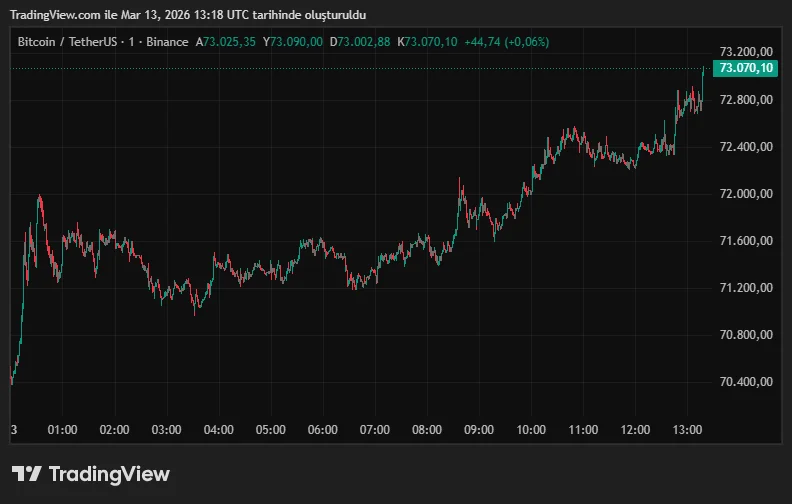
Inflation data from the US, closely followed by global markets, triggered activity in the cryptocurrency market. The Personal Consumption Expenditures (PCE) data, one of the Federal Reserve's (Fed) most important inflation indicators, came in below expectations, helping Bitcoin regain upward momentum. Following the release of the data, the leading cryptocurrency, Bitcoin (BTC), quickly approached the $73,000 level, attracting attention.
According to data published by the US Bureau of Economic Analysis (BEA), PCE inflation in February was 2.8% year-on-year. Market expectations were at 2.9%. Thus, the inflation data came in slightly below expectations. On a monthly basis, the PCE index increased by 0.3%, presenting a picture in line with expectations.
On the other hand, core PCE data, which excludes volatile items such as energy and food, was announced at 3.1% year-on-year. This data aligned with market expectations and remained close to its highest levels in the last two years. Core PCE's monthly increase was also in line with expectations at 0.4 percent. The data shows that headline inflation has decreased somewhat, but core inflationary pressure remains strong.
The decrease in headline PCE from 2.9 percent in January to 2.8 percent in February is considered a positive development, albeit limited, for the Fed's fight against inflation. However, the fact that core PCE continues to remain above 3 percent reveals that the Fed is still quite far from its 2 percent inflation target.
These data are an important signal for the markets before the Federal Open Market Committee (FOMC) meeting next week. Analysts believe that it is highly likely that the Fed will keep the policy interest rate unchanged in light of the current data. US President Donald Trump's calls for an urgent interest rate cut are not seen as a decisive factor in the central bank's policies at this stage.
Bitcoin experienced a rise
Following the release of the inflation data, there was a rapid price movement in the cryptocurrency market. Bitcoin accelerated its rise following the data release, climbing to the $73,000 level. Having surpassed $72,000 during the day, BTC saw an increase of approximately 3% following the announcement. Analysts note that this rise in Bitcoin was not limited to the inflation data alone, but was also supported by strong buying in derivative markets. In particular, increased positions in futures markets are said to have strengthened BTC's upward movement.
In addition, inflows into spot Bitcoin ETFs are among the factors increasing optimism in the market. According to the latest data, approximately $54 million in new investments were made into Bitcoin ETFs in just one day. The continued interest of institutional investors plays a significant role in supporting the Bitcoin price. However, geopolitical risks on the cryptocurrency market have not completely disappeared. The ongoing tension and possibility of war between the US and Iran continue to create uncertainty in global markets. According to analysts, the tension between the two countries is pushing oil prices higher, and this could create new pressure on inflation through energy costs. The possibility that rising oil prices could fuel inflation again may lead the Fed to maintain tight monetary policy for a longer period. This is considered one of the factors that could create temporary pressure on cryptocurrencies, which are seen as risky assets.