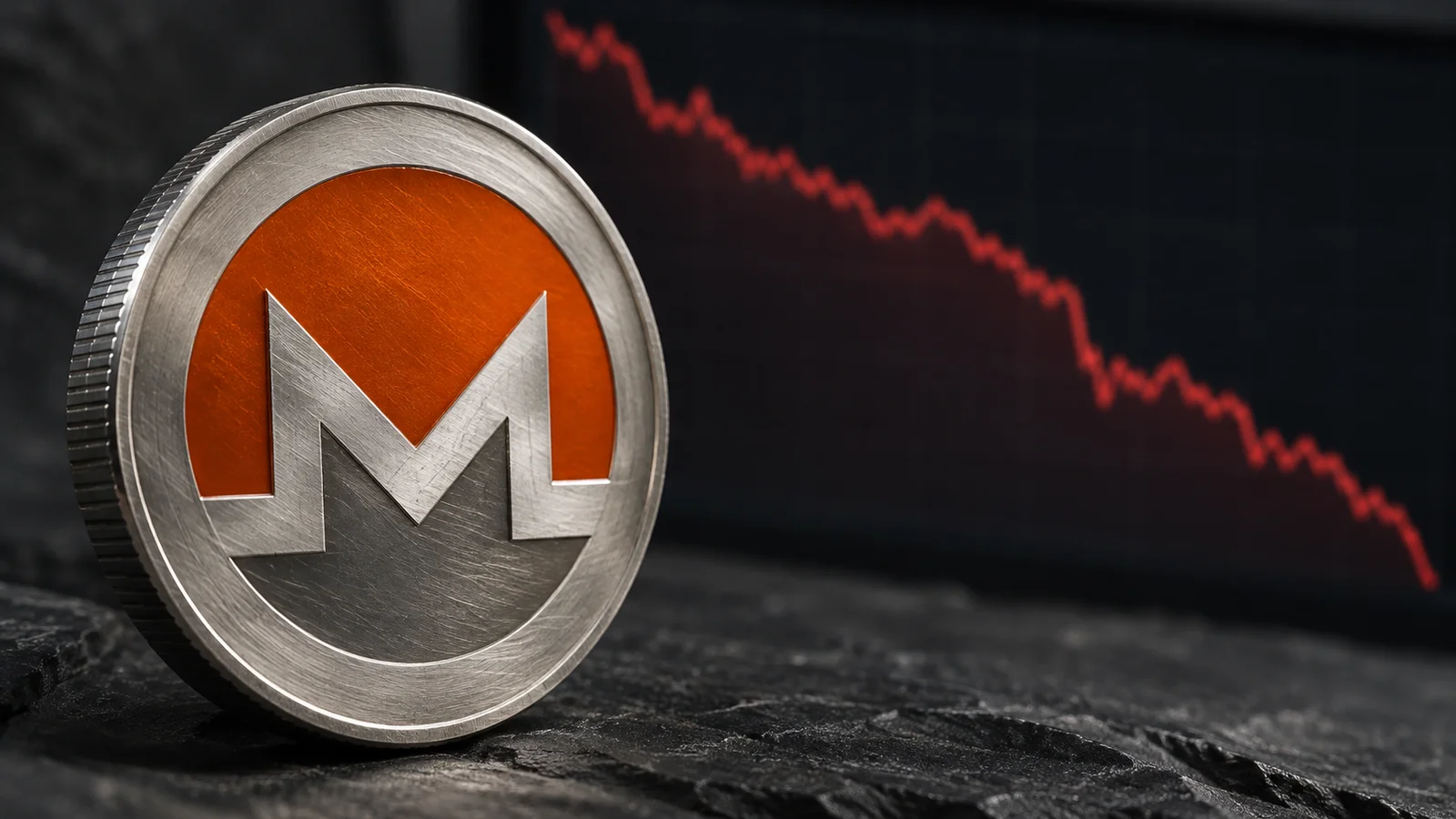
Monero (XMR) fell more than 11% on Thursday, November 26, its steepest one-day decline since June 4. The price of Monero fell as low as $430 during the day. The sell-off came as KuCoin became the second exchange after MEXC to announce in November that it would end spot trading in the privacy-focused cryptocurrency.
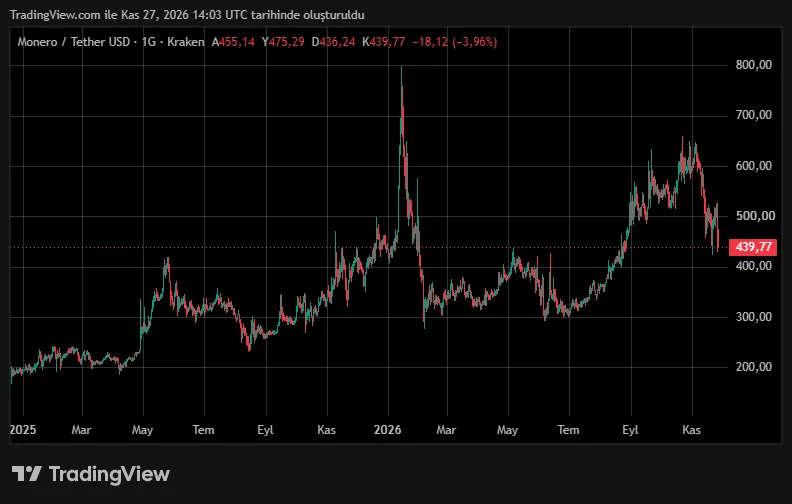
Monero’s November losses reach 22% despite a brief rebound
Monero recovered some of Thursday’s losses early on Friday, November 27. Market data showed XMR trading near $464, about 8% above Thursday’s low, before it slipped back to $430 later that morning.
Despite the brief rebound, XMR’s losses for November reached 22%. Most other privacy coins, including Zcash (ZEC), also lost ground. For Monero, the sell-off coincided with the loss of another major venue where investors could buy and sell XMR.
Two major exchanges announce an end to XMR trading in November
MEXC was the first to act. On November 13, it delisted its USDT-margined XMR perpetual futures contract. Spot trading continued for four more days, ending at 09:00 UTC on November 17.
On November 26, KuCoin announced that it would remove all four of its Monero spot trading pairs. Trading in XMR/USDT, XMR/USDC, XMR/ETH and XMR/BTC will end at 08:00 UTC on Monday, November 30. The exchange will automatically cancel any orders still open at that time.
Users holding XMR on KuCoin have more time to withdraw their funds. The exchange said XMR deposits would remain closed and that it plans to keep withdrawals open until 08:00 UTC on December 31. KuCoin may suspend withdrawals earlier if problems on the Monero network disrupt transfers.
Monero trading is concentrated on fewer exchanges
The two November decisions further narrow access to Monero on major exchanges. In a February report, blockchain analytics firm TRM Labs noted that several platforms, including Binance, Kraken and OKX, had delisted XMR or restricted trading in previous years. The firm cited the difficulty of tracing Monero transfers and concerns over regulatory compliance as factors behind those decisions.
According to TRM Labs, investors can trade Monero on far fewer exchanges than Bitcoin or major dollar-backed stablecoins. XMR liquidity is increasingly concentrated on offshore platforms. The firm said this fragmented market leaves Monero more susceptible to sharp price swings.
Despite the decline in exchange access, transaction activity on the Monero network in 2024 and 2025 remained well above the levels seen in the early part of the 2020–2021 period. TRM Labs said that, despite month-to-month fluctuations, the figures point to steady demand for Monero’s privacy features.
Eigenwallet, which lets users swap Bitcoin and Monero without a centralized exchange, also released a new version this week. The November 23 update enabled encrypted backups by default for new swaps initiated through the app. Users who lose the swap records stored on their device can now recover that data using their wallet’s recovery phrase.