
One of the most critical days of the month in the crypto derivatives markets has passed. Bitcoin and Ethereum options contracts, totaling approximately $9.8 billion, expired on April 24th, with prices closing above their "max pain" levels. This indicates that the overall market trend remains upward, while the decrease in volatility has led to a more cautious interpretation of the rally's nature. According to the data, expiry transactions covered approximately 109,000 Bitcoin contracts, reaching a total nominal value of $8.55 billion. On the Ethereum side, 563,000 contracts stood out, corresponding to approximately $1.32 billion. This was recorded as the highest options closing price of April. The "max pain" level, frequently referenced in the options market, is known as the price point where investors suffer the greatest possible losses. While Bitcoin was trading around $72,000, the spot price at expiry was noteworthy at approximately $77,900. This difference indicated that the market was exhibiting strength beyond expectations.
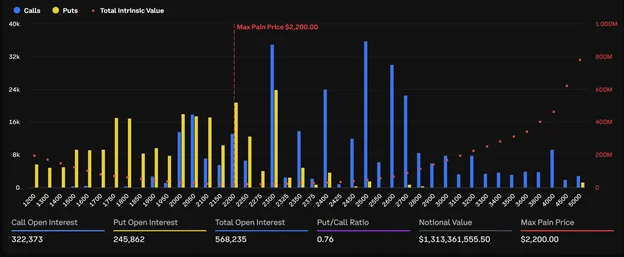
A similar picture emerged for Ethereum. With its maximum price around $2,200, the ETH price traded at approximately $2,315.
The put/call ratio in the options data also provided important signals regarding market sentiment. While this ratio showed a balanced appearance at 0.93 for Bitcoin, it remained at 0.72 for Ethereum, indicating a stronger bullish outlook. The significant prominence of call options, particularly on the Ethereum side, clearly revealed investors' expectations of a price increase.
The open position distribution also supported this trend. While call and put contracts were quite close in Bitcoin, the call side showed a clear dominance in Ethereum. This suggests that there is a broader market optimism, rather than just short-term speculation.
Market remains strong, volatility declines
On the other hand, the decrease in implied volatility despite the rise in prices offered an important clue about the character of the market. According to analysts, volatility in Bitcoin options fell below 40%, while in Ethereum it dropped to around 60%. While volatility is normally expected to increase with price increases, the opposite picture emerged this time.
This divergence shows that the current rise is supported by a more balanced capital flow rather than a sudden and speculative movement. In other words, there is a more controlled and institutionally focused entry into the market rather than aggressive leverage use. This is read as a signal that the rally may be more sustainable.
In the coming period, eyes are turned to the new expiry dates. Approximately 12% of the existing open positions will expire at the end of May. The real critical threshold will be the quarterly closing at the end of June. It is expected that approximately 24% of the total positions will be resolved during this period. Analysts believe that the June expiry date will be more decisive in terms of market direction. If macroeconomic pressures ease towards the middle of the year, levels around $78,000 could become a strong support area for Bitcoin. However, if the current downward trend in volatility reverses, sharper price fluctuations may occur.