US President Donald Trump signed an executive order that could pave the way for crypto and fintech firms to have direct access to the Federal Reserve's (Fed) payment infrastructure. The order directs the Fed to review its current regulatory framework and consider new access options for non-bank entities.
120-Day Deadline for the Fed
US President Donald Trump, in an executive order signed on Tuesday, directed the Federal Reserve to conduct a comprehensive review of access to payment infrastructure for fintech and crypto companies.
The order, titled "Integration of Financial Technology Innovation into Regulatory Frameworks," requests that the federal government remove regulations deemed to be "overburdening" fintech innovation. Companies operating digital assets and blockchain-based services are also included in this assessment.
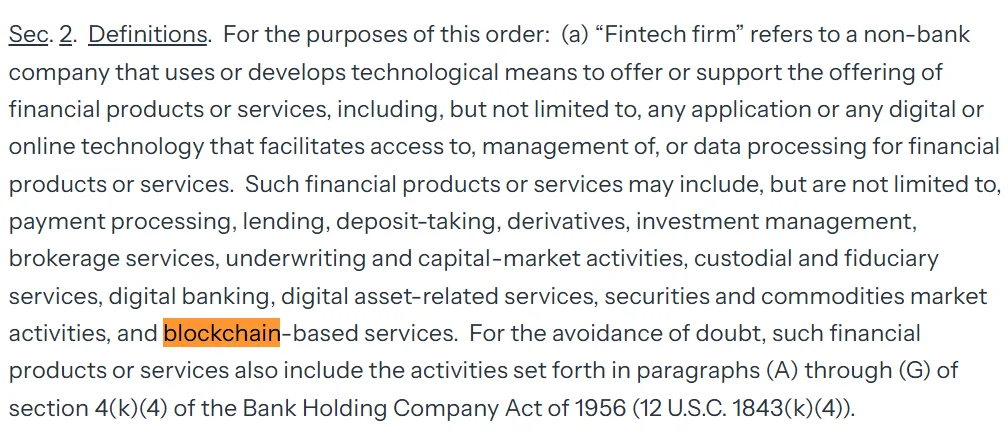
The Fed's current regulatory framework grants reserve banks the authority to approve or reject payment system access applications. Under the Federal Reserve Act, this access is generally limited to licensed depositories; therefore, some crypto firms have had to apply for a federal charter license.
Trump's executive order asks the Fed to take two concrete steps: to review the current framework regulating access to reserve bank payment accounts and services, and to evaluate options for expanding this access to fintech and crypto firms. The order also demands that the 12 Federal Reserve banks clarify, from a legal standpoint, whether they can independently grant access to payment accounts. The Fed is expected to submit a report on this within 120 days. These accounts are known as "master accounts." If crypto firms are granted this access, companies will be able to connect directly to the core US payment infrastructure without needing intermediary banks.
The Kraken Spark
The issue has been the subject of intense debate since March, when the Kansas City Fed opened a "limited purpose account" for Payward, the parent company of the crypto exchange Kraken. The account provides access to high-value dollar swaps for institutional clients; however, it includes restrictions such as the non-accrual of interest on reserves. Kraken Co-CEO Arjun Sethi described the decision as "the meeting of crypto infrastructure and sovereign financial rails." The approval drew strong criticism from the Bank Policy Institute, which acts on behalf of major banks. The institute criticized the Fed for announcing the decision before finalizing its policy framework for "narrow" master accounts, which the Fed publicly released in December. Narrow master accounts are defined as central bank accounts that lack standard features such as earning interest on reserves or borrowing from the discount window, and provide limited access to payment systems. A parallel movement is underway in Congress. Last month, Democrat Sam Liccardo and Republican Young Kim jointly introduced the Payments Access and Consumer Efficiency Act (PACE), which would allow non-bank entities access to Fed payment services under certain conditions. While still in its initial stages, the bill has already garnered support from the cryptocurrency sector.