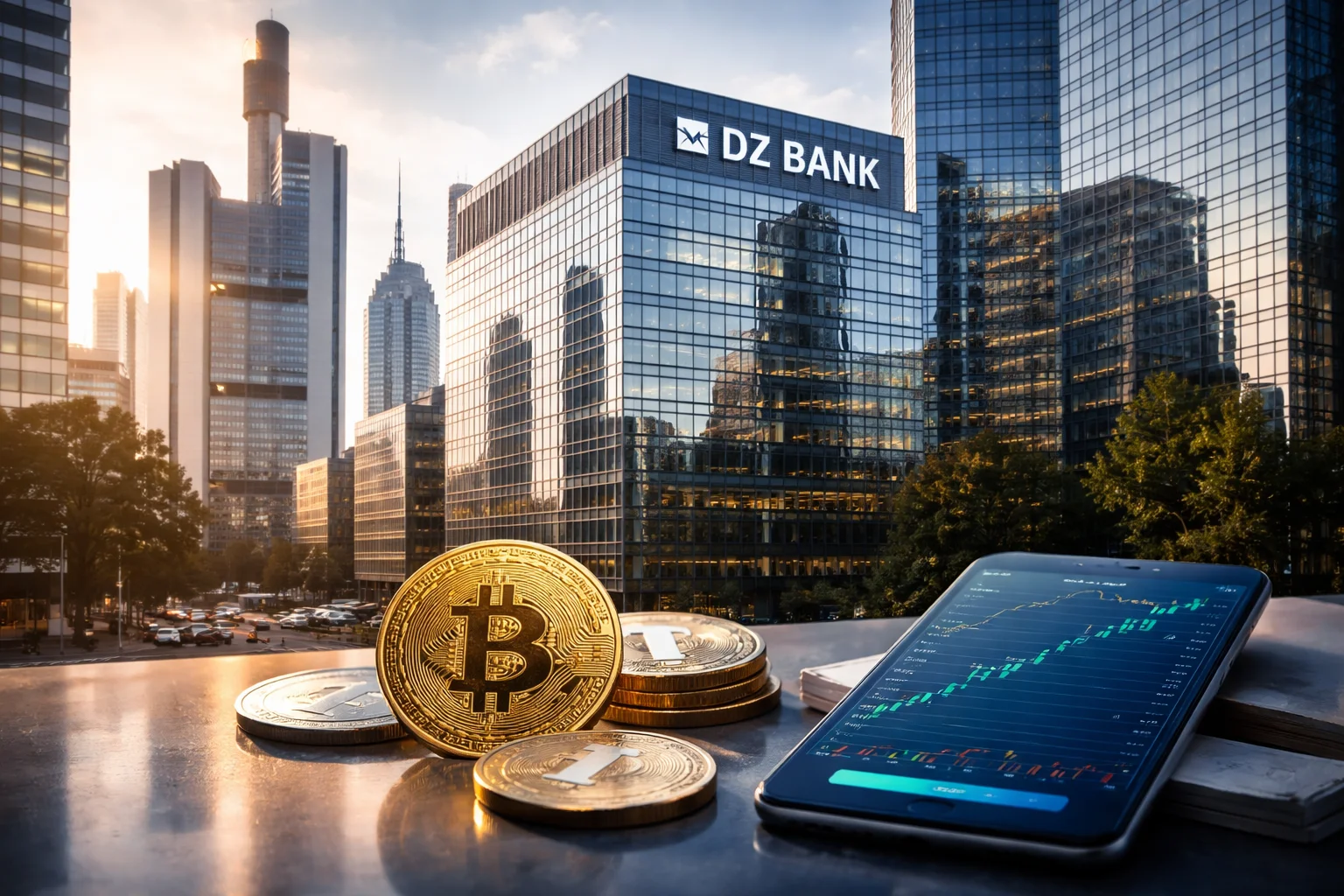
DZ Bank, Germany's second-largest bank, has crossed a significant threshold under the European Union's MiCA framework for crypto assets. With approval from Germany's financial regulator, BaFin, the bank is preparing to offer crypto services through its digital asset platform, "meinKrypto." This step is seen as a critical milestone in the integration of crypto assets into the retail banking system in Germany.
MeinKrypto is being integrated to VR Banking app
According to DZ Bank, meinKrypto offers a wallet structure integrated into the VR Banking application and is particularly aimed at individual investors who want to make their own decisions and do not seek guidance or investment advice. The platform's technical infrastructure was developed by Atruvia, the IT service provider of the cooperative banking group. This allows crypto transactions to be carried out within the mobile banking environment that users are already familiar with. Multiple regulated institutions play a role in the platform's operational structure. Crypto asset custody is provided by Stuttgart Stock Exchange Digital, while transaction execution is carried out through EUWAX AG. This structure allows for the centralized management of risk management and compliance processes. It is specifically emphasized that MeinKrypto is not part of the classic investment advisory services offered to retail customers.
Initially, transactions in Bitcoin, Ether, Litecoin, and Cardano will be permitted. However, each Volksbank and Raiffeisenbank will be able to independently decide whether or not to offer this service. So, while MiCA approval applies to DZ Bank, each cooperative bank must also notify BaFin and choose to participate in the system. This structure provides banks with the flexibility to act according to their own risk profiles and customer strategies.
DZ Bank's interest in crypto is not new. In 2023, the bank launched a crypto custody platform for institutional clients, and in December 2024, it implemented pilot applications for meinKrypto. Board member Souad Benkredda previously stated that the bank aims to offer a wider range of crypto assets over time. This expansion is planned to proceed gradually, depending on regulatory requirements.
A similar trend is observed across the sector. DekaBank, part of the Sparkassen group, launched digital asset services last year, initially limited to corporate clients. LBBW, also within the same network, partnered with Bitpanda in the second quarter of 2024 for crypto custody services. These examples demonstrate a cautious but steady approach to cryptocurrency by traditional financial institutions in Germany. What sets DZ Bank apart is its focus on individual customers. By eliminating the need for private key management or dealing with external cryptocurrency exchanges, the bank aims to make crypto transactions resemble the classic online banking experience. This approach aligns with the principles of transparency and investor responsibility highlighted by MiCA regulations. According to a study published in September 2025 by the German Association of Cooperative Banks, more than a third of cooperative banks in the country plan to implement the meinKrypto solution in the near future. This interest highlights the growing demand for regulated crypto access embedded within the banking system. DZ Bank aims to be the central actor in this process, providing the infrastructure, regulatory framework, and technical foundation.