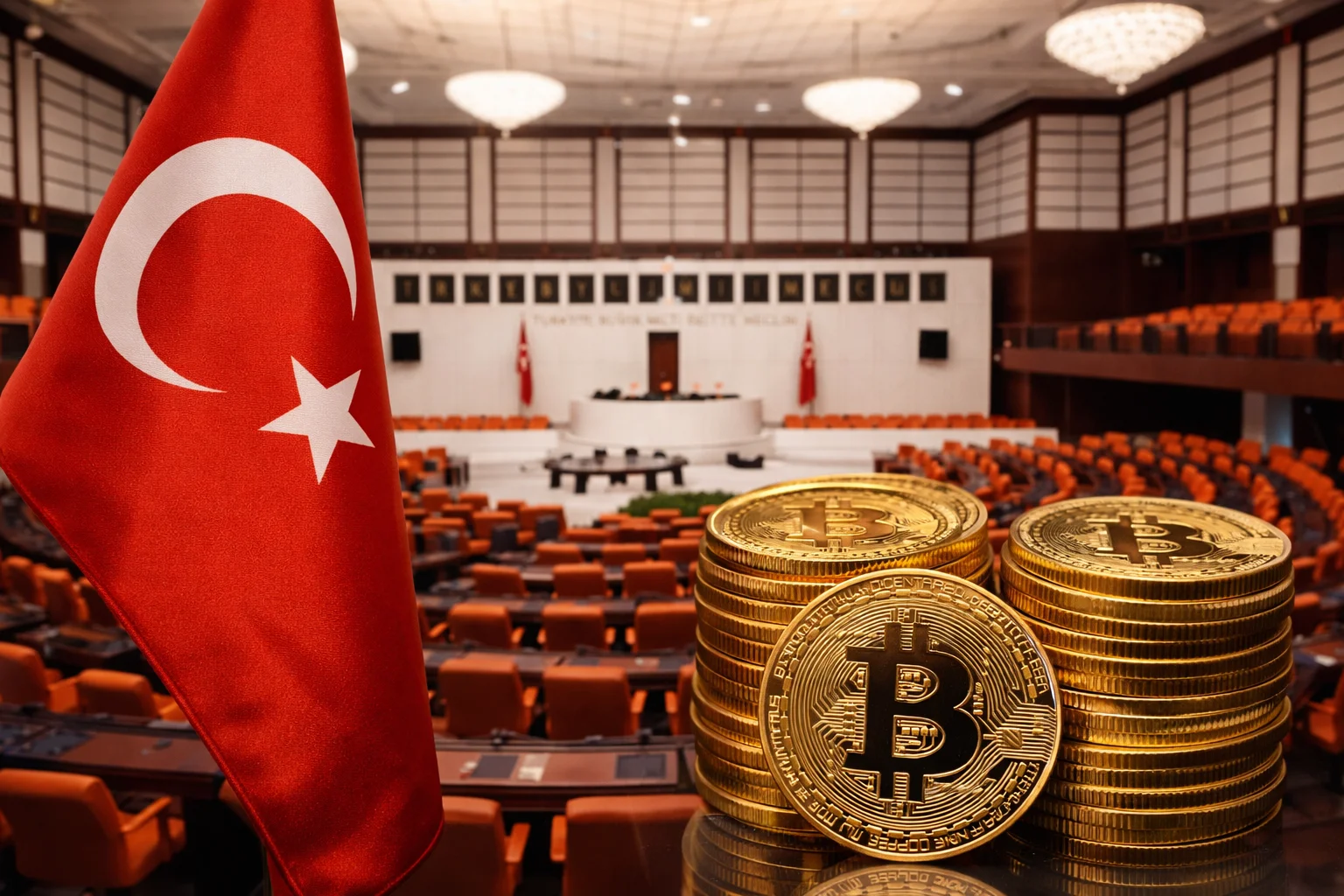
As discussions around cryptocurrency regulations in Turkey continue, a last-minute development has drawn attention. AK Party Member of Parliament Ömer İleri announced that certain provisions related to crypto assets in the bill currently being discussed in the Turkish Grand National Assembly (TBMM) are being reconsidered.
İleri stated that, taking into account public sensitivities, efforts are ongoing to revise the relevant articles through amendment proposals. He emphasized that work on restructuring these provisions is still in progress.
İleri’s remarks come amid growing debate in recent days over the proposed crypto tax regulation. The statement also underlined that the process is not yet finalized and that the public will be informed once the work is completed.
Crypto tax regulation back on the table
The bill on the parliamentary agenda introduces a tax on crypto asset transactions. Accordingly, a “crypto asset transaction tax” is planned to be applied to crypto sales and transfers. The proposed rate is 0.3 per thousand (0.03%), calculated based on either the transaction amount or the market value at the time of transfer.
Another notable aspect of the proposal is that no expenses or tax deductions will be allowed from the tax base. Additionally, the tax will be calculated monthly and must be declared and paid by the 15th of the following month. This could create a significant operational burden for crypto asset service providers.
The regulation is not limited to transaction tax alone. It also includes comprehensive provisions on the taxation of income derived from crypto assets. Under the proposal, a 10% withholding tax is planned on income generated through platforms. This deduction would apply regardless of the investor’s status.
What do the sector and investors expect?
Companies operating in the crypto market and individual investors are closely watching the final form of the regulation. Tax rates, implementation details, and obligations imposed on platforms are seen as critical factors for the future of the sector.
İleri’s statement signaled that changes may be made to the current draft, offering some relief to the market. The fact that public concerns are being taken into account has strengthened expectations that the regulation could take a more balanced shape. However, it remains difficult to draw firm conclusions until the final text is revealed.
Meanwhile, for the regulation to enter into force, it must first be approved by the TBMM General Assembly and then published in the Official Gazette. Following this process, implementation details are expected to be determined by the Ministry of Treasury and Finance.
Tax rates could change
The proposal grants broad authority to the President to adjust tax rates. Accordingly, the rates can be reduced to zero or increased several times over. This flexibility suggests that a more dynamic tax policy could be implemented depending on market conditions.
Similarly, the Ministry of Treasury and Finance will be authorized to determine the procedures and principles of implementation. This indicates that the technical details of the regulation will continue to evolve over time.