BNP Paribas, one of Europe's largest banks, has taken a notable step by expanding its strategy towards crypto assets. The bank is preparing to offer its clients six new exchange-traded notes (ETNs) that provide indirect investment opportunities in digital assets such as Bitcoin and Ethereum. These products, which will be accessible starting March 30th, are considered a development that further strengthens the bridge between traditional finance and the crypto ecosystem.
The new ETNs are being issued by major asset managers such as BlackRock, Fidelity, Invesco, and WisdomTree. This allows BNP Paribas to offer its clients not only its own products but also solutions from players with strong risk management and institutional credibility in the sector. With this move, the bank is opening an alternative channel for investors who do not wish to directly purchase crypto assets.
A new but controlled door for investors
These products are subject to significant limitations under the European Union's financial regulations. In particular, the MiFID II framework prioritizes investor protection and makes access to such products subject to certain conditions. BNP Paribas, in line with this, requires individual investors to undergo detailed suitability tests before accessing these products. The aim is to measure whether investors truly understand the risks of the highly volatile crypto markets.
ETNs offer returns indexed to the price movements of assets such as Bitcoin or Ethereum, rather than directly buying these assets. However, there is a critical difference here. Unlike physically secured ETFs, ETNs are structured as unsecured debt instruments. This means that investors are exposed not only to fluctuations in the crypto market but also to BNP Paribas' credit risk.
The bank describes these products as "indirect and regulated crypto access," while specifically emphasizing that it does not directly recommend crypto assets.
Regulations are a catalyst, not an obstacle
BNP Paribas' move coincides with a period of changing regulatory approaches to crypto globally. The impending implementation of the MiCA regulation in Europe offers a clearer playing field for banks. Similarly, in the UK, the Financial Conduct Authority's (FCDA) plan to re-authorize crypto ETNs in 2025 has paved the way for these products to reach retail investors.
With a total market capitalization of approximately $2.5 trillion and Bitcoin's dominance exceeding 50%, the crypto ecosystem has moved beyond the question of "should we enter?" for institutional players. The real question is how these assets will be integrated into existing financial systems.
BNP Paribas's move is precisely an answer to this question. The bank not only offers investment products but also develops tokenized funds on the Ethereum network and is working on a euro-based stablecoin project. This stablecoin initiative, planned to be launched this year, specifically targets use in areas such as cross-border payments and securities transactions.
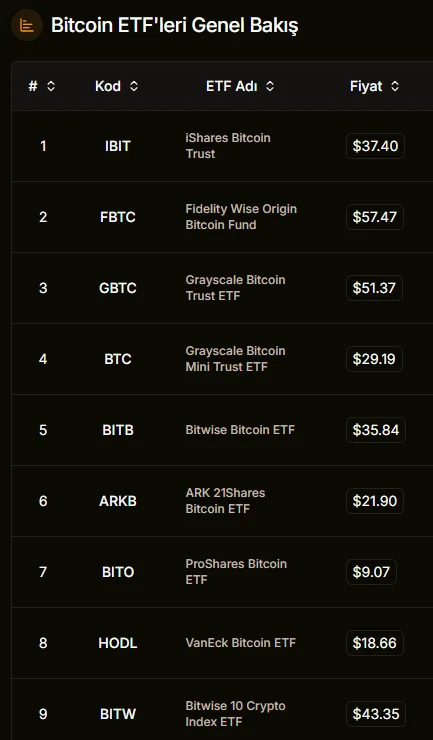
Meanwhile, Bitcoin ETFs continue to be a popular choice for many firms.