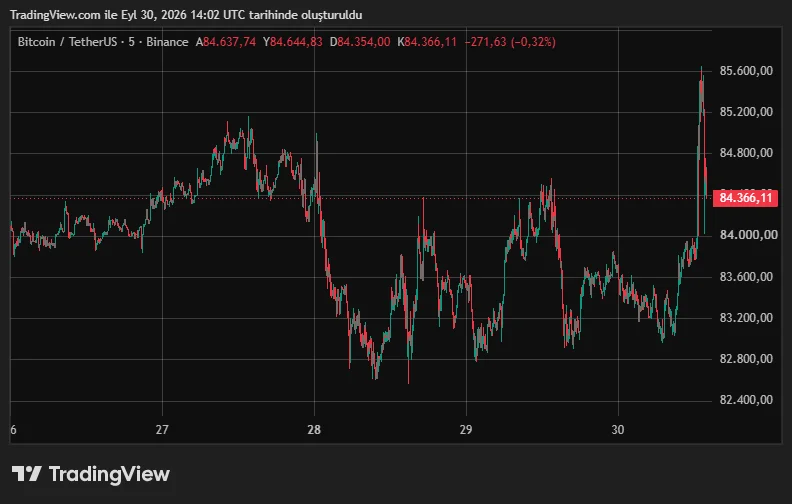
Bitcoin climbed toward $86,000 following the release of US inflation data. Below-forecast core PCE figures lowered expectations for another Fed interest rate hike.
According to market data, Bitcoin gained approximately 2.4% following the announcement, trading near $86,000. However, it later retreated to just above $84,000, surrendering part of its initial gains.
Consequently, US economic releases took center stage in the crypto market’s macroeconomic outlook. Investors assessed the inflation surprise alongside growth and employment figures.
Bitcoin rises following PCE data
The US core PCE price index increased 0.2% monthly in August. Its annual increase reached 3%.
Forecasts had pointed to increases of 0.3% monthly and 3.3% annually. Therefore, both readings came in below market expectations.
Meanwhile, the headline PCE price index rose 0.3% from the previous month. The Fed closely monitors PCE measures when assessing price pressures.
Gains in traditional markets accompanied Bitcoin’s advance following the release. However, available data cannot attribute Bitcoin’s entire move to a single announcement.
Alongside interest rate expectations, institutional demand and investor positioning also influence crypto prices. Therefore, the inflation release represented one important factor shaping the day’s trading.
Shifting Fed expectations support crypto
Following the releases, markets priced roughly a 37% probability of an October Fed rate hike. Consequently, expectations for unchanged interest rates gained greater weight.
The Fed’s September rate hike had increased the importance of incoming data. Investors now seek clarity on the pace of further tightening.
Falling expectations for additional rate hikes can create more favorable conditions for risk assets. Higher interest rates can encourage investors to favor interest-bearing investments.
Conversely, easing tightening pressure can support demand for assets such as Bitcoin. However, this relationship does not produce equally strong price movements after every economic release.
Moreover, a potential October pause does not imply an imminent interest rate cut. Markets currently continue to adjust their expectations for the timing of another increase.
Inflation revisions draw attention
Changes to July’s figures also matter when assessing August’s results. The Bureau of Economic Analysis lowered July’s annual core PCE increase from 3.3% to 3%.
Consequently, July and August show identical annual increases in the updated series. August’s main surprise came from undershooting the market’s 3.3% forecast.
This distinction separates inflation’s month-to-month trajectory from its performance against expectations. Both the level and persistence of inflation will matter in subsequent Fed assessments.
Economic strength keeps the rate debate alive
The US economy recorded annualized growth of 2.2% in the second quarter. The previous estimate had indicated growth of 1.5%.
Additionally, ADP reported that private employers added 90,000 jobs in September. This exceeded August’s revised increase of 36,000.
Real personal spending also rose 0.6% monthly in August. The result showed that consumption remained resilient despite elevated costs.
Strong growth can ease concerns about an economic slowdown. However, robust demand could also encourage the Fed to remain cautious about inflation.
Crypto investors will next focus on employment data and comments from Fed officials. Subsequent trading will reveal whether Bitcoin can retain its remaining gains.