
Standard Chartered has set a $2 price target for Ethena’s governance token, ENA, by the end of 2028. The bank’s assessment highlights how revenue generated through USDe’s growth could fund ENA buybacks. Its outlook centers on the intended link between the protocol’s business activity and demand for the token.
The assessment, prepared by Geoffrey Kendrick, the bank’s head of digital assets research, focuses on Ethena’s efforts to diversify its revenue sources. The bank believes growth in stablecoin adoption, derivatives markets, and asset tokenization could support the project.
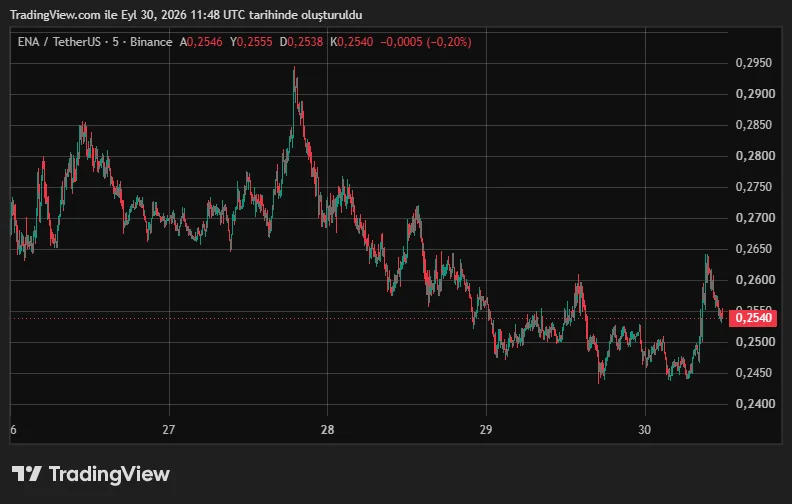
As of September 30, ENA is trading at around $0.25.
USDe Supply Expected to Grow Roughly Eightfold
Standard Chartered’s scenario projects USDe supply reaching approximately $40 billion by the end of 2028. Reports covering the research put the starting level at around $4.9 billion. This forecast would require supply to grow roughly eightfold in just over two years.
USDe is Ethena’s synthetic dollar product, designed to maintain its value against the US dollar. The protocol aims to hedge against price movements by offsetting its backing assets with derivatives positions. Users who stake USDe can receive a share of the protocol’s yield through sUSDe.
USDe and ENA serve different functions within this structure. While USDe’s supply reflects adoption of the product, the proposed ENA buyback mechanism aims to translate revenue into demand for the token. The bank’s bullish outlook depends on these two areas developing together.
First USDe Supply Threshold for ENA Buybacks Set at $7.5 Billion
Ethena’s governance proposal dated August 27 outlines a tiered model linking buybacks to USDe supply. The first threshold is set at $7.5 billion. As supply grows, the share of protocol revenue allocated to the mechanism would also increase.
Once the first threshold is reached, the proposal aims to direct 95% of net revenue paid to the Ethena Foundation toward ENA buybacks. The framework covers the USDe savings product, white-label stablecoin services, and the business line referred to as “Ethena [X]” at the time of the announcement.
The 95% figure applies to net revenue flowing to the foundation. The size of the buyback budget therefore depends on USDe supply, the revenue generated by the protocol, and the foundation’s share. These conditions are central to assessing the price forecast.
Tokenized Equities Could Broaden Revenue Sources
Another part of Ethena’s growth plan involves generating returns from assets beyond crypto markets. The tokenized equity framework published on the protocol’s governance forum combines spot equity tokens with offsetting derivatives positions.
Under this model, the protocol buys a tokenized stock while opening a short position in a perpetual futures contract tied to the same underlying asset. The aim is to offset changes in the stock’s price while collecting funding payments in the derivatives market. This would extend a strategy used in crypto assets into equities.
However, this expansion also comes with its own requirements. The framework calls for an assessment of trading platforms, collateral structures, and the characteristics of the tokens representing the underlying assets. Adding new assets therefore introduces different operational risks alongside potential revenue opportunities.
Reaching the Price Target Depends on Growth Generating Revenue
Standard Chartered’s $2 target reflects a scenario in which USDe adoption expands and buybacks support demand for ENA. The bank expects Ethena’s position across three markets to help drive that process.
The structure of the buyback proposal identifies the key indicators to watch: USDe supply, protocol revenue, and the amounts flowing to the foundation. The mechanism suggests that the impact of supply growth on ENA also depends on revenue generation. Reaching the specified thresholds alone would not mean that ENA will reach the target price.