Bitcoin is struggling to break above $80,000 as investors turn their attention to the upcoming US core PCE data. BTC traded around $78,700 at the time of writing following its rapid rally.
Bitcoin traded between $77,972 and $79,916 during the day. The cryptocurrency has gained approximately 22% since falling to $64,300 on August 19.
Profit-taking emerged around $80,000 following the rally. Investors are now watching how inflation data and the Jackson Hole comments will affect the market.
Bitcoin rally slows ahead of PCE data
The US Treasury’s decision to expand its bond buyback program helped trigger Bitcoin’s rally. The department raised the maximum buyback size for 10- to 30-year securities from $2 billion to at least $4 billion per operation.
According to the US Treasury’s announcement, the larger buybacks will begin on September 9. The decision pushed long-term Treasury yields lower and increased pressure on the dollar.
Lower yields and a weaker dollar supported demand for Bitcoin. BTC consequently climbed from around $64,000 to the $80,000 threshold within a short period.
However, the rally has lost momentum over the past two days. Bitcoin tested $80,000 but failed to establish a sustained move above that level.
Easing tensions in the Middle East and falling oil prices have also changed the market outlook. These developments reduced inflation risks while limiting urgent demand for alternative hedges.
How could core PCE affect Bitcoin?
The US Bureau of Economic Analysis will release July’s PCE data on August 26 at 8:30 a.m. ET. Core PCE, which the Fed closely monitors, excludes volatile food and energy prices.
Core PCE increased by 0.1% month over month in June. Annual core inflation reached 3.3%. Markets expect the monthly increase to accelerate to 0.2% in July.
A lower-than-expected reading could increase downward pressure on Treasury yields and the dollar. Such an outcome could support another Bitcoin test of $80,000.
Hotter core inflation could strengthen concerns that the Fed will maintain tight monetary policy for longer. This scenario could accelerate profit-taking in Bitcoin following its recent rally.
Markets will also follow Fed Chair Kevin Warsh’s Jackson Hole speech on Friday. Warsh’s comments on inflation and interest rates will provide another major catalyst this week.
Bitcoin ETFs attract $314 million
Institutional demand for US spot ETFs continues to support Bitcoin’s strong performance. According to Farside Investors, the funds recorded $314.3 million in net inflows on August 25.
Spot Bitcoin ETFs consequently completed their seventh consecutive session of positive flows. Inflows exceeded $300 million during each of the past five trading sessions.
The funds attracted a combined $2.08 billion during those five sessions. Net inflows over the seven-day streak reached approximately $2.57 billion.
BlackRock’s IBIT collected $284.4 million during the latest trading session. Fidelity’s FBTC attracted $15.4 million, while Grayscale’s BTC received $7 million.
Which Bitcoin price levels matter?
The first major resistance zone for Bitcoin sits between $79,750 and $80,000. A sustained move above this area could bring the $81,000–$83,000 range into focus.
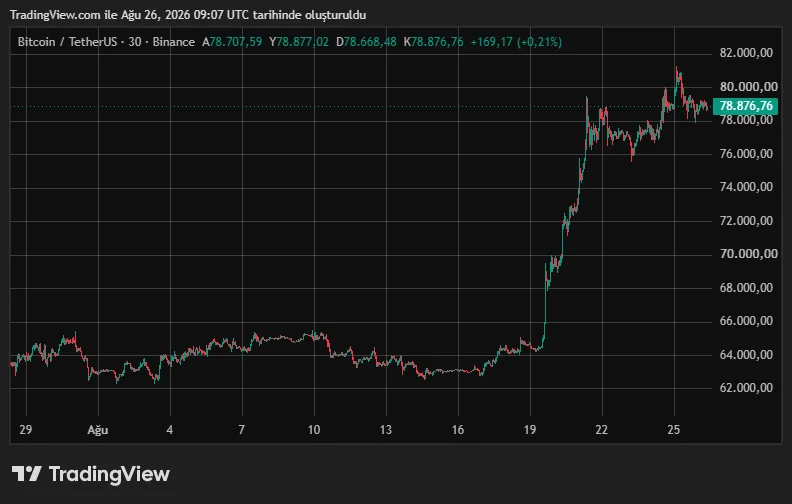
A lasting breakout above $83,000 could strengthen medium-term expectations for $95,000–$100,000. However, this scenario requires strong spot trading volumes and continued ETF inflows.
The first support zone sits between $77,500 and $76,000. Losing this area could trigger a deeper correction toward $74,000.
Slower ETF inflows or hotter PCE data could increase short-term selling pressure. Another failed breakout above $80,000 would also raise the correction risk.
Meta Title: Bitcoin Awaits PCE Data as $80,000 Test Looms
Meta Description: Bitcoin struggles with $80,000 resistance as markets await PCE data and the Jackson Hole speech. Spot ETFs attracted $314 million.
Keywords: Bitcoin, Bitcoin price, PCE data, core PCE, Bitcoin ETF, BTC, Jackson Hole