Altcoin
This page lists the latest Altcoin news and market analysis. Browse articles, expert insights, and updates in this category on JrKripto. Stay informed with in-depth coverage of cryptocurrency trends and developments.
News
Altcoin News
Browse all Altcoin related articles and news. The latest news, analysis, and insights on Altcoin.
When analyzing SOL on the daily chart from a technical perspective, it is evident that the price has been maintaining the uptrend that began in mid-April. The current price is around $175.44, with a limited daily pullback of 0.26%. This pullback can be interpreted as a short-term correction. The price is currently trading near a critical resistance zonebetween $175 and $185. This area has previously acted as both support and resistance, making it a strong horizontal resistance zone.Looking at technical levels, the nearest support level is at $167.79, which also stands out as a retracement area of the previous upward move. If the price falls below $167.79, it could retrace further towards the $146.78 – $139.96 range. This zone has previously attracted significant buying interest and may act as strong support. Additionally, the $124.40level remains an important long-term support on broader timeframes. Current Supports and Resistances On the upside, if the price breaks above $175, the first target will be $191.80. Just above this lies $201.15, a strong resistance level. The $191.80 – $201.15 range is a horizontal resistance zone where the price has faced multiple rejections and reversals in the past. A breakout above this zone could signal a continuation of the strong bullish trendin Solana. If such a breakout occurs, medium-term targets could be $233.09 and eventually $295.73.When examining the candlestick patterns on the chart, it is clear that the price has been facing resistance at the $175 level in recent days, yet bullish momentum remains intact. This may indicate that investors are consolidating strength to break through this level. If the price continues to hold above $167.79, the probability of an upward breakout increases.In summary: Technically, SOL is in a strong recovery phase. In the short term, a break above the $175–$185 zonecould push the price above $200. However, if this zone fails to break, the price may pull back to $167.79 or even $146. Therefore, it is crucial for investors to closely monitor the price action between the $167.79 support and the $191.80 resistance. These breakouts will be key in determining the next direction.

On May 22, 2025, the U.S. Securities and Exchange Commission (SEC) made a landmark decision that sent shockwaves through the crypto market. The Commission approved Canary Capital’s ETF application for a Tron (TRX)-based staked exchange-traded fund. With this approval, TRX became the first ETF product to offer staking rewards to investors, making history.This decision is not only significant for the Tron network but could also pave the way for staking-based Layer-1 projects in the ETF market. Notably, while ETF applications for other similar blockchain networks such as Ethereum, Solana, and Avalanche are still under review, the approval of TRX marks a striking turning point.An Unexpected Move from the SEC: TRX ETF Approved While Others Remain in LimboUnder the 19b-4 filing, the SEC officially accepted the proposal submitted by Cboe BZX Exchange. As per standard procedure, the Commission published a notice for public comment. However, this time, the process moved swiftly and the TRX ETF was formally approved.This decision is being interpreted as a sign of changing sentiment at the SEC, which had been taking a more cautious approach in recent months regarding staking-based products. The fact that a smaller project like Tron received approval while Ethereum-based staking ETFs remain pending is seen by market analysts as a bold and surprising move.Meanwhile, the SEC has not yet made final decisions on other major ETF applications. The final ruling dates for Bitwise’s spot XRP ETF and CoinShares’ XRP and Litecoin ETF applications have been pushed back. According to Bloomberg ETF analyst James Seyffart, these decisions are not expected until late summer or Q4.What is the TRX ETF and What Does It Offer to Investors?The approved TRX ETF is based on Tron’s native cryptocurrency, TRX. What sets this ETF apart is that it provides access not only to price performance but also to staking yields. In other words, investors will be able to earn passive income from staking rewards in addition to TRX’s market value movements.This structure represents the first model to combine ETFs with Proof-of-Stake (PoS) systems, opening the door to a new era of diversified financial products.Canary Capital has appointed BitGo as the custodian for the TRX ETF. This secure custody infrastructure could enhance the product’s appeal among institutional investors.Why Is This Important?First staking-backed ETF: TRX becomes the first Layer-1 ETF to offer both price and staking yield exposure.Regulatory shift signal: The SEC’s move may suggest a softening stance toward staking-based funds.Path cleared for new applications: The door could now be open for similar products from PoS projects like Solana, Avalanche, and Polkadot.Potential rise in institutional interest: With regulatory approval, institutional investors may now be more inclined to include staking-backed products in their crypto portfolios.

When AVAX is examined from a technical perspective on the daily chart, it is seen that the price has broken the downward trend it has been in for a long time and has started to move within an ascending channel after this break. This situation can be evaluated as a signal of a change of direction in the medium term. The current price level is $ 22.25, showing a decrease of 3.09% on a daily basis. This price level is also just above the short-term support line. Technically, this level is a critical threshold in terms of the direction of the price. Significant support and resistance levels are clearly observed on the chart. While the closest support levels stand out as $ 22.00 and $ 20.10, these levels are important because they are areas where the price has reacted many times in the past. In particular, the $ 20.10 level is in a strong horizontal support position and it is predicted that the declines may accelerate if this level is dropped below. In upward movements, the first strong resistance level is $ 23.09. If this level is maintained, $ 24.43 and then $ 28.50 levels can be targeted. The $28.50 resistance is critical as it has been a strong level that has determined the direction of the price in the past. If this resistance is broken, the price may show an accelerated rise to the $33.48 - $35.42 band. In the longer term, the $42.14 and $55.79 levels stand out as major resistance points. Avax current trend When the trend lines are examined, it is seen that the falling trend that previously suppressed the price has been broken and that an ascending parallel channel has been formed with this break. Within the channel structure, the price occasionally touches the lower band and reacts, while the upper band shows resistance. In recent movements, it is noteworthy that the price tested the lower band of the channel and reacted upwards again, but was rejected from the $23.09 resistance. This shows that the market is currently in the decision phase.In terms of possible scenarios, if the $22.00 level works as support in the positive scenario, the price can be expected to test the $23.09 and $24.43 resistances. If it is sustained above $24.43, there may be a movement towards the $28.50 resistance. In the negative scenario, daily closings below $22.00 may lead to pullbacks to the $20.10 support. If this level is broken, selling pressure will increase and a trend towards lower support levels may be seen. As a result, AVAX is trading in the technical decision zone. The $22.00 - $23.09 band is critical and investors are advised to follow the price movements in this region carefully. While upward breaks can confirm the continuation of the uptrend, downward breaks can trigger a new downward wave. Therefore, reactions and volume movements at both support and resistance levels will be decisive in terms of direction determination.

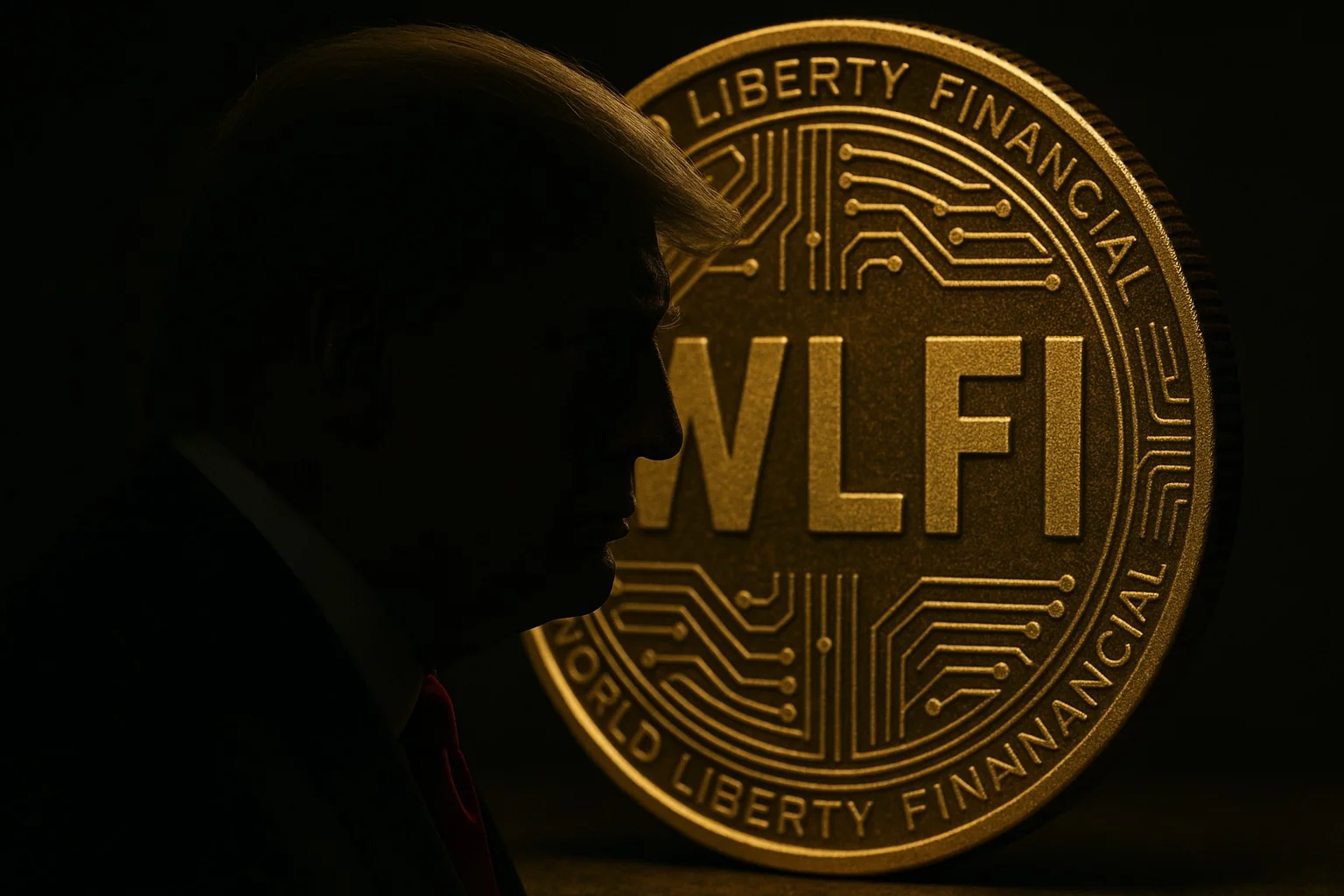
Binance has made a striking move in the cryptocurrency market by listing USD1, a stablecoin developed by World Liberty Financial. This development is not just a technical integration, but a multi-layered move with political, economic, and regulatory implications.What Is USD1 and Why Is It Controversial?Launched in March 2025, USD1 is a stablecoin pegged 1:1 to the U.S. dollar. It is backed by cash, short-term U.S. Treasury bonds, and bank deposits. Issuance and custody operations are handled by BitGo Trust Company, a licensed trust firm in the United States.Although regular audits of reserves are claimed, detailed public reports have yet to be published. This lack of transparency has raised concerns among investors about security and trust.Binance Integration: Where Can It Be Used?Binance has made USD1 available not only via the spot trading pair (USD1/USDT) but also across many other services on its platform:Binance Simple Earn: Users can invest in flexible earnings products with USD1.Buy Crypto: USD1 can be purchased using VISA, MasterCard, Apple Pay, and Revolut.Binance Convert: USD1 can be converted to BTC, USDT, and other coins with zero fees.Binance Margin: USD1 is now available for borrowing in cross and isolated margin trading.Deposits are now open, and withdrawals will be available starting May 23 at 3:00 PM.Market Performance: Ranked Seventh in a Short TimeUSD1 quickly reached a market capitalization of $2.15 billion, making it the seventh-largest stablecoin. Its 24-hour trading volume stands at around $1.39 billion.Currently operating on Ethereum and BNB Chain, USD1 plans to expand its multi-chain support using Chainlink’s cross-chain protocol.Political Backdrop: Trump Family InvolvementUSD1’s developer, World Liberty Financial, has direct ties to U.S. President Donald Trump and his family. Trump serves as the project’s “Chief Crypto Spokesperson”, while his sons Eric and Barron Trump participate as “Web3 Ambassadors.”These affiliations have sparked ethical debates, especially as the stablecoin market is in the midst of regulatory scrutiny. Some Democratic members of the U.S. Senate argue that such connections could create conflicts of interest and undermine market fairness.Rumors that a $2 billion MGX investment into Binance will be funded through USD1 have further fueled these political controversies.The listing of USD1 on Binance has intensified the technical competition in the stablecoin market, while also introducing a politically charged debate. With its aggressive growth strategy and direct ties to the Trump family, World Liberty Financial’s USD1 is far more than just another digital dollar alternative.

Cetus Protocol, a decentralized exchange operating on the Sui blockchain, has experienced one of the largest attacks in its history. According to official statements, attackers exploited the system using fake tokens and manipulated price curves, extracting approximately $260 million worth of digital assets. The incident has shaken not only Cetus but the entire Sui DeFi ecosystem.Structure of the Attack: Manipulation with Fake TokensInitial analysis shows that the attacker used fake tokens like BULLA to manipulate Cetus’s price curve calculations and reserve system. A low-value trade was conducted using the fake token, followed by a small liquidity addition that disrupted the protocol’s internal balance. As a result, real assets from the pools were drained and moved off the system.During the attack, the following assets were transferred to the attacker’s wallet:$52 million worth of SUI$4.9 million in Haedal Staked SUI (HASUI)$19.5 million in Toilet (TOILET)$19.5 million in wrapped USDT (wUSDT)Additionally, according to Extractor data developed by Hacken, the attacker bridged $63 million to Ethereum and transferred 20,000 ETH to a new wallet.First Response from the Cetus Team: Smart Contracts SuspendedImmediately after the attack, the Cetus team announced that they had suspended smart contracts and paused the system for security reasons. Although the team described the incident as a “simple mistake,” this statement was met with backlash from the crypto community. A more detailed explanation is expected in the coming days.Cetus’s native token CETUS dropped 40% within hours, and other ecosystem tokens also saw significant declines. Particularly, Sui-based memecoins like BULLA and MOJO suffered losses of over 90%.Chain Reactions Across the EcosystemThis attack has affected not only Cetus users but the broader Sui ecosystem. For example, Scallop, a Sui-based lending protocol, suspended all borrowing operations. Meanwhile, DEX trading volume surged from $320 million to $2.9 billion in 24 hours—indicating massive fund movement.Several tokens collapsed completely following the attack:AXOLcoin lost 99.5% of its valueLBTC dropped by more than 75%Security Test for Sui and DeFi ProtocolsThis incident once again highlighted how serious the consequences of security vulnerabilities in DeFi ecosystems can be. The fact that Cetus was the largest DEX and liquidity provider on Sui has amplified the impact of the event.On the other hand, the community and developer teams responded quickly. Binance founder CZ announced that they had offered assistance to Sui developers. Many projects have also decided to restart their security audits.A detailed explanation from the Cetus team is expected to clarify the scope of the attack and how the damage will be addressed. However, the current situation reveals that users have suffered significant losses, and there are structural vulnerabilities in the system. Rebuilding trust will not be easy. In the coming period, not only Cetus’s but the entire Sui ecosystem’s response will be decisive.This development stands as a critical case study for the decentralized finance world and should be monitored closely.

In the age of artificial intelligence, the verifiability of digital identity is becoming an increasingly critical issue. At this point, World Network completed a significant funding round on May 21, 2025, aiming to expand its digital identity infrastructure on a global scale. Through a private sale led by Andreessen Horowitz (a16z) and Bain Capital Crypto, the company raised $135 million.This investment will be used to further globalize the World ID system, which forms the backbone of the Worldcoin project led by Sam Altman.Eye-Scanning Technology Has Reached 26 Million PeopleOne of World Network’s most notable technologies is the Orb device, which performs iris scans to confirm that users are unique and verified individuals. As a result of this process, users are issued a World ID. So far, over 26 million people in more than 160 countries have engaged with the system, resulting in the generation of 12.5 million World IDs.With the new investment, World Network plans to accelerate the deployment of Orb devices, particularly in major U.S. cities such as Atlanta, Austin, Los Angeles, Miami, Nashville, and San Francisco.This identity system not only provides digital verification but also rewards users with WLD tokens, creating a reward-driven, blockchain-supported structure that incentivizes participation.WLD Token Rises Following Investment NewsFollowing the investment announcement, the market reacted strongly to the WLD project. The WLD token surged 14%in value the same day, reaching $1.26. This increase reflects investors’ confidence in the vision of Worldcoin and the World ID system.The raised funds will be used not only for the distribution of physical devices but also to support software development, scalability efforts, and the institutional integration of decentralized digital identity infrastructure.Why Is This Step by World Network Important?As issues like identity fraud, bot attacks, and data security continue to escalate in the digital world, the ability to distinguish between humans and machines has become a top priority for tech giants. World Network directly addresses this challenge with its iris-based identity verification solution.This investment carries strategic importance in several key areas:Digital Identity Security: A secure digital identity system that can distinguish humans from machines is being established.Global Scalability: The platform, already present in 160 countries, is strengthening its physical footprint in the U.S.Investor Confidence: The WLD token’s price increase indicates that the market supports the project’s long-term potential.Web3 and AI Integration: World ID offers an infrastructure that can serve as “proof of humanity” in AI-powered systems.The $135 million investment received by World Network is not just growth capital—it marks a strategic turning point for the future of digital identity verification. The project is preparing to redefine identity security within the Web3 and artificial intelligence ecosystems.This development signals that WLD token use cases are likely to expand in the near future and that digital identity will evolve toward new standards. Especially as regulations continue to rapidly take shape, the importance of such technologies is expected to grow even further.

Since the beginning of 2025, $18 billion worth of USDT has been minted. On May 21 alone, $2 billion in new Tether was issued within just 15 minutes. These large issuances are not merely technical operations—they’re often seen as positive signals for investors. That’s because this volume indicates new liquidity entering the market. Put simply: new USDT issuance suggests increased purchasing power and fresh capital flowing into exchanges, which is often interpreted as a precursor to potential upward price movements.$18 Billion Increase Since the Start of 2025The total amount of USDT issued by Tether throughout 2025 has reached $18 billion. A significant portion of these tokens were minted on Ethereum, and especially on the TRON network. As of today, the USDT supply on TRON exceeds $75 billion, surpassing that on Ethereum.In total, the amount of USDT in circulation has surpassed $151 billion—meaning that this single stablecoin’s market size exceeds the money supply of many countries.Why Is So Much USDT Important?Because each new token minted by Tether represents new capital entering the market. Although Tether operates on a “deposit first, mint later” principle, such large issuances are still interpreted by investors as a sign of increasing liquidity.The rise in Bitcoin and Ethereum prices following the latest issuance shows that this perception still holds true. For many crypto investors, these actions are often considered early signs of a new rally.What Does Tether Earn from This?Tether doesn’t just provide a stablecoin to the market—it also profits significantly from the process. In 2024, after issuing $45 billion in USDT, the company reported a net profit of $13 billion. Most of this income comes from low-risk instruments, such as U.S. Treasury bonds held in reserves.In short, Tether has become more than just a crypto player—it’s now a structure embedded in traditional finance as well.Why Should This Development Be Monitored?Because USDT issuance is a key indicator of market sentiment. It provides clues on where liquidity is flowing and which coins are seeing increased buying interest.New money is entering: $2 billion worth of USDT means fresh liquidity in the market.Investors are positioning: Large-scale minting typically triggers expectations of increased market activity.

SUI 4H Technical Analysis – Descending Channel Pattern Formation and Price Compression ContinueWhile SUI maintains its overall uptrend, a series of short-term corrections have formed a technically significant pattern. On the 4-hour chart, two consecutive descending channel pattern stand out. The first flag was broken to the upside, resulting in a strong rally. The second flag, however, is still active, with price currently moving within a tightening range.SUI is trading around $3.80, and the upper boundary of the flag is being tested. A confirmed breakout above this level could indicate a continuation of the previous bullish leg. However, volume confirmation will be critical to validate the move. SUI Flag Formation Key Support Levels:$3.5621: Important short-term horizontal support$3.1589–$3.0386: Strong liquidity zone and previous consolidation range$2.7247: Mid-term support$2.4433–$2.3503: Key demand area in case of a deeper correctionKey Resistance Levels:$3.85–$3.90: Upper boundary of the flag, immediate breakout zone$4.00+: Psychological and technical target upon breakoutThe formation of back-to-back descending channel patterns in SUI reflects a market structure where price consolidates before continuing upward. These patterns often indicate trend continuation, but as of now, the second flag has not been confirmed. If SUI breaks above $3.85 with rising volume, targets above $4.00 may quickly come into play.In a bearish scenario, if the flag breaks downward, the price could first revisit the $3.56 support. Sustained movement below this level could push SUI toward the $3.15–$3.03 range.Conclusion: SUI is at a critical decision point in the short term. A bullish breakout from the flag pattern could reignite upward momentum. On the other hand, increased selling pressure could lead to a test of key support zones. The $3.56 and $3.03 levels should be closely monitored for confirmation.Disclaimer: This analysis does not constitute investment advice. It focuses on support and resistance levels that may present potential short- to mid-term trading opportunities depending on market conditions. However, all responsibility for trading decisions and risk management lies entirely with the user. The use of stop-loss orders is strongly recommended for any trade setup shared.

Ondo Finance has launched a 24/7 instant conversion service between PayPal’s stablecoin PYUSD and its own tokenized U.S. Treasury bond representative, OUSG. This development eliminates the time restrictions encountered in traditional financial transactions while providing easier access to digital assets.Instant and Seamless Transition Between OUSG and PYUSDThanks to the system announced by Ondo, investors will be able to create OUSG tokens using PYUSD at any time or convert their existing OUSG holdings into PYUSD. This conversion service, active 24 hours a day, 7 days a week, currently stands out as the largest stablecoin-to-Treasury fund bridge with a capacity of $25 million.Ondo Finance CEO Nathan Allman stated, “The ability to instantly convert OUSG into PYUSD provides our clients with a high-quality liquidity option.” He also added that they are pleased to expand their collaboration with PayPal in this area.Next-Gen Liquidity Infrastructure: Ondo NexusThis service is also part of Ondo’s new platform called Nexus. Nexus allows tokenized U.S. Treasury bonds to be redeemed by third parties using stablecoins. With the PYUSD integration, this system makes real-world assets more liquid and accessible in digital systems.OUSG currently attracts attention with a total value locked exceeding $525 million. Offering daily interest yield, OUSG is supported on Ethereum and Solana networks. The funds are directed to leading institutions such as BlackRock, Franklin Templeton, WisdomTree, and FundBridge Capital.A New Bridge Between Traditional Finance and CryptoThe 24/7 instant conversion between PYUSD and OUSG is not just a technical innovation; it also represents a new bridge between the digital and traditional financial worlds. The instant liquidity makes investor decisions faster and more efficient, while also enabling stablecoins to be used in new areas.

U.S.-based cryptocurrency exchange Coinbase is taking a new step to increase asset diversity on its Base network. The company announced it will launch wrapped versions of Cardano (ADA), Dogecoin (DOGE), Litecoin (LTC), and Ripple (XRP) tokens on the Base network. These new assets will be named cbADA, cbDOGE, cbLTC, and cbXRP, and each will maintain a 1:1 peg to their original cryptocurrencies.These new wrapped tokens will operate similarly to Coinbase's previously launched cbBTC on the Base network. Users will lock their original ADA, DOGE, LTC, and XRP assets into smart contracts, allowing them to mint these new tokens on the Base network. Thus, these popular cryptocurrencies will become more effectively usable on the Ethereum Layer-2 Base network.Coinbase officials stated that the cbADA, cbDOGE, cbLTC, and cbXRP tokens have not yet been officially released and cautioned investors to remain vigilant against potential fraud. The tokens' official launch date will be announced in the coming days.What is the Purpose Behind This Development? Coinbase aims to enhance DeFi integration on the Base network and enable users to access decentralized applications with a broader range of assets. Moving high-volume altcoins like ADA, DOGE, LTC, and XRP to the Base network will increase liquidity and expand the use cases of applications built on Base.How Does Coinbase's Wrapped Token Model Work?Users lock an asset, for instance, ADA, into a smart contract.In exchange, cbADA is minted on the Base network at a 1:1 ratio.Users can utilize cbADA in various DeFi protocols.cbADA can be burned at any time to reclaim the original ADA.This model improves transaction efficiency and enriches the Ethereum ecosystem with additional assets.This development clearly underscores Coinbase's commitment to the Base network and its growth ambitions within decentralized finance. With the introduction of these new tokens, Coinbase users can utilize assets like ADA, DOGE, LTC, and XRP with much greater flexibility.

Worldcoin (WLD) Technical AnalysisWLD has recently demonstrated a highly impressive upward performance. This movement, which began in early April, gradually climbed from the $0.60 level and pushed the price above $1.30. During this period, both the rising trendline and Fibonacci support levels functioned effectively. It is currently holding within the $1.162–$1.226 range, which it initially failed to break, later did so, and then confirmed as support via a retest and SR flip. WLD Current Outlook The rising trendline seen on the chart indicates that WLD is ascending in a healthy, step-by-step fashion and carries strong buying momentum. The current pullback can be interpreted as a technically normal and healthy breather.Support Levels:$1.226 – $1.162: Critical support zone$1.000: Strong psychological and technical support$0.861 – $0.816: Supports that may come into play in the event of deeper correctionsResistance Levels:$1.300 – $1.330: Short-term price resistance currently being tested$1.446: A resistance level that may be targeted in the medium termVolume-backed breakouts in these zones will be critical to triggering the next leg of the price rally. Otherwise, WLD could pull back into the $1.16 – $1.00 range. However, the overall trend structure remains positive.In conclusion, WLD presents a strong outlook both in terms of technical structure and rising trend. As long as it maintains support above $1.226, new highs are within reach. Especially closes above $1.30 could position $1.446 as the next target for WLD. The key risk in this process is a breakdown of the rising trend. However, the current structure indicates that this scenario has not yet materialized.These analyses do not constitute investment advice and focus on support and resistance levels believed to potentially create trading opportunities in the short to medium term based on market conditions. However, all responsibility for trading and risk management lies entirely with the user. The use of stop-loss orders in all shared trades is strongly recommended.

ZK (zkSync) Technical AnalysisZK (zkSync) has finally broken out of its long-standing downtrend to the upside. In particular, after the strong breakout above the $0.0551 resistance level with significant volume, the price accelerated rapidly, climbing to $0.0796. This suggests that buyers have regained control in the short term. As of now, the price is consolidating at $0.0744, and it is being monitored whether previous resistance levels are now being tested as support. ZK Current Breakdown The structure formed after this breakout may technically indicate the beginning of a new upward wave. However, for this uptrend to be sustainable, the price needs to hold the $0.0675–$0.0637 zone and also break above the $0.0796 resistance with strong volume.Support Levels:$0.0675 – $0.0637: Support-resistance flip (SR Flip)$0.0551: Major supportResistance Levels:$0.0796: Current strong resistance and the area where the price has stalled$0.0938 – $0.0995: Medium-term target zone$0.1193: Major long-term resistance to watchThe breakout on the chart followed by a strong rally reveals that buyers have stepped in aggressively. While the RSI indicator supports the upward movement, a short-term correction should not be ruled out. Therefore, it is advisable for investors to closely observe price behavior around the support levels.In conclusion, ZK has clearly broken above its descending trendline, giving a technically positive signal. Movement above the $0.0551 level suggests that higher targets may come into play in the medium term. If we see sustained closes above $0.0796, the price could potentially move toward $0.0938 and then above $0.10. Otherwise, the $0.0675 – $0.0630 range may be retested. However, the current structure indicates that the bullish scenario is more likely.This analysis does not constitute investment advice. It focuses on support and resistance levels that are considered to potentially offer trading opportunities under current market conditions in the short to medium term. However, the responsibility for making trades and managing risk lies entirely with the user. The use of stop-loss orders in any shared trades is strongly recommended.

Meta is preparing to return to the crypto world after a three-year break. It is now reported that the company is in talks with various crypto infrastructure firms to launch stablecoin-supported payments on its platforms. This development is a significant signal for both the crypto market and global payment systems.Meta’s Strategic ComebackAccording to a report by Fortune, Meta is working on a model where popular stablecoins like Tether’s USDT and Circle’s USDC can be integrated as multiple tokens. This step specifically aims to make micro-payments to content creators through platforms like Instagram and WhatsApp faster, cheaper, and more efficient.The new payment initiative is being led by Ginger Baker, who has experience in the fintech and blockchain world. Meta currently describes the process as being in “learning mode,” but the scale of the steps being taken shows that this transformation is not superficial but rather a long-term strategic move.Stablecoin Race: Tech Giants on the FieldMeta is not alone in this field. Recently, many major finance and tech companies have entered the stablecoin space:On May 7, Visa invested in the stablecoin venture BVNK.Stripe launched stablecoin-based accounts in over 100 countries.World Liberty Financial (WLFI) launched the USD1 stablecoin pegged to the U.S. dollar in March. In just two months, it became the seventh-largest stablecoin by market value.U.S. Treasury Secretary Scott Bessent summarizes this trend clearly:“Stablecoins are a great opportunity to increase the dollar’s dominance in the digital world.”However, this growth is being affected by a lack of regulation. On May 8, Democratic senators blocked the Genius Stablecoin Act, delaying the regulation process.Why Is This So Important?The fact that a tech giant like Meta is working on stablecoin integration significantly strengthens the potential for daily use of cryptocurrencies. This is not just a change in payment methods; it also provides four critical contributions that could increase the use of stablecoins in everyday life:Low transaction costs: Bank fees are eliminated.Instant and cross-border transfers: Global content creators can receive payments instantly.Growth of in-platform economy: Revenue models in apps like Instagram and WhatsApp will be reshaped.Digital financial inclusion: Offers opportunities for users without traditional bank accounts.Digital Payments Cross a New ThresholdThe step Meta is about to take could be transformative not only for its own platforms but for the entire crypto ecosystem. Stablecoins are no longer just an “experiment”; they are preparing to become a mainstream tool in global payment systems.As regulations become clearer and tech companies take more steps in this area, the idea of “paying with crypto” will no longer be the future—it will be today’s reality.

A newly introduced bill in the United States has opened the door to a major transformation in the crypto world. Called the “Genius Stablecoin Act” (GENIUS Act), this bill particularly concerns stablecoin issuers like Tether (USDT). The law foresees that Tether, regardless of where it is headquartered, will now be subject to U.S. laws. This is a critical development not just for Tether but for the entire global stablecoin sector.Tether to Be Subject to U.S. RegulationsThe most notable clause in the new bill is the principle of “extraterritoriality,” which includes foreign companies within the jurisdiction of the United States. In other words, every stablecoin issuer that serves users in the U.S.—even if their headquarters are abroad—will now be required to comply with American regulations. Tether, which is based in El Salvador, will be directly affected by this regulation.Tether CEO Paolo Ardoino stated that they view this initiative positively and aim to maintain a constructive collaboration with U.S. regulators. However, the company will now have to comply with stricter reporting and transparency rules.What Does the GENIUS Act Bring?According to the bill, stablecoin-issuing companies will face the following regulations:1:1 Reserve Requirement: Every stablecoin must be fully backed by assets such as U.S. dollars or short-term Treasury bills.Licensing and Supervision: Projects over $10 billion will be federally licensed, while smaller ones will be licensed at the state level.AML/KYC Compliance: All issuers will be subject to anti-money laundering and know-your-customer rules.Regular Reporting: Monthly reserve reports and annual independent audits will be required.Although it is not yet certain whether the GENIUS Act will become law, the framework it proposes signals the beginning of a period where stricter rules will dominate the stablecoin market. As the U.S. continues its efforts to expand influence in this area, a new adaptation process may begin for giants like Tether. During this process, both investors and industry players will have to be more prepared for regulatory uncertainties.

Eric Trump once again drew attention with his appearance at the TOKEN2049 conference held in Dubai on May 8, 2025. Making headlines in the crypto world, Trump introduced a new project called World Liberty Financial (WLFI) and clearly expressed his confidence in both this project and Bitcoin.According to Trump, World Liberty Financial aims to repair and reshape the current "broken" financial system. Built on decentralized finance (DeFi) principles, the project seeks to enable users to carry out financial transactions with peace of mind, without relying on intermediaries like banks.WLFI’s stablecoin, USD1, is backed by U.S. Treasury bonds and cash equivalents. This digital asset will operate on the Tron blockchain and will be used in a $2 billion strategic investment by Abu Dhabi-based investment firm MGX into Binance. This step indicates that WLFI is not just another DeFi project, but one that will play an active role in international capital flows.In Trump’s words: “Wait for the next two months and see what happens. WLFI will be one of the fastest-growing crypto projects.”“Bitcoin Is Digital Gold — And the Trump Family Owns a Lot of It”WLFI wasn’t the only topic discussed at the conference. Eric Trump also shared his views on Bitcoin, stating, “I love Bitcoin. I believe it’s digital gold,” and revealed that both he and his father, Donald Trump, own a significant amount of Bitcoin.According to Trump, Bitcoin will experience exponential growth in the coming years. This remark is not just an investment prediction; it also shows that the Trump family views cryptocurrencies as a long-term strategic asset class.A Political Perspective on CryptoThe WLFI project carries not only financial but also political significance. The Trump family’s interest in crypto assets signals that the U.S. should take a more active role in the digital asset ecosystem. Projects like WLFI support decentralization and offer alternative pathways to traditional financial institutions.In conclusion, Eric Trump’s appearance on the TOKEN2049 stage in Dubai highlighted the potential of World Liberty Financial and once again reinforced the Trump family’s position in the crypto market.