Bitcoin mining relies on specialized hardware performing calculations to produce new blocks on the network. Miners help record transactions and support network security. In return, they can earn income from the block subsidy and transaction fees. However, purchasing a device alone does not ensure consistent earnings. Electricity costs, network competition, hardware efficiency, and the Bitcoin price all influence the outcome. This guide explores how mining works, equipment selection, rewards, and the requirements for a home setup.
What Is Bitcoin Mining, and Why Is It Necessary?
Bitcoin operates without a single institution managing its transaction records. Mining forms part of the mechanism that produces new blocks within this decentralized system.
The network’s rules also explain how Bitcoin is created. Mining introduces new Bitcoin within the limits set by the protocol.
Recording transactions, issuing new Bitcoin, and securing the network
Miners work on a candidate block containing transactions. A miner who finds a valid block can claim the reward permitted by the protocol.
This reward comes from two sources: the block subsidy, which creates new Bitcoin, and transaction fees. Transaction fees transfer existing Bitcoin; they do not create new supply.
While miners select transactions, full nodes independently enforce the network’s rules. A block containing invalid transactions or an excessive reward remains invalid, regardless of computing power.
This distinction helps clarify mining’s role. Miners compete to produce blocks; full nodes check which blocks are valid.
How Proof of Work and SHA-256 work
Proof of Work refers to a mechanism that demonstrates computational effort. In Bitcoin, it involves finding a hash that meets a specific target.
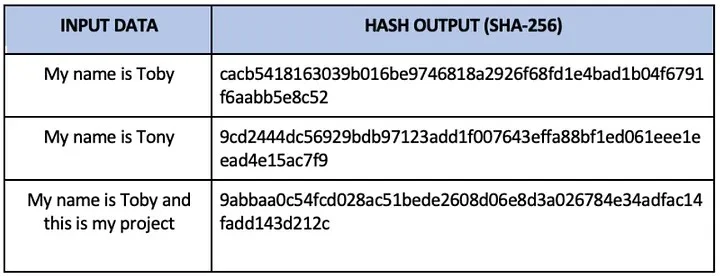
A hash function produces a fixed-length output from its input data. Even a small change to the input substantially changes the result.
Bitcoin mining applies the SHA-256 function twice to the block header. The miner attempts to produce a numerical result that does not exceed the network’s target.
Because a valid result cannot be predicted, the hardware makes numerous attempts. Verifying the cryptographic proof supplied by a successful miner is comparatively straightforward.
Why blocks link together?
Each block contains the previous block’s hash. This connection helps preserve the order of the transaction history.
Changing an older block’s contents also changes its hash. Maintaining the links to subsequent blocks therefore requires repeating the computational work.
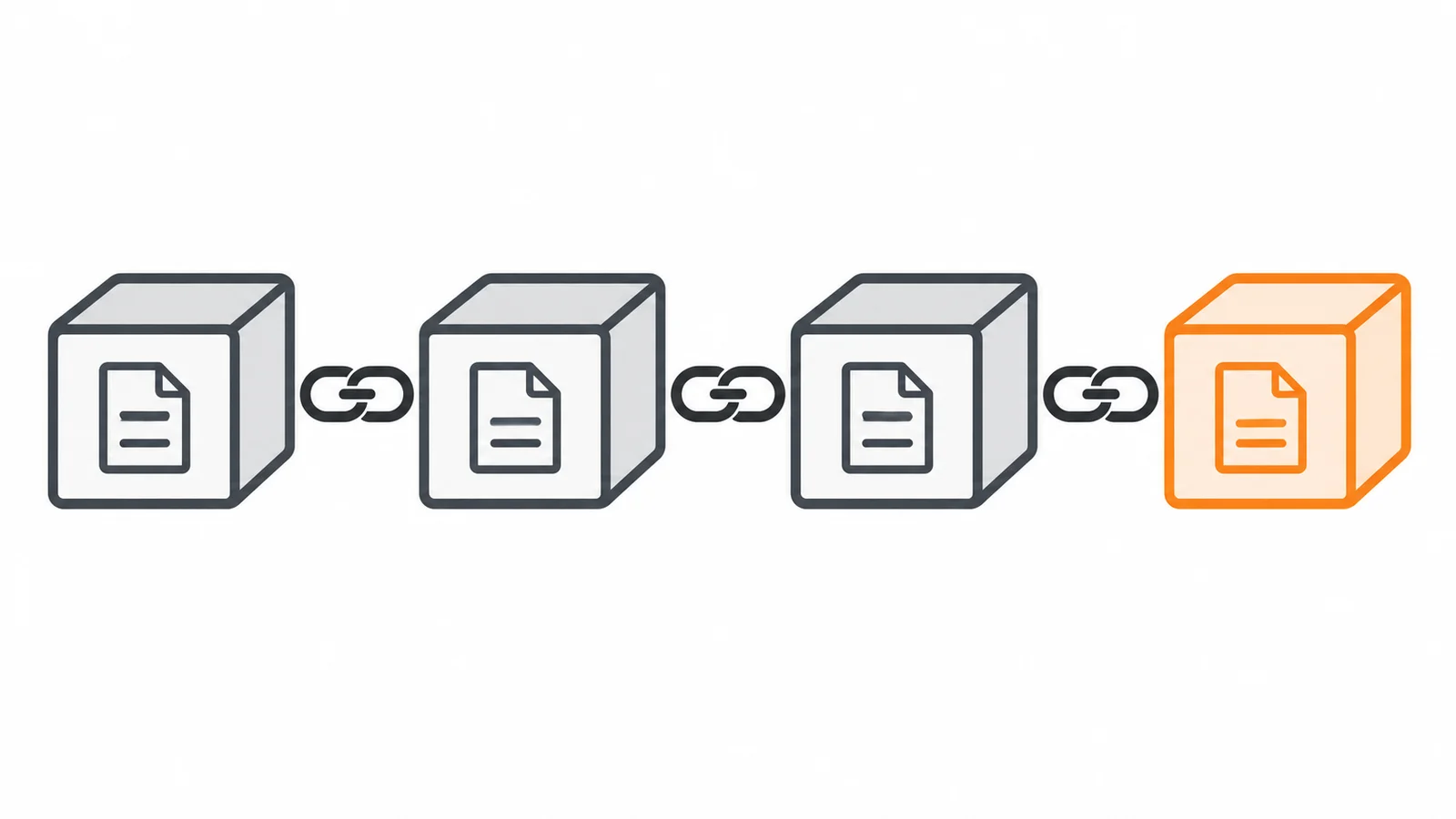
Among valid chains, the network follows the one with the most accumulated work. As new blocks arrive, rewriting the history requires more computation.
This explains why transaction confirmations matter. As additional blocks build on the block containing a transaction, the risk of reversal generally decreases.
How Does Bitcoin Mining Work?
Sending a Bitcoin transfer does not immediately place the transaction on the blockchain. It first spreads across the network and may then enter a block produced by a miner.
From the mempool to a candidate block
Nodes keep accepted transactions that have not yet entered a block in an area called the mempool. Each node’s mempool does not have to contain exactly the same transactions.
A miner or pool selects transactions to prepare a candidate block. Since block capacity is limited, transaction fees play an important role in this selection.
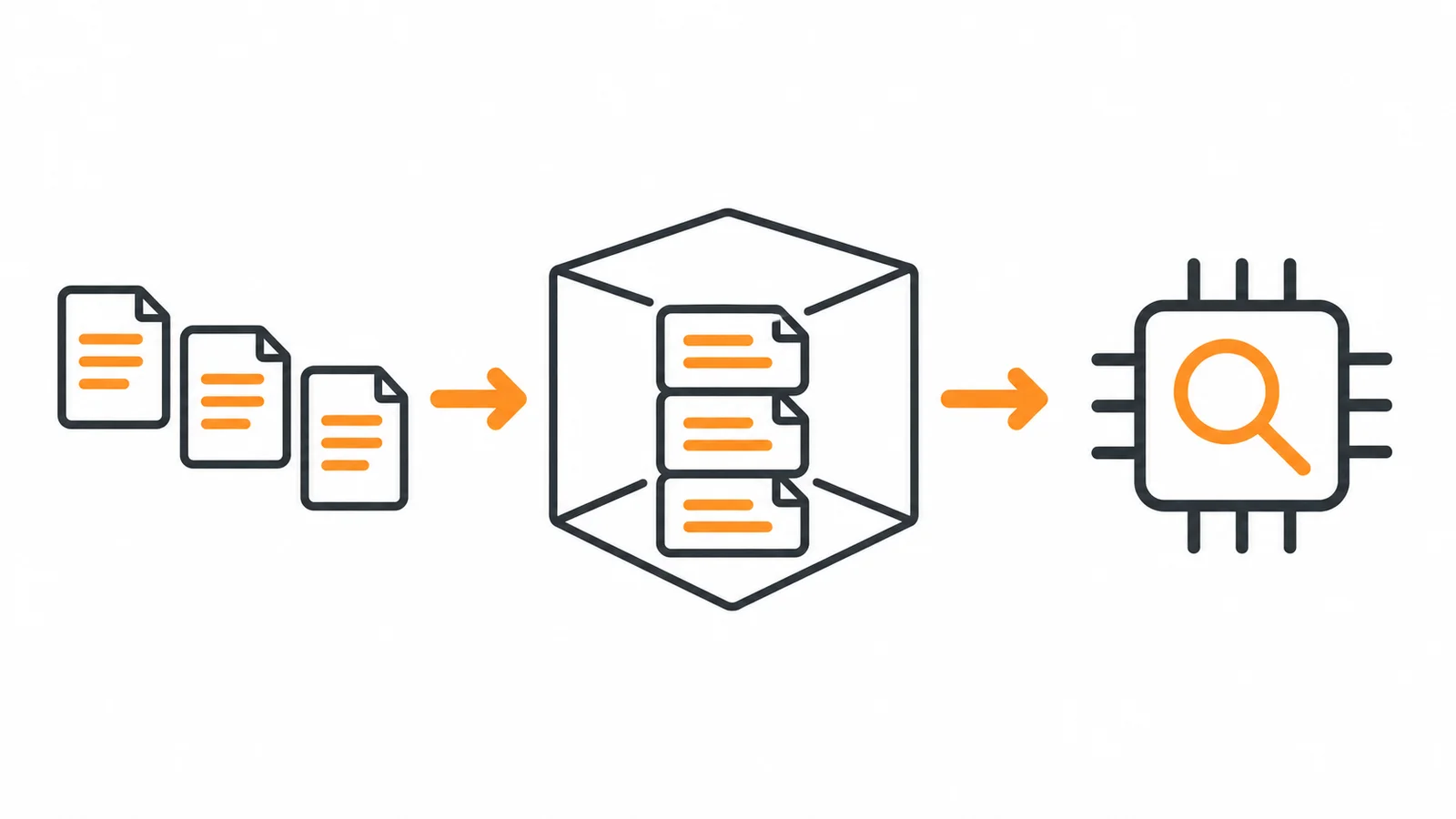
The total fee alone does not determine priority. The fee rate relative to the space a transaction occupies also matters.
For example, a large transaction may pay a higher total fee. A smaller transaction, however, may offer more fees per unit of space.
The block header and the search for a nonce
During mining calculations, hardware works on the block header rather than the entire candidate block. The header contains these main fields:
| Field | Purpose |
Version | Specifies the block’s version |
Previous block hash | Links the new block to the previous block |
Merkle root | Represents a cryptographic summary of the block’s transactions |
Timestamp | Provides time information within the limits allowed by the rules |
Target information | Encodes the target a valid hash must meet |
Nonce | Holds a value that can change for new hashing attempts |
The hardware repeatedly calculates hashes while changing the nonce. However, its attempts are not limited to this field.
Mining software can modify other data, such as the coinbase transaction, to create new search possibilities. Here, coinbase means the special transaction containing the mining reward; it does not refer to the exchange.
What happens when a miner finds a valid block?
The miner that finds a result meeting the target broadcasts the block. Nodes check its Proof of Work, transactions, and other validity requirements.
Sometimes, two miners find different valid blocks at nearly the same time. The network may briefly work on different chain tips.
Subsequent blocks determine which branch accumulates more work. The expected reward for a block on the other branch may never become lasting earnings.
Finding a block and securing its reward therefore should not be treated as the same moment. Mining software and pools track these situations in their records.
Equipment Required for Bitcoin Mining
In Bitcoin’s early years, people could mine using personal computers. As competition and total computing power increased, hardware requirements changed.
Today, economically competitive Bitcoin mining largely relies on ASIC devices designed for SHA-256. Ordinary computers cannot match their efficiency.
Differences between ASICs, GPUs, and CPUs
An ASIC is an integrated circuit designed for a specific task. Bitcoin ASIC devices aim for high performance and energy efficiency in mining calculations.
A GPU is a graphics processing unit, while a CPU is a computer’s central processing unit. These components can perform more general-purpose tasks.
| Hardware | Role in Bitcoin mining | Main limitation |
CPU | Used during Bitcoin’s earliest years | No longer provides competitive computing power |
GPU | Became prominent before the ASIC era | Inefficient compared with ASICs for Bitcoin mining |
ASIC | The main hardware used in Bitcoin mining today | Tied to a specific algorithm, with limited alternative uses |
GPU systems can mine on other suitable cryptocurrency networks. This flexibility does not make them economical for Bitcoin mining.
Some services may also pay BTC for other computing activities. Receiving payment in Bitcoin does not mean the device is directly attempting to produce Bitcoin blocks.
Energy efficiency matters alongside hash rate
Hash rate measures the number of calculations a device performs per second. Bitcoin ASIC specifications commonly use the unit TH/s.
However, a higher TH/s figure alone does not mean greater profit. You also need to examine the electricity required to achieve that performance.
J/TH measures the energy needed per terahash. Under the same conditions, a lower value indicates better energy efficiency.
When comparing mining equipment, evaluate the following together:
- Hash rate and power consumption at the wall.
- Energy efficiency in J/TH.
- Electrical connection and power supply requirements.
- Cooling method and noise level.
- Warranty, servicing, and access to replacement parts.
- Purchase, shipping, and installation costs.
The cheapest device may not offer the lowest costs over its operating life. An inefficient model can consume its upfront savings through higher electricity bills.
Software selection and setup basics
CGMiner and BFGMiner are prominent open-source projects in mining software’s history. Their appearance in an older guide does not mean they support every current ASIC.
Check BFGMiner’s documentation to confirm which devices it supports. Modern ASIC setups may use manufacturer-provided software or compatible alternative firmware.
For example, Braiins OS provides alternative firmware for supported devices. Available features and compatibility can vary by device model and control board.
The general setup process includes these steps:
- Check the device’s electrical and cooling requirements.
- Prepare connections according to the manufacturer’s instructions.
- Connect the device to a trusted local network.
- Change the management interface’s default login credentials.
- Enter the pool address and worker details.
- Configure the payout address according to the pool’s instructions.
- Monitor hash rate, temperatures, and error rates.
A worker name identifies your device within the pool. Assigning separate names to multiple devices makes performance issues easier to locate.
Mining Pools, Difficulty, and Block Rewards
Mining income depends on network conditions as well as device performance. The pool model, difficulty adjustment, and Bitcoin halving are central to this relationship.
How a mining pool works
A mining pool brings participants’ computing power together under a shared operation. Participants demonstrate their work by submitting “shares” that meet the pool’s requirements.
Not every share represents a valid block on the Bitcoin network. The pool uses these records to measure miners’ contributions.
Pools may use different payout methods:
| Payout model | Basic approach |
PPS | Pays for accepted shares according to a defined calculation |
FPPS | Includes transaction fees alongside the block subsidy in its calculation |
PPLNS | Distributes earnings from blocks found by the pool according to a defined window of shares |
|
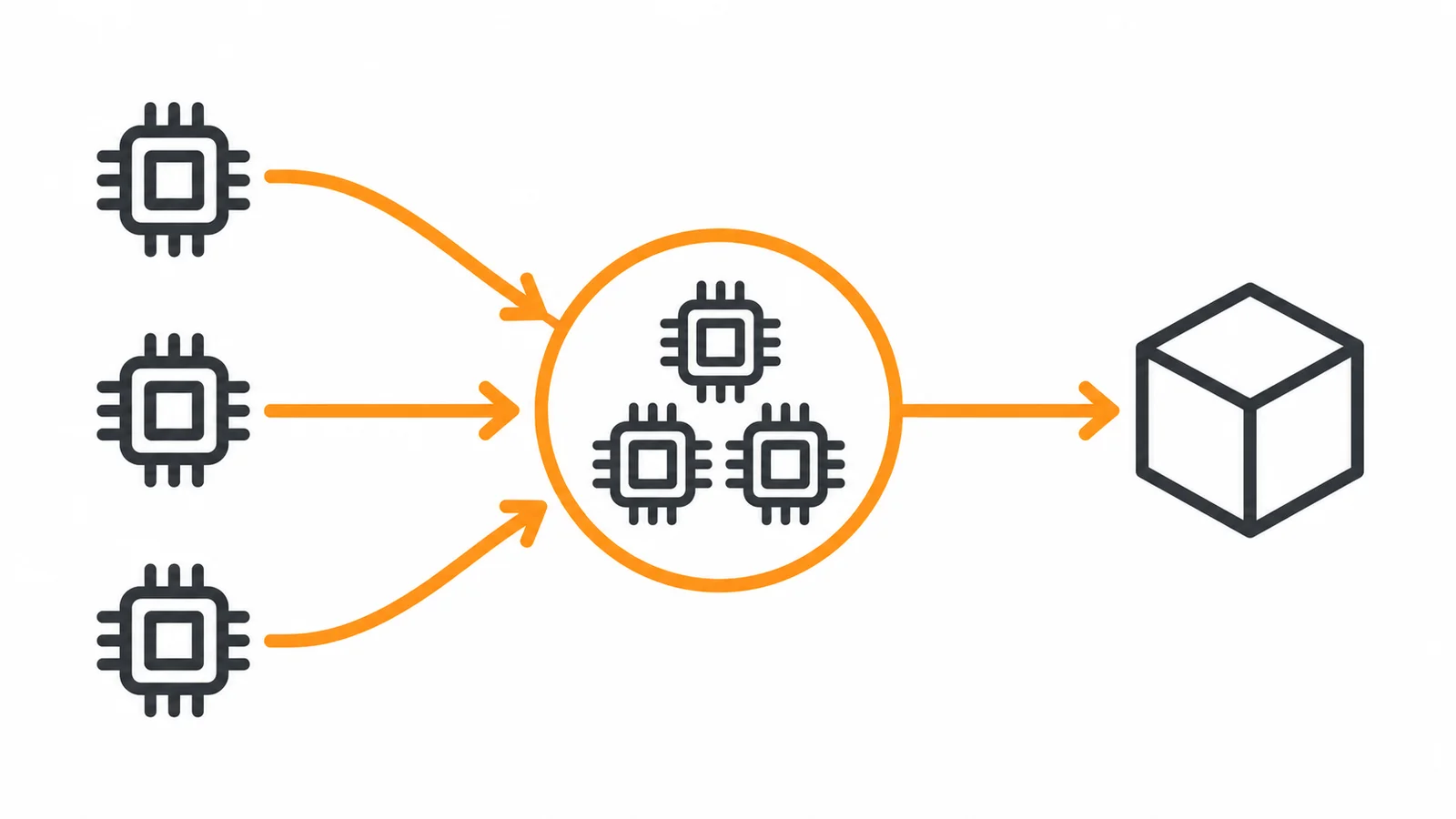
Pools using the same model name may differ in their implementation. Review fees, transaction fee distribution, and payment conditions separately.
Using a pool can reduce income variability compared with solo mining. However, it does not guarantee fixed earnings or profitability.
When choosing a pool, compare fees, payout thresholds, connection stability, and support quality. Concentration in a few large pools can also create centralization risks in block production coordination.
Why mining difficulty changes
Bitcoin targets an average block interval of approximately 10 minutes. Individual blocks do not need to arrive exactly 10 minutes apart.
On the mainnet, difficulty adjusts every 2,016 blocks. The system calculates the new target using the previous period’s block production time.
If blocks arrive faster than intended, mining generally becomes more difficult. If they arrive more slowly, difficulty may fall, helping the network adapt to changing computing power.
The protocol does not directly measure total hash rate by counting every device. We estimate the network’s computing power from block production.
When competing miners add more powerful devices, your device’s share of the network may shrink. Your expected BTC income can decline even if your performance remains unchanged.
The block subsidy and Bitcoin halving
Bitcoin’s block subsidy halves every 210,000 blocks. This approximately four-year cycle is known as the Bitcoin halving.
| Period | Block subsidy |
At launch in 2009 | 50 BTC |
After the 2012 halving | 25 BTC |
After the 2016 halving | 12.5 BTC |
After the 2020 halving | 6.25 BTC |
After the 2024 halving | 3.125 BTC |
After the next halving, expected around 2028 | 1.5625 BTC |
As of October 2026, the block subsidy stands at 3.125 BTC. Adding transaction fees gives the miner’s total block revenue.
The next halving will occur at block 1,050,000. Its exact calendar date depends on how quickly blocks arrive.
Halving does not remove existing Bitcoin; it slows the rate of new supply. Bitcoin’s limited supply contributes to its “digital gold” description, but it does not guarantee price increases.
Is Bitcoin Mining Profitable?
When evaluating mining income, distinguish the amount of BTC earned from net profit. Even if Bitcoin’s price rises, electricity and other expenses can consume the earnings.
Calculating electricity costs
Consider a hypothetical ASIC drawing an average of 3,000 watts from the wall. Running 24 hours a day, it consumes 72 kWh daily.
For this example, assume a total electricity price of 4 Turkish lira per kWh:
| Calculation | Result |
Daily consumption: 3 kW × 24 hours | 72 kWh |
Daily electricity cost: 72 × 4 lira | 288 lira |
Consumption over 30 days | 2,160 kWh |
Electricity cost over 30 days | 8,640 lira |
This calculation does not represent a current electricity tariff or a particular device. External cooling, downtime, and variations in power consumption affect the actual result.
Also account for tiered pricing or additional charges on your bill. Other household electricity use can influence your total bill.
Expenses that affect net earnings
A simplified operating calculation starts by subtracting electricity and other operating expenses from mining revenue. Track the upfront cost separately to determine whether you have recovered your hardware investment.
Include the following items:
- Pool fees and any firmware fees.
- Cooling, maintenance, and replacement parts.
- Shipping, installation, and any import costs.
- Operating time lost to device failures.
- Financing costs and tax obligations associated with the activity.
- Hardware depreciation over time.
Profitability calculators produce estimates based on the assumptions you enter. Comparing different scenarios is more useful than treating their results as a definite income forecast.
For example, separately test scenarios involving a falling Bitcoin price, rising difficulty, and higher electricity costs. This helps avoid relying on an investment calculation that works only under favorable conditions.
Energy Consumption and Home Mining
Cryptocurrency mining requires physical infrastructure. Electricity sources, ambient temperature, and hardware service life affect both costs and environmental impact.
How much energy does Bitcoin mining consume?
Cambridge’s April 2025 report estimated Bitcoin mining’s annual electricity consumption at approximately 138 TWh. The research drew on data representing roughly 48% of global mining activity.
The report estimated annual network-wide greenhouse gas emissions at 39.8 million tonnes of CO₂ equivalent.
Electricity consumption and carbon emissions are distinct measures. Two facilities consuming the same amount of electricity can produce different emissions because of their energy sources.
Energy sources and hardware waste
In the Cambridge study, renewables accounted for 42.6% of participants’ electricity mix. Including nuclear energy’s 9.8% share, sources classified as sustainable reached 52.4%.
However, renewable energy use does not eliminate the impacts of hardware production and electronic waste. Maintenance, repairs, and device lifespan also matter.
More efficient ASIC models can reduce the energy required for the same computational work. Yet total network consumption may still rise if the number of devices increases.
A cold climate may reduce cooling requirements at appropriately designed facilities. Waste heat recovery is also possible; its benefits depend on local heating demand and installation costs.
Is Bitcoin mining at home possible?
With suitable hardware and infrastructure, mining Bitcoin at home is technically possible. However, powerful ASIC devices can generate considerable heat and noise in a residential setting.
Answer the following questions before installation:
- Can the electrical circuit handle the device’s continuous load?
- Can hot air exit the space safely?
- Will the noise affect household members or neighbors?
- Is the internet connection stable?
- Is the device’s management interface protected against external access?
- Does the activity comply with local rules and applicable agreements?
Have a qualified electrician assess the electrical infrastructure. Unsuitable cables and connections can create risks under a continuous high load.
Small-scale devices may appeal to people who want to learn and gain experience. However, the probability of finding a block through solo mining with limited computing power can remain extremely low.
A home setup lets you observe the system directly and develop technical experience. The financial outcome still depends on electricity tariffs, device efficiency, and network conditions.
Frequently Asked Questions (FAQ)
Below are answers to some frequently asked questions about Bitcoin mining:
- What is Bitcoin mining, and how do you do it?: Bitcoin mining is the process of producing new blocks through Proof of Work calculations. It requires compatible ASIC hardware, electrical infrastructure, an internet connection, and suitable software. Miners can operate solo or join a pool.
- What equipment do you need for Bitcoin mining?: The basic requirements include a SHA-256 ASIC, a suitable power supply, network connectivity, and cooling infrastructure. You also need a Bitcoin wallet to receive payouts.
- How much can I earn from mining?: There is no fixed amount. Your device’s hash rate, network difficulty, Bitcoin’s price, transaction fees, and operating expenses affect the outcome. Gross revenue does not equal net profit.
- What should I consider when choosing a mining pool?: Compare the payout model, fees, minimum payout amount, and connection stability. Also review account security and protections against unauthorized payout address changes.
- Does Bitcoin mining harm the environment?: Electricity generation, hardware manufacturing, and electronic waste can create environmental impacts. Their scale depends on the energy source, device efficiency, and equipment lifespan.
- What are the advantages of mining Bitcoin at home?: You can learn to manage hardware, understand the network, and monitor performance. There is also potential to earn income, although electricity, noise, and cooling requirements constrain the outcome.
Explore JrKripto’s mining rig guide for a closer look at Bitcoin mining hardware. Our Proof of Work and Bitcoin halving guides also explain network security and the reward mechanism.