
Six crypto organizations have urged the SEC to incorporate its digital commodity classification into binding rules. Their joint letter seeks a more durable legal foundation for certain crypto assets. The organizations argue that existing interpretations provide insufficient certainty for developers and market participants.
The signatories include the Stellar Development Foundation, Hedera, Aptos Labs and Ava Labs. The Cardano Foundation and Chainlink Labs also joined the initiative. These organizations operate within the XLM, HBAR, APT, AVAX, ADA and LINK ecosystems, respectively.
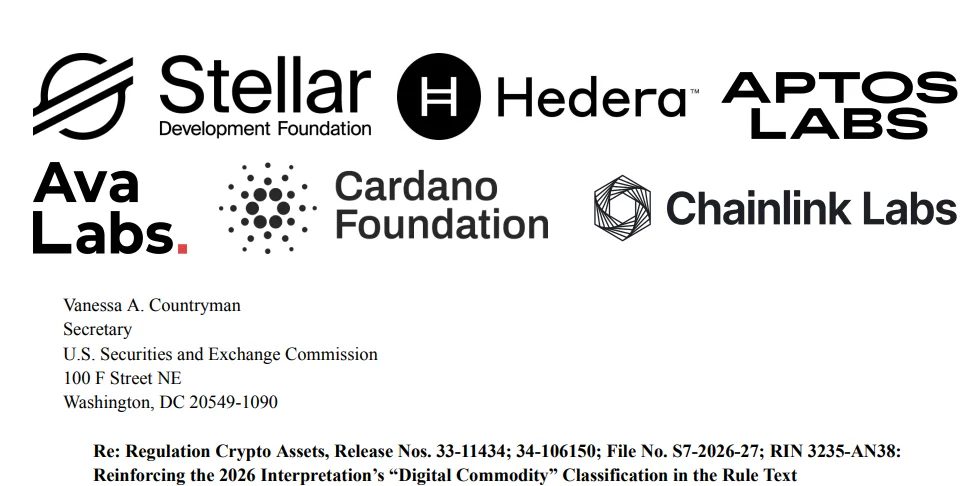
The submission focuses on the SEC’s proposed “Regulation Crypto Assets” framework. The six organizations want the digital commodity definition incorporated directly into the regulation’s operative provisions. Their goal is to give the SEC’s existing approach a firmer regulatory foundation.
Calls for Stronger Protection of Digital Commodity Status
The debate centers on the distinction between the SEC’s explanatory statements and the proposal’s binding provisions. According to the organizations, the proposal references the digital commodity classification in its preamble. However, the rule text itself does not establish that classification with equal clarity.
The joint letter calls for preserving the approach the SEC outlined in March. In its earlier interpretation, the agency identified Bitcoin and Ether as examples of digital commodities. XRP, ADA, LINK, AVAX, HBAR, XLM and APT also appeared among those examples.
The signatories consider reliance on regulatory interpretation alone insufficient. They argue that incorporating the digital commodity definition into formal rules would reduce legal uncertainty. The request particularly concerns teams developing products and planning investments over longer periods.
The letter itself does not represent an SEC decision granting these assets a new status. The organizations are requesting changes to the proposed framework to reinforce the existing approach. Their submission therefore does not mean the SEC has accepted their request or implemented new rules.
Token Sales and Asset Status Require Separate Assessments
Another central issue is the legal distinction between a token and its sale. Under certain circumstances, a company’s token sale may involve an investment contract. However, the organizations stress that this does not automatically make the token itself a security.
The letter therefore requests an explicit provision stating that digital commodities are not securities. It also proposes preserving that distinction when a digital commodity is subject to an investment contract. This would separate the asset’s characteristics from the commitments made during its sale.
The organizations’ approach addresses a central question in the debate over crypto regulation. The circumstances surrounding a token sale can affect which rules apply to the transaction. The joint submission also seeks clarity on how that assessment affects subsequent uses of the token.
Letter Also Addresses Secondary-Market Transactions
The letter proposes a clearer framework for secondary-market transactions on exchanges. The organizations request a default presumption for digital commodity sales by parties other than the issuer. Without outstanding issuer commitments concerning essential managerial efforts, they want a presumption that these transactions involve no investment contract.
The submission also emphasizes the voluntary nature of the proposal’s “Rule 400” safe harbor. The organizations argue that using this mechanism should not constitute an admission that an investment contract previously existed. Choosing not to use it should not, by itself, create a presumption to the contrary.
The SEC’s official timetable set October 20, 2026, as the deadline for comments on the proposal. Published in August, the proposal outlines a new framework for investment contracts involving crypto assets. The close of the comment period does not automatically bring the regulation into force.
The six organizations aim to reduce uncertainty surrounding asset classification throughout this process. Industry representatives want the SEC to reinforce its earlier interpretations through explicit provisions in the final regulation. The agency’s response will be an important issue as the rulemaking process advances.