
The U.S. Securities and Exchange Commission’s (SEC) Division of Corporation Finance has published new guidance on the application of securities laws to crypto assets. The September 25 FAQs address token buybacks, liquid staking tokens, protocol development activities and promotional communications.
The explanations focus on whether a protocol is functional and what commitments issuers have made to investors. The document reflects the views of division staff and does not constitute a binding SEC decision or a new regulation.
Protocol Status Is Key to Token Buyback Analysis
According to the guidance, announcing a buyback program for a non-security token in a functional crypto system does not, by itself, constitute a commitment to undertake essential managerial efforts. The explanation addresses buybacks conducted for purposes such as treasury management, reducing circulating supply and protocol-funded token burns.
The assessment may differ for systems that are not yet functional. If an issuer presents a buyback as a mechanism that generates returns for token holders, the announcement could constitute a commitment to undertake essential managerial efforts.
This distinction matters under the Howey test, which is used to identify investment contracts. Its elements include investors’ expectations of profits from the managerial efforts of others. The stage at which a buyback is announced and the promises accompanying it therefore influence the assessment.
Conditions Matter for Liquid Staking Tokens
The guidance also clarifies the classification of “staking receipt tokens,” which represent ownership of staked assets. Under the specified circumstances, a token representing a digital commodity that is not subject to an investment contract may qualify as a “digital tool” because it serves to establish ownership.
Tokens issued by a protocol-based liquid staking provider may instead qualify as “digital commodities.” In such cases, the token must be intrinsically linked to the programmatic operation of a functional crypto system. Its value must also derive from that operation and supply-and-demand dynamics.
The document further explains the limits of what qualifies as a receipt. Such an instrument must not alter the underlying asset’s rights and obligations or provide its holder with additional financial incentives beyond those associated with the asset.
A staking receipt token does not independently guarantee rewards associated with the underlying asset or determine their amount. The guidance therefore does not provide an unconditional securities exemption for all liquid staking products.
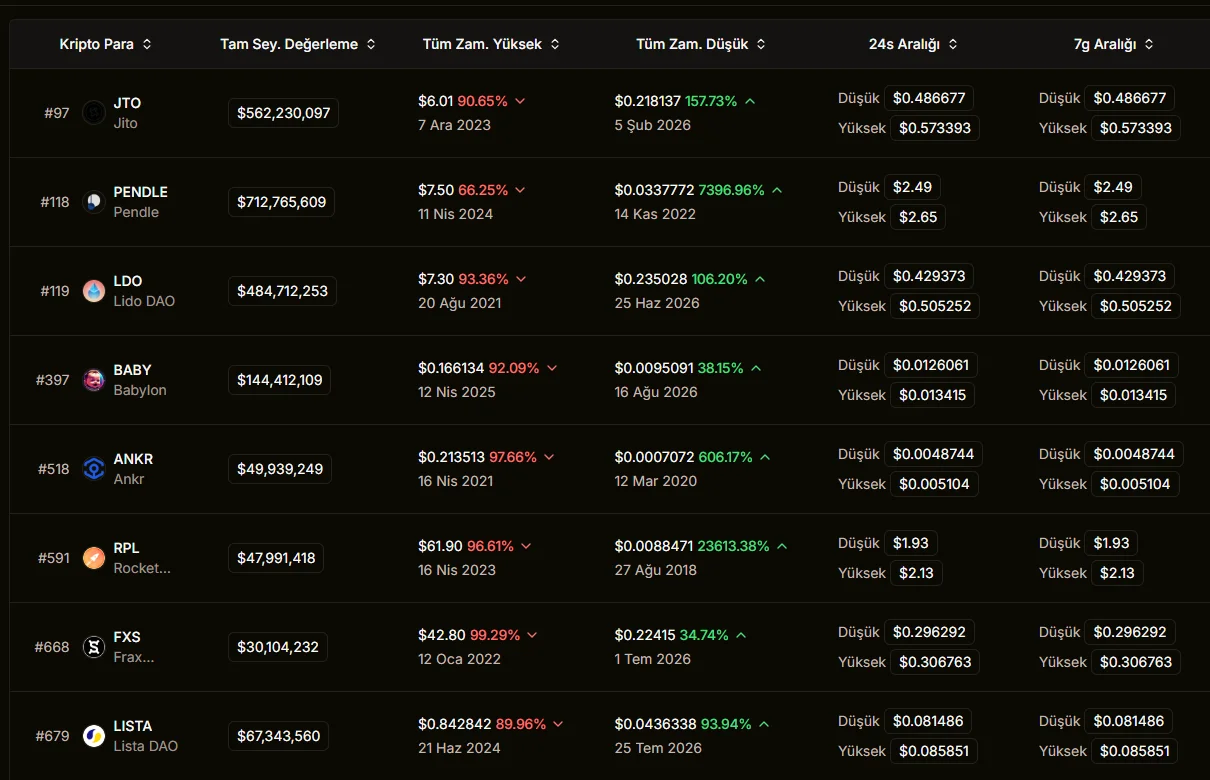
Some of the largest liquid staking tokens include:
How Are Maintenance and Development Activities Assessed?
According to the explanations, once a crypto system becomes functional, activities that secure, maintain or improve it do not constitute essential managerial efforts. Activities intended to increase network use and participation also fall within this scope.
Sponsoring or funding development projects is among the examples provided in the guidance. A team’s continued development of a functioning protocol therefore does not, by itself, satisfy the relevant element of the Howey test.
However, this assessment applies to functional systems. Commitments to complete a project that is not yet operational do not automatically fall within the same scope.
Promotional Communications and Profit Claims
The Division of Corporation Finance also addresses projects’ marketing messages. Promoting a crypto system’s existing utility and capabilities, without additional factors, is unlikely to constitute a commitment to undertake essential managerial efforts.
Indefinite, aspirational statements about future features may receive similar treatment. However, those statements must not promote the potential for profit.
This approach does not exclude every promotional activity from investment-contract analysis. Specific promises, the project’s circumstances and the communications as a whole remain relevant to the assessment.
Guidance Also Addresses Trading Platforms
According to the guidance, platforms that provide secondary markets for crypto assets do not automatically qualify as “promoters” simply because they facilitate trading. A platform must meet the definition of a promoter under Securities Act Rule 405.
The document also states that, where a functional crypto system has no central party, subsequent statements by the issuer would generally be unlikely to create a new investment contract. The key consideration is whether the issuer or another party retains control that could affect the system’s success or failure.
The FAQs build on the SEC’s March 17, 2026, interpretation concerning crypto assets and do not change existing laws or create new obligations. The document states that the Commission has neither approved nor disapproved its contents and explains how division staff interpret the existing framework.