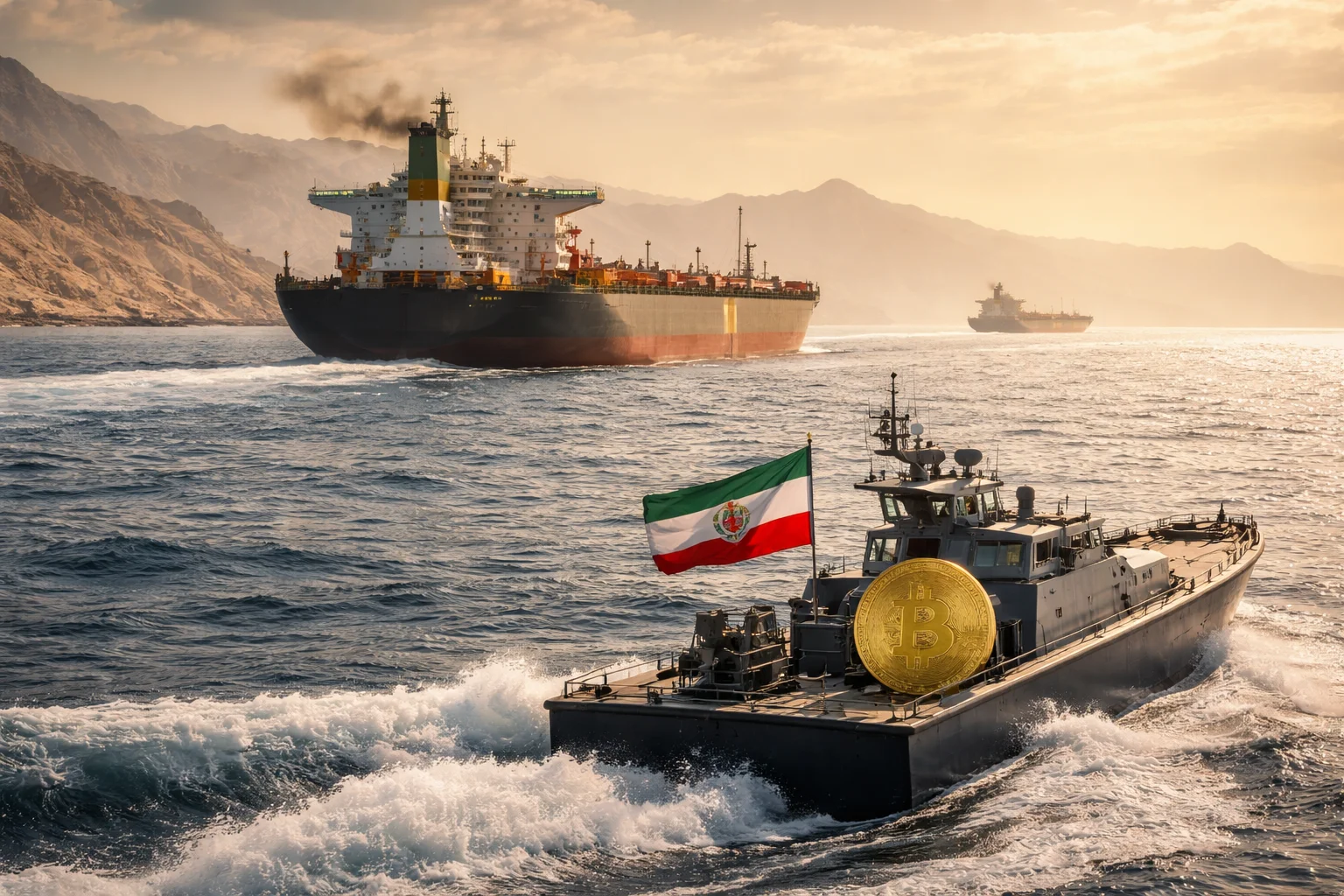
The claim that Iran plans to collect transit fees from oil tankers passing through the Strait of Hormuz using cryptocurrency stands out as a noteworthy breaking news development. According to information reported by the Financial Times, this practice is intended to be implemented during the two-week ceasefire declared with the US.
Crypto collection
Under the plan, fully loaded tankers will be required to notify Iranian authorities of their cargo details via email. Following this notification, a transit fee of approximately $1 per barrel will be calculated. Payment will be made directly through digital assets instead of traditional financial systems. Bitcoin is particularly highlighted as the prominent payment method in this process.
This model is not only a technical payment change; it is also considered a new link in Iran's alternative financial strategies developed to circumvent sanctions. The Tehran administration, which has long been under US and Western sanctions, is increasingly turning to the use of crypto assets to remain outside of dollar-based systems. This approach has been seen similarly in countries such as Russia. Statements by Hamid Hosseini, spokesperson for the Iranian Association of Oil, Gas and Petrochemical Products Exporters, clearly reveal the motivation behind this plan. Hosseini stated that the implementation is not only economic but also security-focused, aiming for closer monitoring of cargo passing through the strait. In this context, it is reported that empty tankers will be allowed to pass, but fully loaded ships will be subject to a crypto payment process.
Furthermore, it is stated that the payment process will be quite fast. Following the assessment by Iranian authorities, ships will be given only a few seconds to make payments. This short time frame aims to make it more difficult for sanctions mechanisms to be activated. This is because blockchain-based transactions, especially due to their fast and decentralized nature, operate largely independently of traditional financial auditing systems.
This development is interpreted as one of the most striking examples of the expansion of real-world use cases for crypto assets. Analysts point out that if crypto payment systems are used in this critical waterway, through which approximately 20% of global oil trade passes, this could be one of the largest-scale applications to date. However, the plan also carries risks. The possibility of Iran redirecting tanker traffic to a route closer to its own shores could raise security concerns, particularly for Western and Gulf-linked shipping companies. Given the geopolitical sensitivities in the region, such a redirection could create additional risks for maritime transport. Furthermore, it remains unclear how this model would be assessed under international law and trade rules. Mandatory crypto payments could create operational and legal challenges for some companies. Nevertheless, the adoption of alternative payment systems in heavily sanctioned areas could signal a “transition” in the global financial architecture.