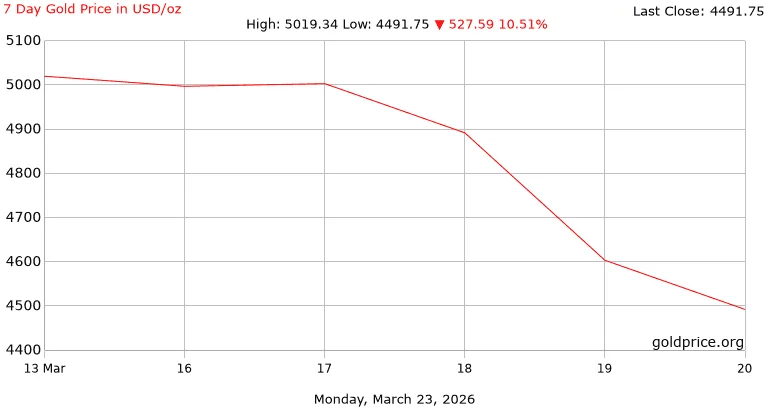
As the sell-off deepened in global markets, escalating geopolitical tensions in the Middle East put pressure on both traditional assets and the crypto market. Asian stock markets approached correction territory, bond yields rose, and oil prices experienced a sharp jump. However, Bitcoin's relative resilience amidst this negative picture was noteworthy. With rising geopolitical risks, investors adopted a more cautious stance, and a widespread sell-off emerged in the markets. Gold, traditionally considered a "safe haven," has lost value continuously for the past nine days, falling to around $4,360. This decline marks one of the longest negative streaks in recent years.
Meanwhile, Asian stocks approached a correction threshold with a three-day losing streak, while US and European futures indicated a weak opening.
On the energy side, however, the picture completely reversed. Brent oil prices rose to $113 per barrel, showing an increase of over 70% since the beginning of the year. Goldman Sachs described these developments as "one of the biggest supply shocks in history for global oil markets," and revised its year-end oil forecasts upwards. Rising energy prices, strengthening inflationary pressures, have also led to expectations that central banks may move away from interest rate cuts. This has caused bond yields to rise.
What's the latest on Bitcoin and altcoins?
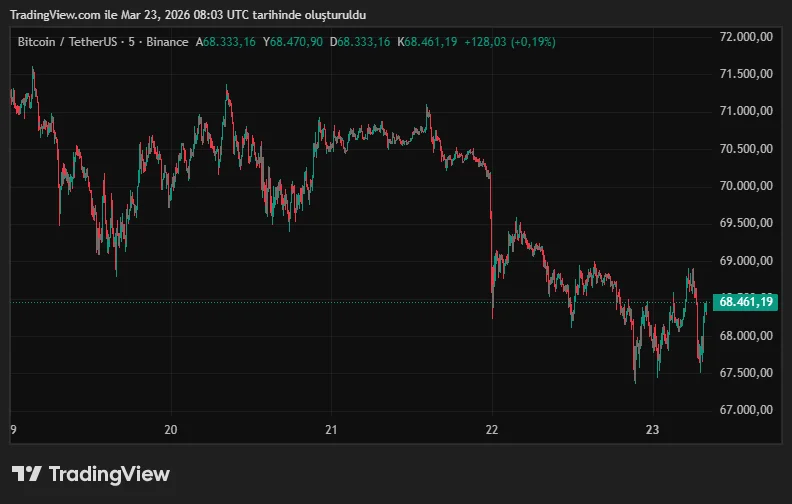
While the general trend in the crypto market is negative, Bitcoin's performance has remained relatively strong. Despite losing approximately 6% in value over the past week, the leading cryptocurrency has managed to hold above the $66,000 level. This level stands out as a significant support during all the war-related sell-offs since the end of February. Trading around $68,000 in Asian markets, Bitcoin has shown a slight recovery signal in the last 24 hours.
On the altcoin side, a weaker outlook prevails. Ethereum is trading around $2,050, while XRP has fallen to $1.38. While major assets like Solana and Dogecoin experienced sharper weekly losses, Tron was the only major cryptocurrency to show a limited but positive divergence on a weekly basis. The total cryptocurrency market capitalization fell to $2.35 trillion, reflecting a decline in investor risk appetite. Analysts note that current price movements stem not only from short-term market dynamics but also from deeper structural changes. In particular, the recent increase in gold reserves by some countries, especially China, created a significant shift in market direction. However, the escalation of conflict and the resulting need for liquidity reversed this buying trend in gold. On the other hand, the relatively strong performance of both Bitcoin's spot price and derivatives markets indicates continued institutional interest. Experts suggest that funding rates and futures markets may increase in the coming weeks, which could strengthen the possibility of an upside surprise in prices. Meanwhile, tensions remain high on the geopolitical front. The harsh statements from the US against Iran and threats regarding the Strait of Hormuz are increasing uncertainty about energy supplies. Iran's threat to close the strait in the event of a possible attack poses serious risks to global trade and energy markets.