US inflation data for March has been released, and market attention has once again turned to the trajectory of price pressures. The figures reveal that headline inflation was driven upwards, particularly by sharp increases in energy prices, while core indicators showed a relatively more balanced picture.
The Consumer Price Index (CPI) increased by 0.9 percent on a monthly basis in March. This increase was 0.3 percent in the previous month. Annual inflation rose to 3.3 percent, indicating a significant acceleration compared to the 2.4 percent level in February. Nevertheless, the data was slightly below market expectations. Expectations were around 3.4 percent on an annual basis.
Core inflation remained limited while energy prices rose
Looking at the details of the data, it is seen that the main driver of price increases was the energy item. Energy prices rose by 10.9 percent on a monthly basis, with the increase in gasoline prices exceeding 21 percent being particularly noteworthy. This shows that geopolitical tensions and supply-side uncertainties are directly reflected in consumer prices. In contrast, core inflation, excluding volatile items such as food and energy, showed a more limited increase. Core CPI rose 0.2 percent monthly in March, reaching 2.6 percent year-on-year. These figures were both below expectations and indicated that price pressures remain under control in the underlying trend. This divergence is considered a critical signal for the Federal Reserve's (Fed) policy decisions. While the rise in headline inflation could weaken expectations of interest rate cuts in the short term, the moderate trend in core inflation shows that the effects of tight monetary policy continue. Therefore, the Fed is expected to maintain its data-driven approach in the coming period and closely monitor volatility, especially in energy prices. The initial market reaction was cautious. While the data being slightly below expectations did not completely suppress risk appetite, the signal of renewed acceleration in inflation led investors to take a more balanced position. Limited movements were seen in bond yields, while the dollar index also showed a flat trend after the data.
What's the latest on Bitcoin?
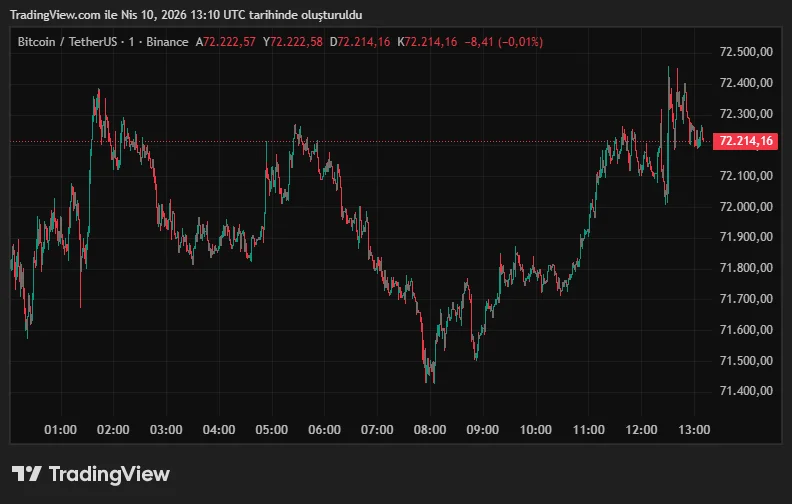
The cryptocurrency market experienced volatile movements around the time the data was released. Although Bitcoin experienced short-term volatility after the announcement, it maintained its upward trend throughout the day. According to the data shown in the image, the leading cryptocurrency traded around $72,200, gaining approximately 1.39% in the last 24 hours. While the price approached $72,800 during the day, it retreated slightly due to profit-taking after the data release, but remained strong overall.