
CME Group plans to launch Bitcoin Cash (BCH) and Uniswap (UNI) futures contracts on October 19, 2026. According to the company’s official announcement on September 22, the launch remains subject to regulatory review.
CME aims to give clients more options for managing price risk in altcoin markets. Both cryptocurrencies will have standard and micro-sized contracts.
Four new contracts for Bitcoin Cash and Uniswap
Standard Bitcoin Cash contracts will represent 250 BCH, while micro contracts will represent 25 BCH. For Uniswap, standard contracts will cover 10,000 UNI, with micro contracts covering 1,000 UNI.
Micro products will therefore allow positions at one-tenth the size of standard contracts. This structure will help traders adjust their exposure in smaller increments.
Giovanni Vicioso, CME Group’s Global Head of Cryptocurrency Products, said demand for regulated risk management tools is growing as the market matures. He said the new contracts would offer flexibility and capital efficiency within the company’s 24/7 marketplace.
Ripple Prime President Noel Kimmel, whose comments also appeared in the announcement, highlighted institutional investors’ need for around-the-clock access to derivatives markets. He emphasized the importance of the clearing and financing infrastructure supporting that access.
Daily crypto derivatives volume reaches $8.3 billion
According to CME’s figures, cryptocurrency futures and options recorded an average daily volume of 279,800 contracts in the first half of 2026. These trades represented approximately $8.3 billion in daily notional value.
The company’s second-quarter report also illustrates growth in crypto derivatives trading. Average daily contract volume in the first half increased by approximately 44% compared with the same period a year earlier.
In the second quarter alone, average daily volume stood at roughly 250,000 contracts. Total notional trading volume reached $459.2 billion during the period.
Bitcoin-related products accounted for the largest share, with $320.9 billion in second-quarter notional volume. Ether products followed at $114.2 billion; Solana and XRP products generated $12.8 billion and $10.8 billion, respectively.
The breakdown shows that Bitcoin and Ether continue to account for most trading activity as CME expands its product range. BCH and UNI contracts will broaden the company’s selection of products tracking individual cryptocurrencies.
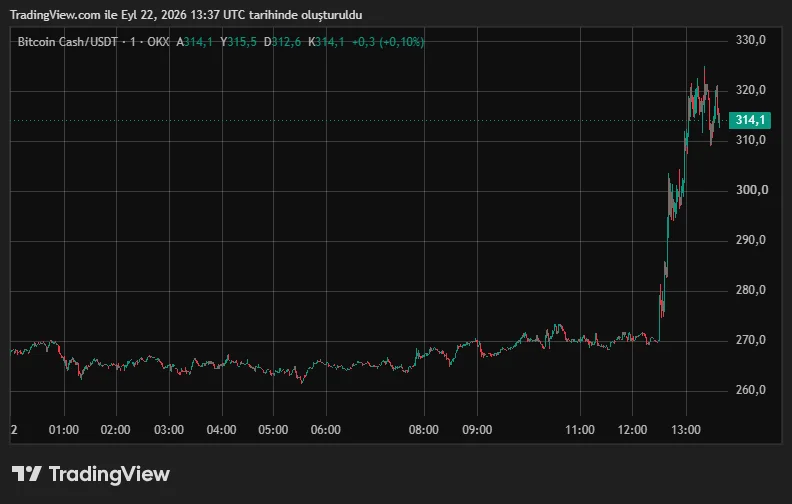
The two cryptocurrencies posted different price gains following the announcement. Bitcoin Cash climbed 16%, while Uniswap’s gain remained at 1%.
Altcoin products and weekend trading expand
CME added several altcoin futures products during the year. Following Cardano, Chainlink and Stellar contracts, Avalanche and Sui futures began trading on May 4.
In June, the company introduced Bitcoin Volatility futures, offering a separate tool for exposure to price fluctuations. Nasdaq CME Crypto Index futures, which launched that same month, provided exposure to multiple cryptocurrencies through a single contract.
The broader product range came alongside changes to trading hours. CME announced that its cryptocurrency futures and options moved to a 24/7 trading schedule on May 29.
More than 7,200 contracts changed hands during the first weekend under the new schedule. The company reported that these trades represented approximately $50 million in notional value.
CME executive Tim McCourt linked weekend access to clients’ changing needs. According to the company, the extended hours aim to let investors respond to crypto market movements over the weekend.
The trading schedule CME announced in February also includes a weekly maintenance window of at least two hours over the weekend. The 24/7 model therefore incorporates scheduled technical maintenance.