Ethereum co-founder Vitalik Buterin shared new assessments on the network’s long-term roadmap. The effort, called “Lean Ethereum,” is described as a transformation on the same scale as the Merge upgrade.
In a post on X on Saturday, Buterin wrote that this is not a one-time update, but a series of improvements that will unfold over the next three to four years. In his own words, this is Ethereum’s “third major iteration,” and almost every part of the protocol will change.
The post came after a meeting held by Ethereum researchers in Berlin at the end of June. The updated plan is part of a draft roadmap introduced in February by Ethereum Foundation researcher Justin Drake, which includes seven network upgrades through 2029.
Major Change in Data Storage
Buterin sees the change in the data storage system as the most disruptive part of the plan. Ethereum currently keeps everything, from token balances to exchange contracts, in a single expensive format. Under the new plan, this system will remain in place for the most complex applications, while a separate and cheaper layer will open for simpler applications.
In Buterin’s example, this new layer could carry 50 times more data than the old system by 2030. Most tokens, NFTs, and DeFi applications could move to the cheaper layer, while complex contracts such as Uniswap would remain in the existing system. No one will be forced to migrate, but transaction fees for a token designed according to the new system could fall by more than 10 times.
Quantum Security and Privacy Move to the Forefront
Quantum security has moved “very significantly” higher on the priority list, in Buterin’s own words. Concerns that future quantum computers could break today’s cryptography require vulnerable components on the roadmap to be replaced from end to end. The most urgent issue is finding a quantum-resistant design for blobs, the temporary data space used by Layer 2 networks to keep fees low.
Privacy has gained a similar position. Buterin said privacy is no longer an add-on feature, but a primary goal; new features are now designed with the question of how transactions can remain private in mind. A quantum-resistant network and private ETH transfers embedded into the base layer are listed among the five main goals of the draft roadmap.
What Will Replace the EVM?
Buterin also addressed alternatives that could replace the Ethereum Virtual Machine, the software environment that runs every application. He pointed to RISC-V and leanISA as the most likely candidates, but acknowledged that this change remains a distant target. The RISC-V proposal, which came up in April 2025, sparked debate; Arbitrum developer Offchain Labs argued last November that WebAssembly would be a better choice, but that option was not included in Buterin’s list on Saturday.
In the ideal scenario, the network would run entirely on the new engine, while the current EVM would remain as a translation layer so older applications can continue to operate smoothly.
Timing Pressure Continues
Buterin said Ethereum’s capacity will increase steadily over the next five years, with a major gas limit increase expected through the Glamsterdam upgrade. Glamsterdam, expected in the first half of 2026, has not yet gone live, and Hegota is expected to follow. Hegota, planned as this year’s second upgrade, is expected to be the last major hard fork before Lean Ethereum.
The post came about ten days after the Ethereum Foundation completed a restructuring that included laying off around 20% of its staff, or 54 people.
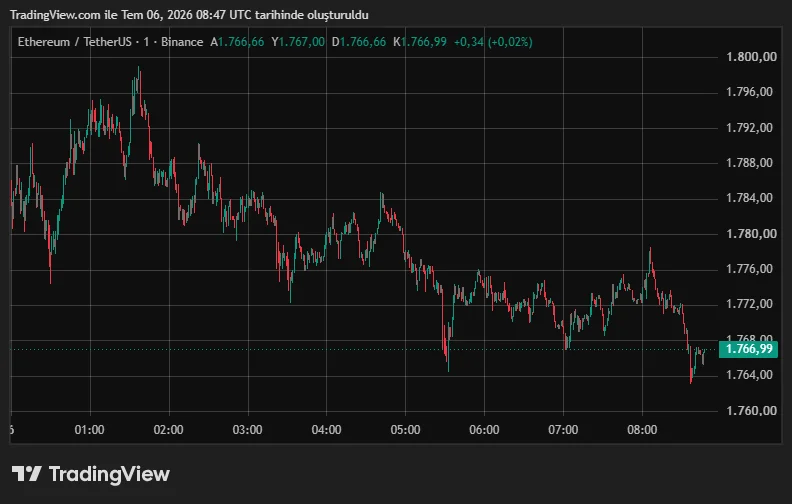
At the time of writing, Ethereum was trading around $1,762.83.