U.S. spot Bitcoin ETFs closed September’s final trading session with net outflows. Investors withdrew a net $148.7 million from the funds on Wednesday, September 30, ending nine consecutive trading days of inflows.
The Bitcoin funds had attracted approximately $3.1 billion during that stretch before demand weakened at month-end. Spot Ethereum ETFs also recorded $59.6 million in outflows on the same day, bringing combined net withdrawals across both groups to $208.3 million.
Fidelity Led Bitcoin ETF Outflows
According to Farside Investors, Fidelity’s FBTC recorded the largest net outflow of the day at $125.6 million. Bitwise’s BITB lost $13.6 million, while BlackRock’s IBIT saw $9.5 million leave the fund.
All other spot Bitcoin funds reported zero net flows. FBTC therefore accounted for approximately 84% of the day’s withdrawals; no fund recorded net inflows to offset those outflows.
BlackRock’s IBIT also ended its own nine-day inflow streak. The fund had attracted approximately $1.6 billion over the previous nine trading sessions.
IBIT’s outflow remained small compared with the inflows accumulated in preceding sessions. Still, the reversal at a fund that has accounted for a substantial share of Bitcoin ETF demand stood out in the month-end figures.
The fund-level breakdown shows that withdrawals were unevenly distributed across products. Fidelity’s outsized contribution is therefore an important factor when assessing the overall figure.
Withdrawals Reversed a Small Portion of the Nine-Day Inflows
The recent inflow streak had helped Bitcoin ETFs recover from outflows earlier in 2026. Approximately $3.1 billion in net demand helped push year-to-date flows back into positive territory.
The $148.7 million withdrawn on September 30 represents roughly 5% of that nine-day total. Although the streak ended, the withdrawals reversed only a small portion of the preceding inflows.
That comparison helps put the daily move into perspective. A single day of outflows is insufficient to establish a lasting decline in investor demand; flows over subsequent trading sessions will be needed to assess whether the shift persists.
ETF data alone does not explain why investors withdrew their money. Additional evidence would be needed to attribute the figures directly to profit-taking, institutional investors leaving the market, or a response to a particular macroeconomic development.
Ethereum ETF Outflows Extended Into a Second Day
Ethereum funds recorded a second consecutive trading day of net outflows. Before that reversal, spot Ethereum ETFs had attracted approximately $850 million over seven straight sessions.
Fidelity’s FETH accounted for the largest share of the $59.6 million withdrawn on September 30. The fund recorded $26.6 million in net outflows, followed by $25.5 million from Grayscale’s ETH and $7.5 million from its ETHE fund.
Both Bitcoin and Ethereum funds therefore ended September with negative daily flows after strong inflow streaks. However, the latest withdrawals in both groups remained below the amounts attracted during those preceding runs.
Cumulative net inflows into Ethereum funds since their trading debut stand at approximately $14 billion. The latest two days of withdrawals reduced that total while leaving cumulative flows firmly positive.
Whether outflows continue will be one of the developments to watch during October’s opening sessions. In particular, flows into and out of IBIT and FBTC remain major contributors to the daily aggregate for Bitcoin ETFs.
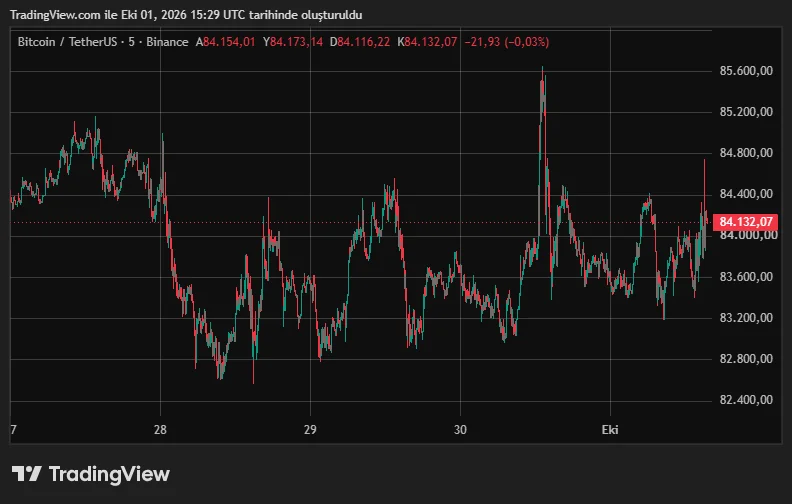
At the time of writing Bitcoin is trading at $84,199.71.