Consumer prices in the United States rose 4.2% year-over-year in May, marking the highest inflation rate recorded since 2023. The data arrived at an already complicated moment for the Federal Reserve’s monetary policy outlook and further strengthened expectations that at least one rate hike could come before the end of the year. Crypto markets responded cautiously to the figures.
Inflation matched expectations, but the picture is not comforting
According to data released Wednesday by the U.S. Bureau of Labor Statistics, the Consumer Price Index (CPI) increased 4.2% in May compared with the same period last year. The result was in line with economists’ expectations and confirmed a third consecutive month of accelerating inflation. On a monthly basis, prices rose 0.5%, with energy costs serving as the main driver of the increase.
Core inflation, which excludes volatile items such as food and energy, came in at 2.9% annually, also matching expectations. Monthly core inflation stood at 0.2%, slightly below the market forecast of 0.3%. Investors interpreted this limited easing as a small positive signal, though it did not change the broader picture.
Behind the increase is the renewed escalation in tensions between the U.S. and Iran. The conflict has tightened global oil supply, increased pressure on energy prices and effectively disrupted the Fed’s years-long effort to bring inflation back down to 2%.
The Fed’s path has narrowed further
The reading is the first major inflation data released under Fed Chair Kevin Warsh. His predecessor, Jerome Powell, had resisted repeated pressure from the Trump administration to cut interest rates. The central bank kept its policy rate steady in the 3.5% to 3.75% range throughout 2026. Signals under Warsh, however, point in a different direction. According to CME FedWatch data, markets are now pricing in at least one rate hike by year-end. At the start of the year, the dominant scenario was based on three rate cuts.
Iggy Ioppe, chief investment officer at Theya, summarized the situation as follows: “For Bitcoin, an inflation print that matches expectations is not a clean catalyst. It keeps liquidity expectations under pressure and means risk assets will continue trading around positioning, rather than a fresh dovish impulse.”
The impact of interest rate pressure on crypto is direct. As rates rise, cash and U.S. Treasuries become more attractive due to their yields. Non-yielding assets such as Bitcoin and gold, meanwhile, lose some of their appeal.
Bitcoin attempts to recover
At the time of writing, Bitcoin was trading at $61,295, as shown on the chart, down 2.19% over the past 24 hours. After the inflation data was released, the price climbed from $61,000 to around $61,750, then held near the $62,000 range. The recovery is part of a broader rebound that has continued since last Friday’s selloff, which was triggered by strong employment data.
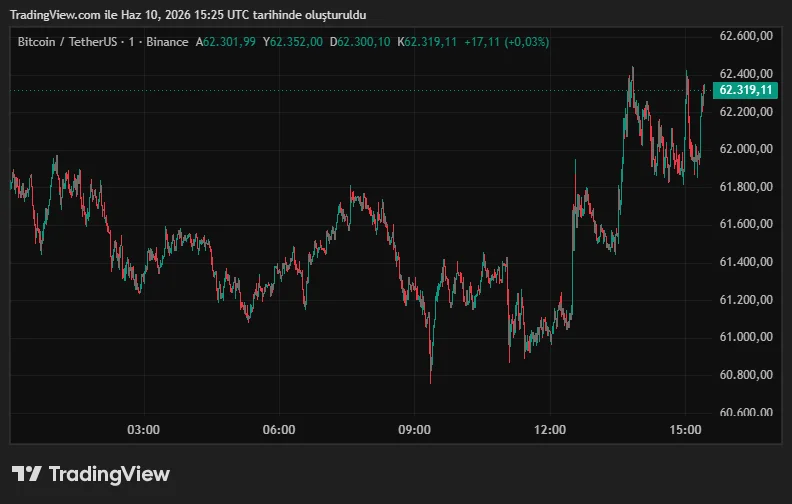
The weekly picture remains more severe. BTC has fallen 8.67% over the past seven days. Its 30-day loss has reached 24.35%, leaving the market divided over whether the current rebound is a real breakout or only temporary relief.
Ethereum rose to $1,650, XRP to $1.12 and Solana to $65. XRP remained down 1.6% on a 24-hour basis, while Ethereum and Solana turned positive.