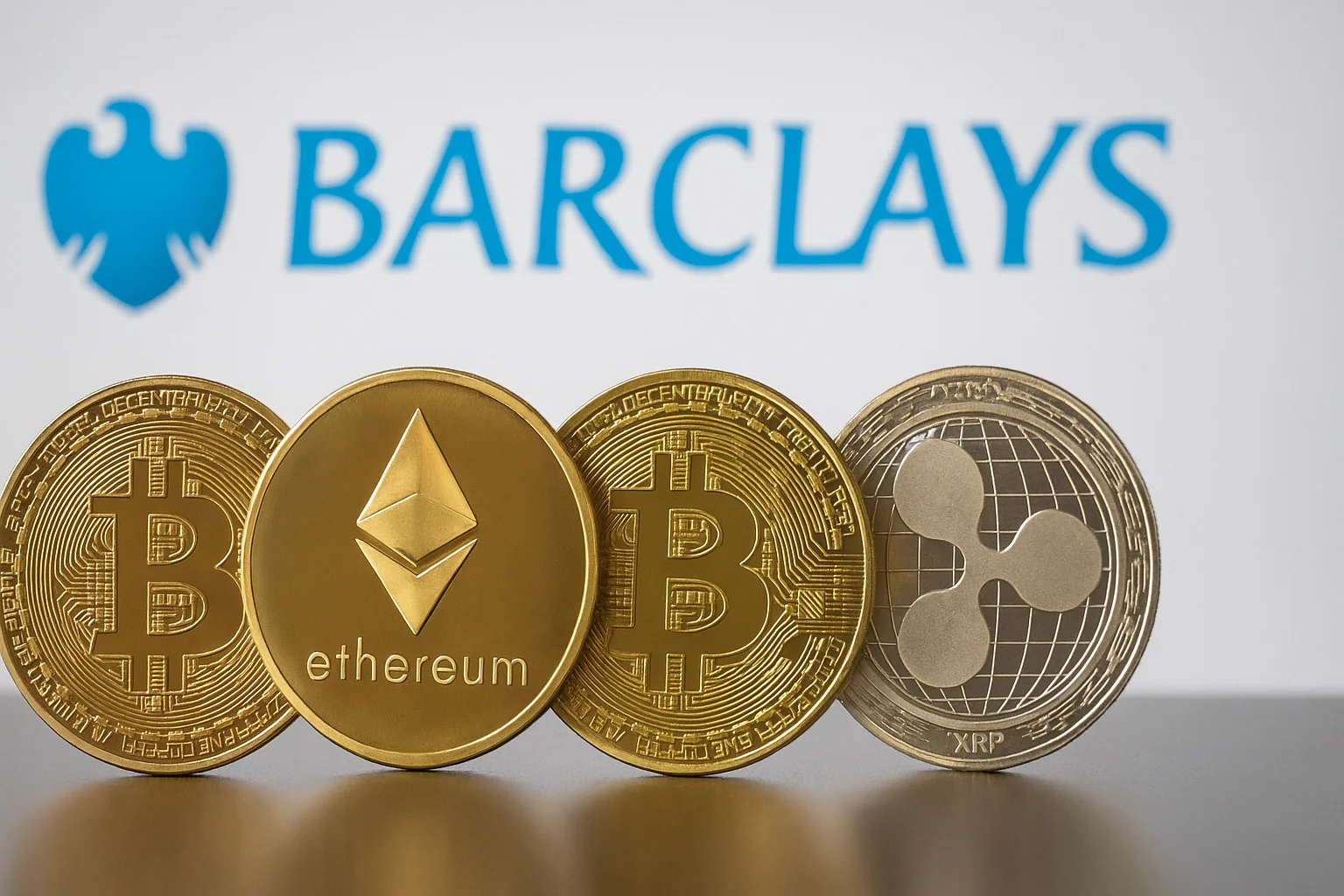
In its year-end report, Barclays painted a cautious picture for the cryptocurrency markets in 2026. According to the bank, the coming year will be a period of declining trading volumes, weakening investor appetite, and a lack of clear catalysts to trigger a new upward trend. This outlook is particularly challenging for individual investor-focused platforms like Coinbase and Robinhood, which derive a significant portion of their revenue from spot market trading. The report emphasizes that crypto markets have historically been largely driven by strong narratives and noteworthy developments. Intense inflows into spot Bitcoin ETFs in March 2024, or political developments in the US highlighting crypto-friendly rhetoric, led to short-lived surges in trading volume. However, according to Barclays analysts, in the absence of such events, it seems difficult for the market to generate strong momentum on its own. The bank expects spot crypto trading volumes to trend downwards in fiscal year 2026 and sees no clear trigger to reverse this trend. This slowdown in spot markets translates directly into revenue pressure, especially for platforms like Coinbase and Robinhood. Analysts note that these companies, which benefited significantly from individual investor interest during the recent bull run, are now facing a calmer market environment. The decline in trading volumes is limiting fee revenue, while high operational costs are putting additional pressure on profitability.
There are question marks regarding regulation
In Barclays' report, the regulatory aspect stands out as an area with long-term potential but short-term uncertainty. The CLARITY Act, currently under consideration in the US, aims to clarify the framework for whether digital assets are considered commodities or securities. This bill could make it clearer which assets fall under SEC oversight and which under CFTC oversight. According to the bank, such regulation could reduce the operational risks of crypto companies and pave the way for new products, particularly tokenized assets. However, given potential legal challenges and the implementation process, the passage of the bill through the Senate is not guaranteed to significantly boost the market by 2026. Coinbase holds a special place in Barclays' analysis. While the company is trying to expand into areas such as derivatives and tokenized stocks, according to the bank, weakness in spot trading volumes in the short term is overshadowing the impact of these initiatives. Therefore, Barclays lowered its target price for Coinbase stock to $291 and adopted a more conservative profit expectation.
On the tokenization side, interest continues to grow. BlackRock, Robinhood, and some other major players are conducting pilot projects in this area. Despite this, Barclays believes that tokenization is still in its early stages and will be difficult to make a significant contribution to company balance sheets in 2026.
Looking at the overall picture, Barclays defines 2026 as a "transition year" for the crypto markets. In this period, where individual investor activity is weak and short-term momentum is limited, sector players are focusing more on long-term strategies, regulatory compliance, and new product infrastructure. When and to what extent these investments will yield returns remains uncertain for now.