
AAVE/USDT Technical Outlook
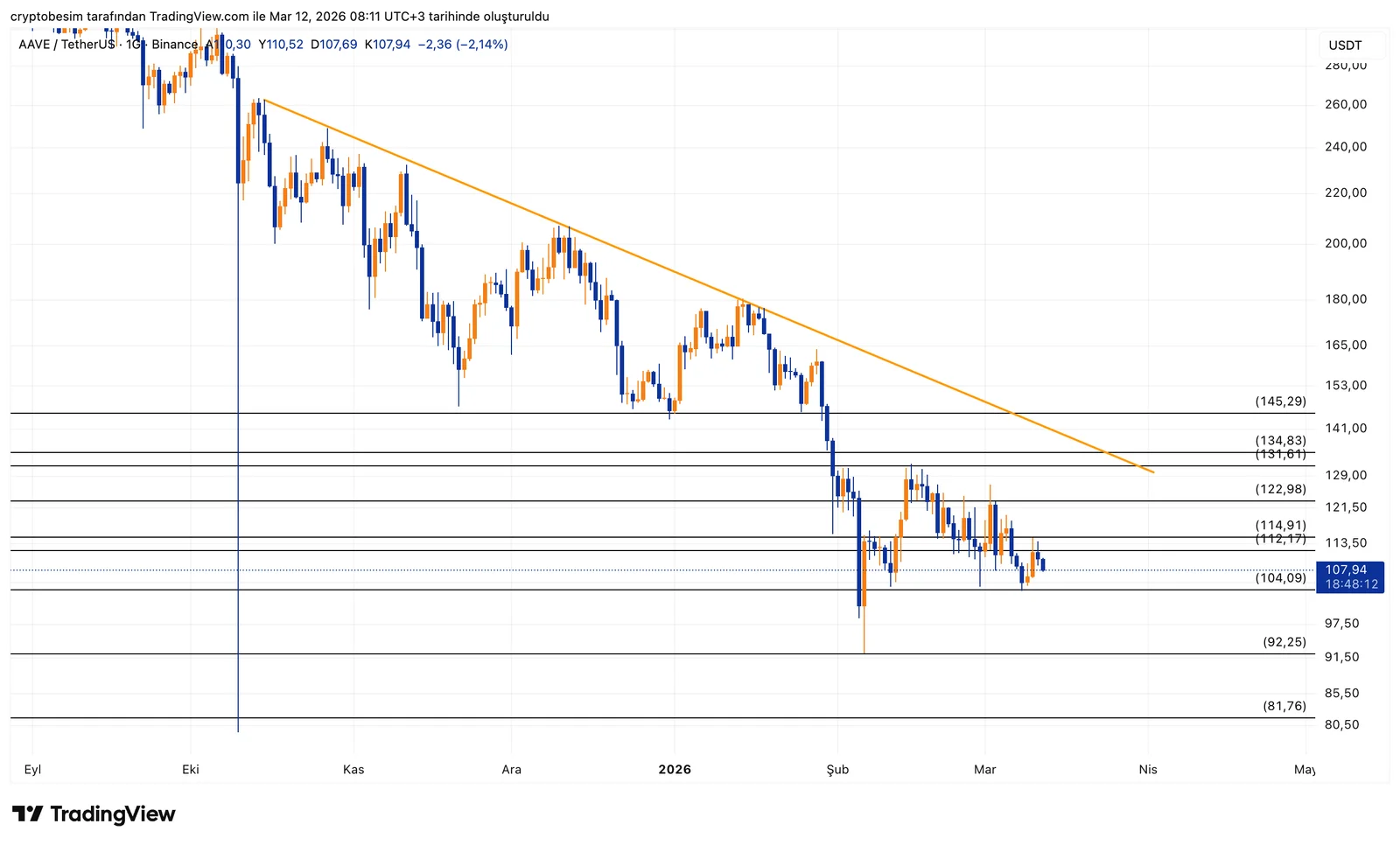
The 131$ level mentioned in the previous analysis worked exactly as expected. As soon as price approached that area, it faced selling pressure and started moving downward again. In other words, the descending trend structure remains intact, and what we are seeing so far are only intermediate relief reactions.
Currently, the price is trading around 107–108 dollars and has been consolidating within the 104–114 dollar range for some time. This area appears to be a short-term equilibrium zone where the market is trying to establish balance. The 104 dollar level has been tested multiple times and buyers stepped in each time. For that reason, if this level breaks downward, selling pressure could accelerate.
On the upside, the first level to monitor is the 114–115 dollar range. If price manages to establish acceptance above this area, 122 dollars could be tested again. However, when looking at the overall structure of the chart, these moves still resemble corrective bounces within a broader downtrend. The key level that would actually change the bigger picture remains 131 dollars. Without a break above this level, it is difficult to talk about a medium-term trend reversal.
On the downside, 104 dollars stands out as a critical support. If price drops below this level, the next supports appear around 92 dollars, followed by a stronger support zone near 81 dollars.
In summary, the 131 dollar region identified in the previous analysis worked accurately, and the market turned downward from that level. At the moment, the chart is mostly attempting to establish balance between 104 and 114 dollars. The side that eventually breaks out of this range will likely determine the short-term direction.
These analyses do not provide investment advice and focus on support and resistance levels that are considered to offer short- and medium-term trading opportunities depending on market conditions. However, responsibility for execution and risk management lies entirely with the user. In addition, the use of stop loss is strongly recommended.