DeFi yield opportunities often appear scattered, technical, and difficult to follow. Turtle aims to bring liquidity providers, protocols, and the distribution channels that deliver these opportunities to users under one structure. The TURTLE token is positioned as the crypto asset that plays a role in governance, incentives, and network participation within this ecosystem.
Turtle’s Definition and Origin
Turtle operates as a distribution protocol that connects DeFi yield opportunities with different platforms and users. In its official documentation, the project is described as a three-sided marketplace that matches yield opportunities with the wallets, exchanges, neobanks, and other platforms that distribute them. On the other side of this structure are protocols looking to attract liquidity.
In this model, Turtle does not work merely like a yield dashboard. The protocol links which user provided liquidity to which opportunity through which distribution channel on-chain. This allows distributors that bring liquidity to earn revenue share, while protocols pay only for the liquidity that is actually provided.
TURTLE is the token of the Turtle ecosystem. According to Binance Research, TURTLE is listed as an ERC-20 token that represents participation in Turtle Protocol and is used in the network’s governance and incentive mechanisms. The token appears to have been designed especially to support alignment between the protocol’s liquidity distribution network, the community, and stakeholders.
Which network does it run on?
The official contract page for TURTLE shares addresses on Ethereum, BNB Smart Chain, and Linea. The same page also includes addresses for sTURTLE, the staking contract, CCIP bridge pool, DAO multisig, and Governor. This shows that the token is handled together with multi-chain usage and governance infrastructure.
The project’s launch purpose
Turtle’s launch purpose is to make liquidity distribution in DeFi more traceable and more efficient. In traditional liquidity mining campaigns, protocols often allocate large incentive budgets. However, it is not always easy to measure whether this budget goes to lasting liquidity or to short-term yield-seeking capital.
Turtle tries to solve this problem with an attribution model. When a user deposits into a vault, this transaction is recorded on-chain together with the identity of the distributor that referred the user. This allows the protocol to see the source of incoming liquidity; the distributor can also receive revenue share based on the TVL it brings.
The project’s documents also emphasize that user assets are not held by Turtle. The user signs the transaction from their own wallet, the funds go to the selected vault contract, and Turtle does not provide custody during this process. This structure places the project closer to a distribution and coordination layer than to a centralized yield platform.
Turtle’s History: Key Milestones
Turtle’s early phase took shape around a structure that connected liquidity providers with specific DeFi opportunities. According to the Binance Research roadmap, Turtle’s MVP launch began in the second quarter of 2024. During this period, the project moved forward with its dashboard and Deals Boost product in the first stage, called the “bootstrap phase.”
At the center of this first model was the goal of attracting more efficient liquidity to protocols and offering better-structured opportunities to liquidity providers. Turtle aimed to make opportunities that large liquidity providers could access available to a broader user base. For this reason, the project is positioned differently from a classic DEX or lending protocol.
By 2025, Turtle v1 and then the v2 process came to the forefront. According to Binance Research, the new dashboard, app, and brand design were introduced in the first half of 2025. In the second half of 2025, products such as the Leaderboard, Portfolio Page, Discovery Page, Earn Widget, Turtle API, and partner analytics were introduced for the first time within a broader structure.
Listings and developments
One of the most visible developments on the TURTLE token side was Binance’s HODLer Airdrops announcement. In October 2025, Binance announced the HODLer Airdrops program for TURTLE and stated that 10 million TURTLE rewards, equal to 1% of the maximum total supply, had been allocated under this program.
After the token entered the market, it began trading on different platforms such as Gate, KuCoin, Binance, MEXC, and Uniswap.
The project also attracted attention on the funding side. It was announced that Turtle received an additional $5.5 million investment in October 2025, bringing its total funding to $11.7 million. The same announcement stated that Turtle had reached more than 358,000 connected wallets and over $5.5 billion in routed liquidity.
Current status
Today, Turtle positions itself as an on-chain liquidity distribution infrastructure. On the official website, product-side features such as opportunity discovery, analysis, investing, monitoring, and position management stand out. The project aims not only to help users find DeFi opportunities, but also to follow risk and performance in a more organized way.
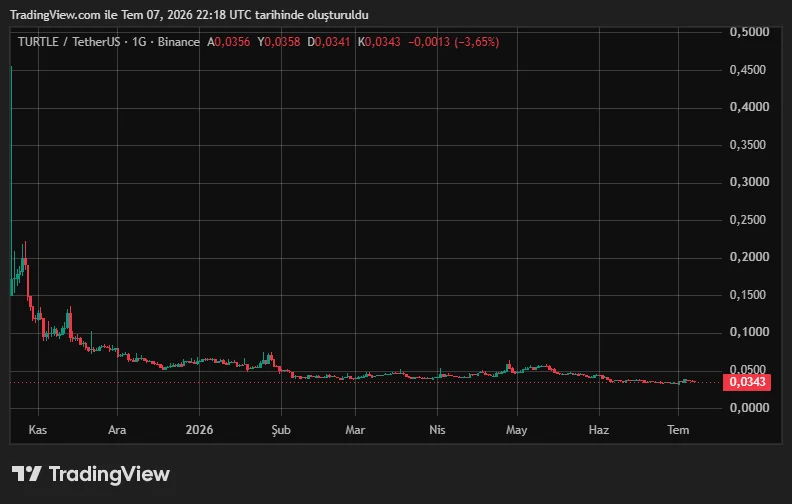
As of July 2026, the TURTLE coin price is hovering around $0.03.
How Does the TURTLE Token Work?
The main use case of the TURTLE token is built around governance and ecosystem participation. According to the official governance documentation, users can stake TURTLE and receive sTURTLE. sTURTLE holders can either vote directly or delegate their voting power to another delegate.
This structure shows that the token is designed not only as a market asset that can be bought and sold, but also as a tool that can play a role in protocol decisions. It is stated that issues such as treasury management, protocol direction, and integrations may be influenced through the governance process. However, the governance structure may take time to mature, and its practical impact depends on community participation.
There is also an additional use case on the staking side. According to the official documentation, users can stake TURTLE and receive up to a 10x boost on the Turtle Shells leaderboard. This boost is applied linearly based on the ratio between the value of staked sTURTLE and the value of the user’s position in certain opportunities.
The Turtle team also states that token use cases may expand in the future. In the documentation, broader access to liquidity opportunities, fee discounts, yield boost mechanisms, buyback or redistribution models, and advanced staking layers are listed among possible future use cases. These should not be read as currently guaranteed features, but as areas that may develop depending on governance and ecosystem decisions.
Supply and token economy
TURTLE’s maximum and total supply is announced as 1 billion tokens. Binance Research gives the initial circulating supply during the Binance listing process as 154.7 million TURTLE. This corresponds to 15.47% of the total supply.
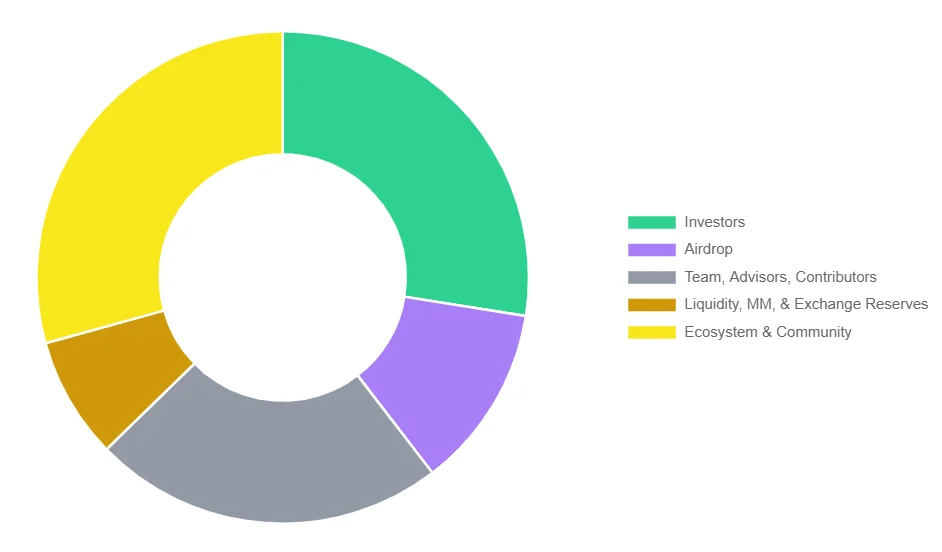
On the official tokenomics page, the supply distribution is divided into several main categories. Private rounds, meaning investor rounds, receive 27.50% of the supply; the airdrop receives 12.10%; and the team, advisors, and contributors receive 23.10%. Liquidity, market makers, and exchange reserves account for 8.00%, while the ecosystem and community category stands out as one of the largest allocations with 29.30%.
On the vesting side, investor tokens have a 6-month cliff and a 36-month linear unlock. The team, advisors, and contributors have a 12-month cliff and again a 36-month linear vesting schedule. On the airdrop side, a claim and partial linear unlock mechanism is used.
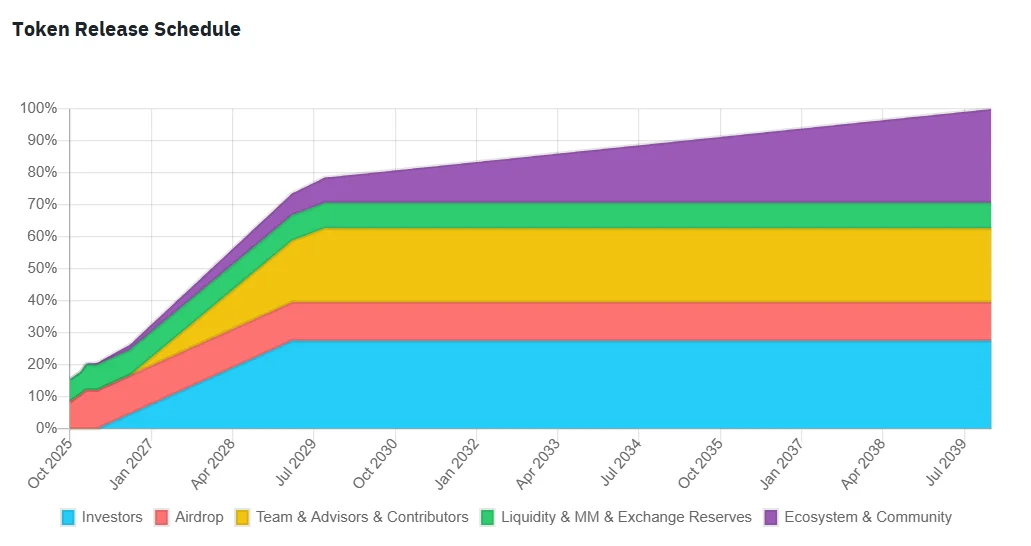
This structure makes two points important for investors. First, there is a significant gap between circulating supply and total supply. Second, future token unlocks may create pressure on the price. This situation is not unique to TURTLE; similar risks exist for many tokens that enter the market with a low circulating supply ratio.
Network, transaction, and security structure
Turtle’s security approach is divided into several layers. According to the official documentation, Turtle does not custody user assets, does not access private keys, and does not have the authority to move or freeze user funds. The user signs through the interface where the transaction is created, while the assets go directly to the selected vault contract.
Turtle runs opportunities through a review process before adding them to its catalog. This review covers areas such as technical risk, smart contract risk, operational risk, and curator assessment. The project also states that featured vaults undergo independent solvency checks, while some smart contracts are audited by independent security firms.
Still, these mechanisms do not completely remove risk. DeFi vaults, bridges, incentive campaigns, market volatility, and third-party protocols can carry different risks. Turtle mainly acts here as an infrastructure layer that reviews, distributes, and attributes opportunities. The selected vault’s own contracts and risk profile should also be assessed separately.
Attracting liquidity in DeFi is an expensive and complex process. When a protocol launches a new product, starts an ecosystem campaign, or wants to grow TVL, it usually allocates an incentive budget. However, it is not easy to measure whether these incentives reach the right users, whether they create lasting liquidity, and which channel actually delivers results.
This is where Turtle’s core problem area appears. The project makes the relationship between liquidity providers and protocols more data-driven. Recording which distributor each deposit came through helps measure campaign performance more transparently.
This model also opens a new revenue area for distributors. Wallets, exchanges, or different platforms can offer DeFi yield opportunities to their own users through Turtle Earn integration. If those users provide liquidity to a vault, the distributor can earn revenue share based on the TVL it brings.
Its place in the ecosystem
Turtle does not directly fit into one of the classic protocol categories in DeFi. It is not a lending protocol, DEX, stablecoin project, or only a yield aggregator. It works more like a distribution and attribution infrastructure that organizes liquidity flow between these areas.
From this perspective, Turtle’s place in the ecosystem can be summarized as a coordination layer between capital owners and protocols seeking capital. Protocols can create campaigns through Turtle, distribution partners can deliver these opportunities to their own users, and liquidity providers can access pre-reviewed vaults.
The project’s official announcements refer to ecosystem campaigns such as Avalanche, Katana, Linea, and TAC. Binance Research also lists Avalanche, MetaMask, Binance, and more than 60 protocol integrations among business developments. These types of partnerships support Turtle’s goal of becoming an infrastructure that works not only for individual users, but also at the protocol and ecosystem level.
Turtle’s Community and Ecosystem
On its official website, Turtle lists Essi as Founder & CEO and Nick as Founder & CTO in the team section. The same page also includes different team members working across CMO, COO, business development, product, liquidity desk, and marketing roles. The press release also identifies Essi Lagevardi as CEO. Since Nick’s surname is not clearly stated on the official homepage, this guide uses only the naming provided on the official website.
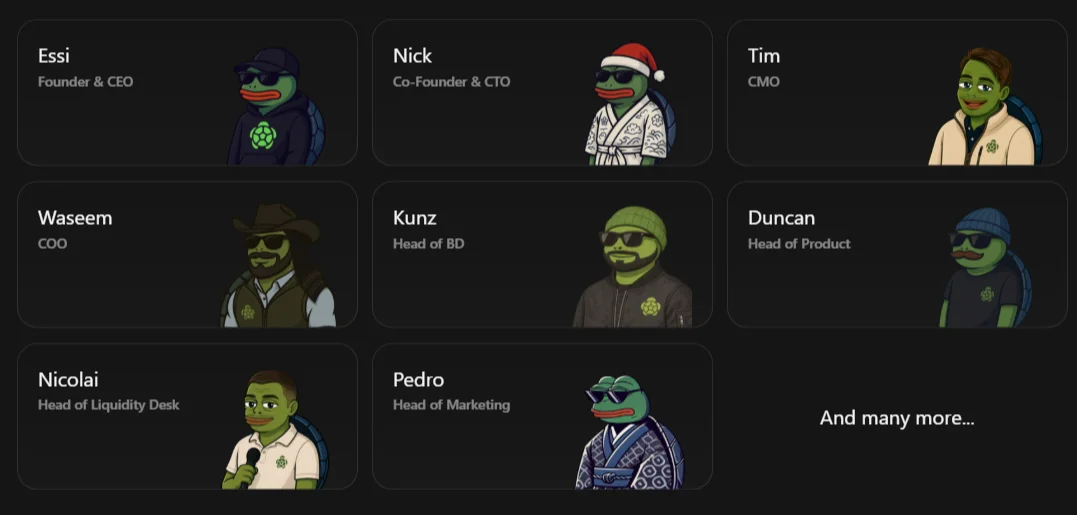
The team structure shows that Turtle is building not only a technical product, but also a model that grows through business development and liquidity relationships. This is because the project’s success does not depend only on contracts working properly. Agreements with protocols, integrations with distribution partners, and relationship management with liquidity providers also play important roles.
On the investor side, Turtle has a fairly broad list of backers. The official website and press releases refer to SIG, Amber, Consensys, FalconX, GSR, Flowdesk, Theia, Trident Digital, and different crypto investors. This support shows that the project has gained visibility on the institutional and professional liquidity side; however, investor backing alone does not mean guaranteed success.
Community and governance
One of the most important community-side topics for TURTLE was the Genesis Airdrop process. According to the official documentation, airdrop eligibility was determined through wallets that made real and measurable contributions to the Turtle ecosystem. It was stated that Sybil and bot activity were filtered, while verification was carried out through on-chain data and partner payouts.
The airdrop mechanism is not based only on passive NFT ownership. The documents state that users with an NFT or Discord role also had to make measurable contributions to the DAO. Some campaigns, leaderboard rankings, and referral activities were also included in the distribution scope.
On the governance side, TURTLE holders stake their tokens and receive sTURTLE. To vote, sTURTLE must be delegated. The official documents also explain parameters such as proposal threshold, quorum, voting delay, and voting period. This structure shows that the Turtle DAO may gradually play a more visible role in protocol decisions.
Partnerships and use cases
Turtle’s partnerships are shaped around liquidity campaigns, ecosystem integrations, and distribution partnerships. The official press release highlights campaigns such as TAC, Linea Ignition, Katana, and Avalanche. These campaigns aim to show Turtle’s capacity to gather and direct liquidity around specific goals across different networks.
Turtle Earn is one of the important products on the distribution side. Through this structure, wallets, exchanges, or other platforms can integrate Turtle opportunities into their own interfaces. Turtle API documentation also states that products such as Earn, Streams, and portfolio data can be used through a single REST API.
On the use case side, Turtle’s focus stands out as DeFi yield, liquidity campaigns, vaults, incentive distribution, revenue share, and governance. The TURTLE token is associated with functions such as decision-making, staking, boost, and contribution incentives within this ecosystem. However, the impact of all these functions will become clearer over time depending on the protocol’s level of usage.
Frequently Asked Questions (FAQ)
Below, we have included some frequently asked questions and answers about Turtle:
- What is Turtle, and when did it launch?: Turtle is a liquidity distribution protocol that connects DeFi yield opportunities with liquidity providers and distribution channels. According to the Binance Research roadmap, Turtle’s MVP launch began in the second quarter of 2024. Throughout 2025, the project moved into a broader structure with products such as the dashboard, Earn, API, leaderboard, and partner analytics.
- What is the TURTLE token used for?: The TURTLE token is a crypto asset used for governance and participation within the Turtle ecosystem. Users can stake TURTLE to receive sTURTLE, delegate their voting power to themselves or another delegate, and participate in the governance process. The token is also associated with staking boosts and ecosystem incentives.
- Which network does Turtle run on?: According to the official contract page, the TURTLE token exists on Ethereum, BNB Smart Chain, and Linea. The same page also shares addresses for staking, the bridge pool, DAO multisig, and Governor contracts. Turtle’s product infrastructure aims to provide access to yield opportunities and vaults across different EVM networks.
- Who is the founder of Turtle?: On the official Turtle website, Essi is listed as Founder & CEO, while Nick is listed as Co-Founder & CTO. Turtle’s October 2025 press release states that the CEO is Essi Lagevardi. Since Nick’s surname is not clearly given on the official homepage, this information should not be presented as fully confirmed.
- What is the TURTLE supply?: TURTLE’s maximum and total supply is announced as 1 billion tokens. Binance Research gave the circulating supply at the time of listing as 154.7 million TURTLE. On the official token economy page, 27.50% of the supply is allocated to investor rounds, 12.10% to the airdrop, 23.10% to the team and contributors, 8.00% to liquidity and exchange reserves, and 29.30% to the ecosystem and community category.
- Is Turtle suitable for investment?: Turtle presents a notable model in the DeFi liquidity distribution field. However, TURTLE is a crypto asset with a low market capitalization, high volatility, and future token unlocks. For this reason, any investment decision should consider the price chart, supply unlocks, real usage, liquidity conditions, project revenues, and personal risk profile together. This guide is not investment advice.
Follow the JR Kripto Guide series for the latest information about Turtle and new projects in the crypto ecosystem.