World Liberty Financial (WLFI), a decentralized finance (DeFi) project linked to the Trump family, has issued a strong response to recent criticism regarding increased liquidation and "bad debt" risks in the market. The project team characterized claims that their high borrowing position on the Dolomite protocol is risky as "FUD" (fear, uncertainty, and doubt), defending the sustainability of the current structure. In a statement, WLFI emphasized that the platform is "never close" to liquidation risk. The team stated that they could provide additional collateral even if market conditions were to turn against them. Project officials noted that this approach is a common mechanism in DeFi protocols and that this is how the system works.
However, on-chain data points to a more complex picture. According to the blockchain analytics platform Arkham, WLFI borrowed approximately $75 million worth of stablecoins on Dolomite, using around 5 billion WLFI tokens as collateral. It was noteworthy that a significant portion of this debt, approximately $40 million, was transferred to Coinbase Prime wallets. This move led to speculation that the funds may have been used for fiat conversion or over-the-counter (OTC) transactions.
Concentration risk discussed in the protocol
WLFI's position on Dolomite is in the spotlight not only because of the size of its debt but also because of its weight within the protocol. According to data, WLFI represents approximately 55% of the total value locked (TVL) on the platform. In addition, the usage rate in the USD1 pool exceeding 93% indicates a liquidity crunch that could make it difficult for other users to withdraw their funds.
Some DeFi researchers and analysts argue that such a concentration could pose a systemic risk. In particular, it is stated that a sharp drop in the price of the WLFI token could make it difficult to liquidate the collateral, leading to significant losses for lending users. Using a low-liquidity asset as collateral on this scale is cited as a factor that could further increase the risk.
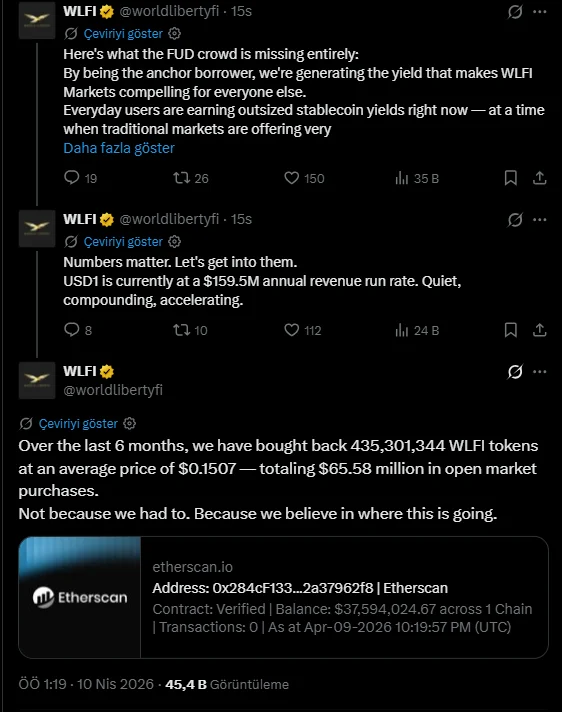
WLFI, however, offers a different perspective against these criticisms. The project states that it positions itself as an "anchor borrower," meaning the main borrower in the protocol, thereby generating higher returns for other users. The team argues that this model strengthens the Dolomite ecosystem.
Token buybacks and new plans on the agenda
According to data shared by the project, WLFI has repurchased 435.3 million tokens in the last six months at an average price of $0.1507. The total value of these transactions is approximately $65.58 million. It was also announced that the annualized revenue of the USD1 stablecoin has reached $159.5 million. On the other hand, WLFI is preparing to introduce a governance proposal next week that will be of great interest to early-stage investors.
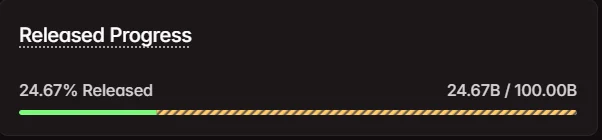
This proposal is expected to involve a vote on a plan to gradually unlock WLFI tokens, which are currently largely locked. The project states that not all tokens will be released at once, but instead a long-term, phased vesting model will be implemented. According to Tokenomist data, only 24.67% of the total 100 billion supply is in circulation. The remaining 75% consists of tokens that are locked or planned to be unlocked in the future. This situation has created dissatisfaction among early investors regarding access to liquidity. It has even been suggested that some investors are considering legal action.