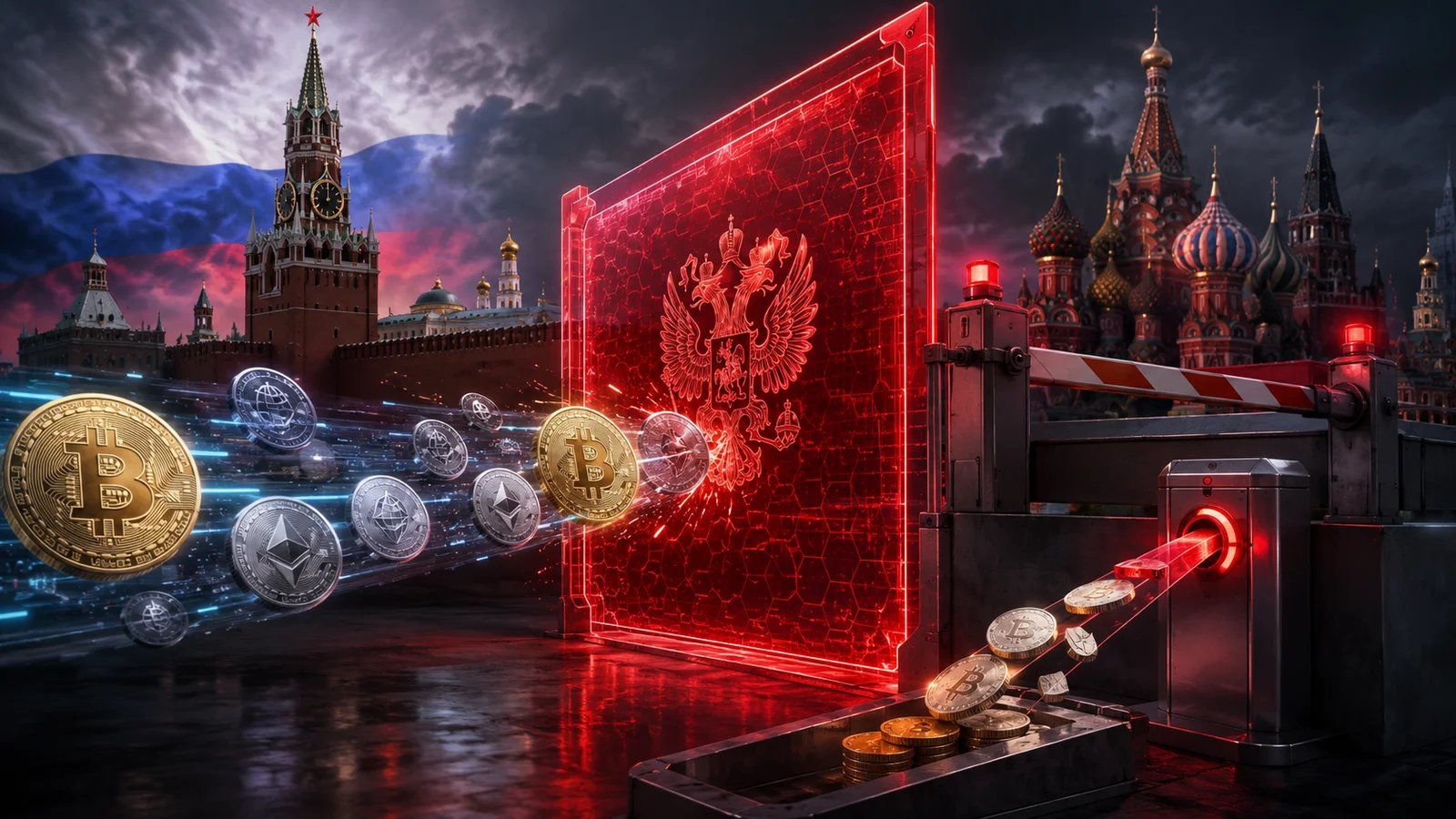
Russian Deputy Finance Minister Ivan Chebeskov said Russia plans to introduce transaction fees and restrictions on Western-linked cryptocurrencies. Speaking to reporters on June 9 at the St. Petersburg International Economic Forum (SPIEF 2026), Chebeskov said the proposed measures aim to steer Russian investors away from assets considered “unfriendly.”
Under the draft framework, Russia would create a system consisting of economic incentives, technical restrictions and recommendation mechanisms. Chebeskov said, “There may be both technical protective measures and various practices such as economic incentives, commissions or recommendations that encourage citizens to hold other assets.”
Which cryptocurrencies are being targeted?
The draft defines tokens issued by entities under the jurisdiction of countries included in Western sanctions lists as “unfriendly.” The main assets falling under this classification are USDT, USDC and BNB.
The common thread is clear: the issuers of these three assets, Tether, Circle and Binance, have previously frozen wallets or restricted access for Russian users at the request of foreign authorities. Russia frames this situation directly as a sovereignty issue.
Freedom Global analyst Vladimir Chernov estimates that possible fees could range between 0.5% and 2% for “unfriendly” token transactions, while dollar-linked stablecoins could face fees of up to 3%. Chernov also stressed that excessively high fees could push users toward informal channels.
What will retail investors be able to buy?
According to statements from Central Bank Deputy Governor Vladimir Chistyukhin, starting July 1, 2026, Russian citizens without qualified investor status will be allowed to trade only three tokens: Bitcoin, Ethereum and USDT.
USDC and BNB were excluded from the retail investor list because their issuers can freeze assets at the request of foreign authorities. Tether carries the same risk; in fact, Russian officials initially considered banning USDT entirely. After objections from the industry, that decision was rolled back, but access was left open in a restricted form with new protective mechanisms added.
Ruble-linked stablecoins are expected to gain priority for inclusion on the list.
Where does the bill stand?
The measures announced by Chebeskov have not yet become law. The bill titled “On Digital Currency and Digital Rights” was approved in the first reading in the State Duma on April 21, 2026, by a vote of 327 to 13.
The first reading established the basic framework: five licensing categories for crypto operators, broad supervisory powers for the Bank of Russia, the ongoing ban on domestic crypto payments and a clear opening for cross-border crypto swaps used to bypass sanctions.
The main points of contention will take shape during the second reading. Anatoly Aksakov, chairman of the Duma Financial Markets Committee, aims to finalize the main framework by July 2026 and bring implementation rules into force by July 2027. The fee structure for unfriendly assets sits at the center of the negotiations.
The scale of the numbers
According to Chainalysis data, Russia processed approximately $376 billion worth of cryptocurrency transactions between July 2024 and June 2025. This was the highest recorded volume across Europe.
Legal expert Yuriy Brisov says Russian investors pay around $15 billion in commissions to foreign crypto exchanges every year. The law aims to redirect this revenue to licensed domestic platforms.
Another piece of data completes the picture: according to the Bank of Russia’s Financial Stability Report dated June 1, retail crypto investments stood at only 3.8 billion rubles, or roughly $44 million. The deep gap between $376 billion in transaction volume and $44 million in investment size shows that Russia’s crypto weight lies not in domestic portfolios, but in cross-border flows.
Two options for foreign exchanges
The regulatory framework directly affects not only individuals, but also international exchanges. Starting in July 2026, foreign platforms without operating permission or a physical office in Russia could be fully blocked. Roskomnadzor is reportedly preparing DNS-level filtering tools similar to those used against YouTube.
Binance, which has excluded Russian users from its services, and HTX, which was added to the United Kingdom’s sanctions list last month, are among the platforms facing the most direct pressure. The options are clear: comply with Russia’s licensing rules or lose access to millions of users.