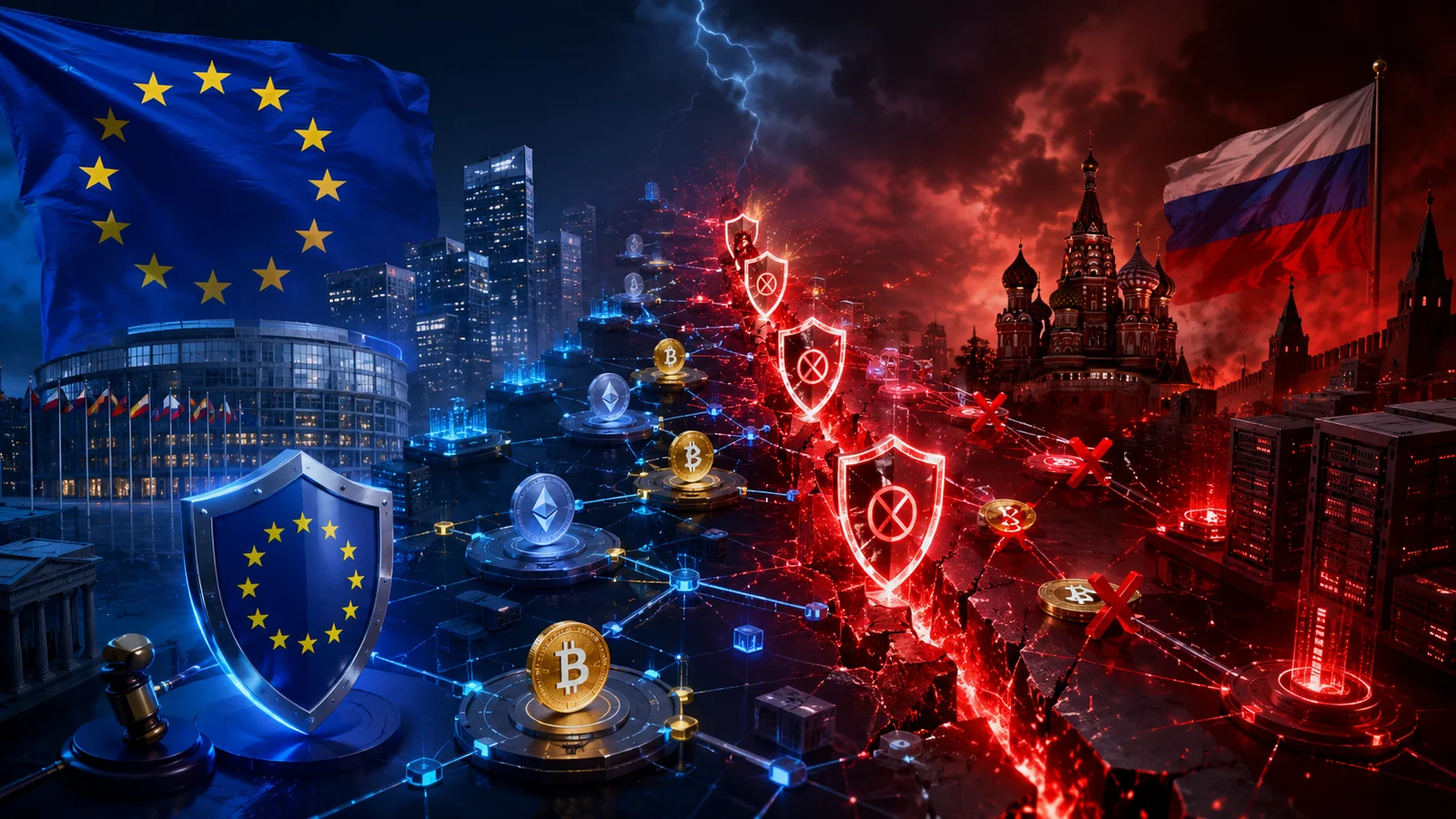
The European Commission has announced its 21st sanctions package against Russia. Under the package, a full-scale ban option is also being considered for countries hosting crypto platforms that help Russia evade sanctions.
European Commission President Ursula von der Leyen announced the 21st sanctions package targeting Russia on Tuesday. The package includes new measures in several critical areas, including the financial sector and crypto restrictions.
According to the statement, the Commission plans to expand transaction bans on 20 non-EU entities found to have provided services to sanctioned Russian institutions and individuals. The list includes banks, crypto platforms and oil traders.
The most notable element of the package is the country-based ban option. Von der Leyen said the Commission could impose a full-scale ban on crypto services provided from countries outside the EU. This measure would also apply to countries hosting platforms that allow Russia to bypass sanctions. “This will have a strong deterrent effect on countries hosting these platforms,” von der Leyen said. Earlier this year, media reports had indicated that the EU was considering a broader ban on crypto transactions with Russia.
The numbers reveal the scale of the issue
The new sanctions package was not prepared without reason. Looking at the background of the package, the figures clearly show the scale of the problem. According to blockchain analytics firm Chainalysis, total transaction volume received by illicit crypto addresses reached $154 billion in 2025. Russia-linked transactions also account for a significant share of state-backed crypto activity. The ruble-backed stablecoin A7A5, with $93.3 billion in transaction volume, further illustrates this picture.
In February, blockchain research firm Elliptic publicly identified five crypto exchanges that it said helped Russia bypass sanctions through financial channels outside traditional banking oversight. These exchanges appear to be filling the gap left by the shut down of Garantex.
Last month, the UK Financial Conduct Authority added HTX, formerly known as Huobi Global, to its sanctions list on the grounds that it provided support to the Russian government.
Meanwhile, Russia has announced that it is preparing a comprehensive crypto regulatory framework expected to take effect in July 2025. The framework envisions the creation of licensed domestic trading platforms.
Energy and trade restrictions are also deepening
The scope of the package is not limited to the crypto sector. The measures also target Russia’s energy and foreign trade revenues by adding oil tankers and Russian fishing companies to the blacklist for the first time. In her statement, von der Leyen said, “Our sanctions continue to bite and cut deep. We are weakening the foundations of Russia’s war economy.”