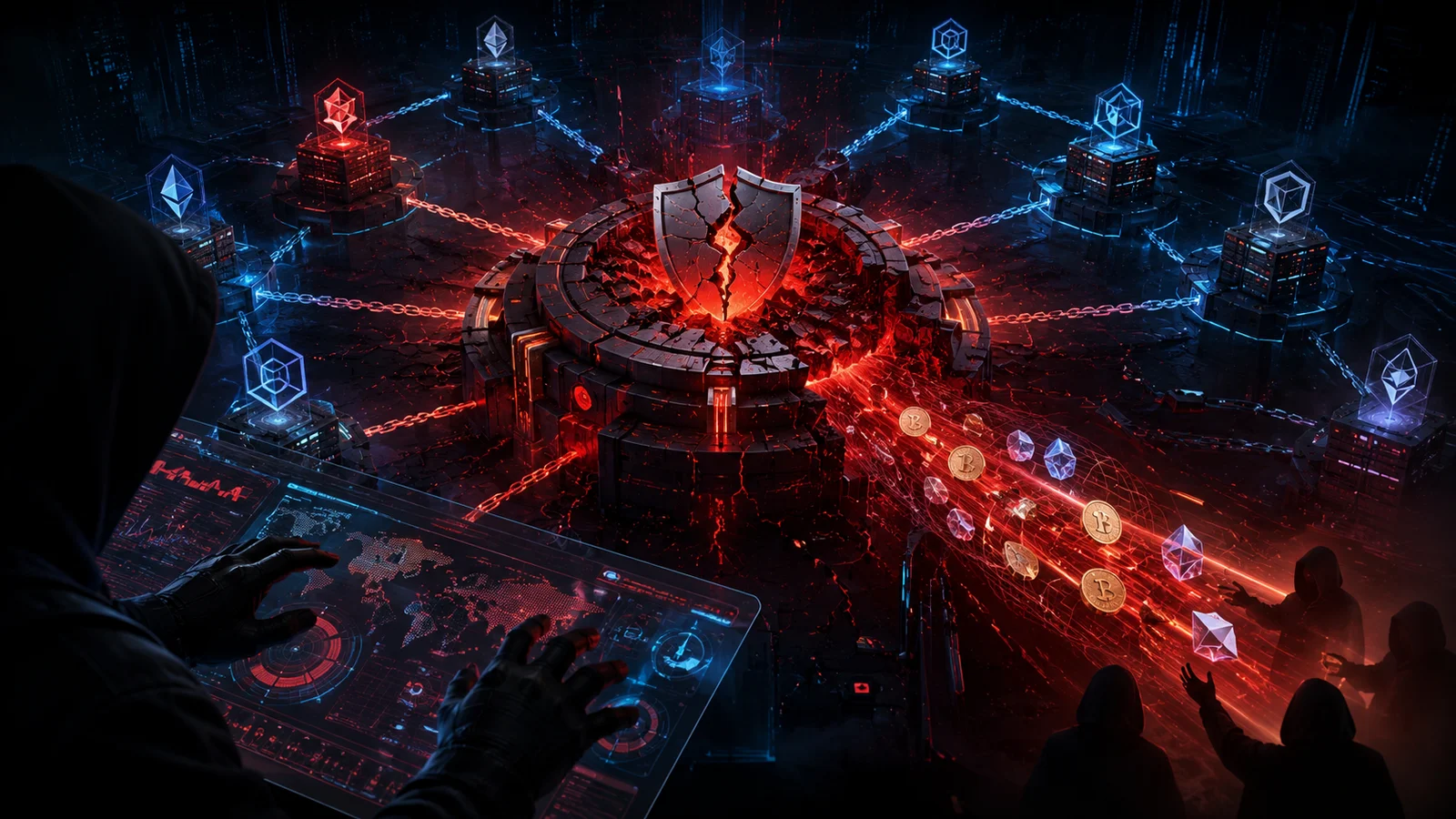
Decentralized finance protocol Radiant Capital has decided to wind down its operations after failing to recover from a major attack in 2024. The project spent roughly 18 months trying to get back on track, but said it was unable to recover a meaningful portion of the stolen funds or secure fresh capital. As a result, Radiant Capital said the DAO no longer has a viable path forward.

In a statement shared on X, Radiant Capital said the protocol will move into a “maintenance state.” During this period, the frontend and smart contracts will remain live and accessible. Users will still be able to withdraw funds, repay loans and manage their open positions.
The team stressed that the decision was not made lightly. According to the statement, contributors and community members continued working under increasingly difficult conditions in recent months to support users and keep the protocol operational. However, Radiant Capital said effort alone was not enough without fund recovery, new capital or renewed growth.
2024 hack: What happened?
Radiant Capital suffered a major exploit in October 2024 targeting its deployments on Arbitrum and BNB Chain. The attacker reportedly used a backdoor contract to gain unauthorized access and drain roughly $50 million worth of assets from the protocol. At the time, security researchers said the losses had reached about $51 million.
The attack caused more than financial damage. It also severely weakened trust in Radiant Capital. In decentralized finance, user confidence is often just as important as available capital, and large exploits can directly affect a project’s chances of long-term survival.
Radiant Capital had already faced a separate security incident earlier in 2024. At the beginning of that year, the protocol was hit by a flash loan attack that drained around 1,900 ETH. The stolen assets were worth about $4.5 million at the time. Two major security incidents in the same year further weakened the project’s ability to recover.
The company emphasized that the current decision will not prevent users from accessing their funds. During the maintenance period, the protocol’s core functions will remain available. This means users can close positions, repay debt and withdraw assets.
Radiant Capital also said recovery efforts have not been fully abandoned. If any funds are retrieved in the future, they will be returned to affected users. Still, the current picture shows that the project will not return to an active development and growth phase. Instead, Radiant Capital will remain in a limited state focused on allowing users to safely manage their existing positions.
Radiant Capital’s shutdown once again shows how lasting the consequences of security breaches can be for DeFi projects. Decentralized finance protocols offer high-yield opportunities and cross-chain accessibility, but their complex smart contract structures also continue to make them attractive targets for attackers.
The number of attacks across the crypto ecosystem has also increased sharply in recent months. According to DeFi Llama data, the number of crypto hacks reached a record monthly high in April. Although the total amount of stolen funds did not set a new record, the fact that the number of exploits exceeded 20 showed that security risks continue to grow across the sector.
The Radiant Capital case highlights that technical security is critical not only at launch, but throughout the entire life cycle of a DeFi protocol. After a major exploit, regaining user trust, replacing lost capital and attracting new investment can become far more difficult than expected.
For this reason, Radiant Capital’s closure should not be viewed only as the failure of a single protocol. It also stands as a current example of how decisive security, capital management and post-crisis recovery can be in the DeFi market. Keeping withdrawals and position management open for users remains important in the short term, but Radiant Capital no longer appears able to continue as an active project.