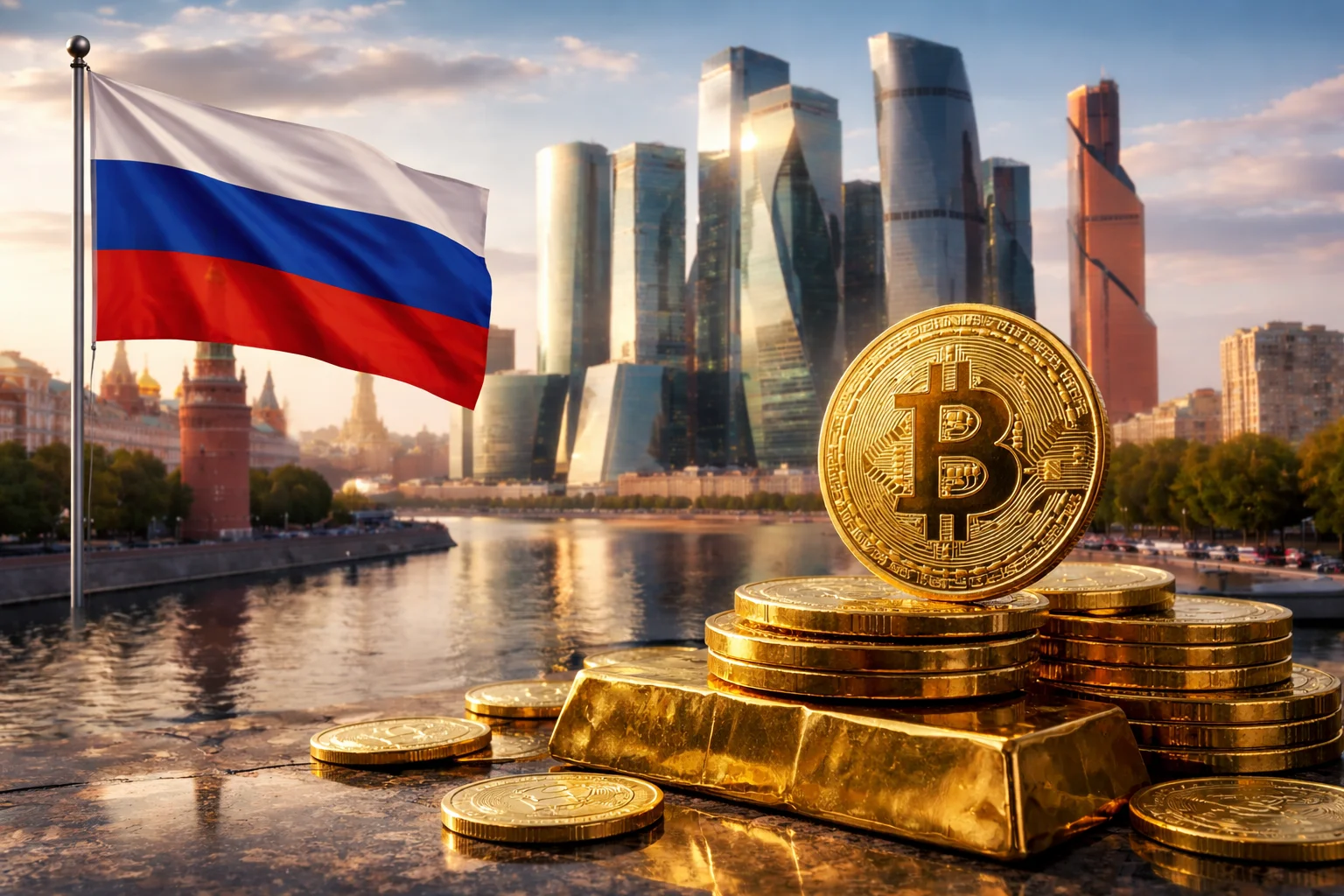
Russia is preparing to take another step towards opening the cryptocurrency market to individual investors. According to information reported by the state news agency TASS, Anatoly Aksakov, head of the Financial Markets Committee of the State Duma (the lower house of the Russian parliament), announced that a draft law is ready that would allow limited access to crypto assets for unqualified investors. The draft is expected to be on the agenda of the spring parliamentary session.
Crypto removed from special regulation
According to Aksakov, the new regulation aims to make cryptocurrencies a more ordinary financial instrument by removing them from the scope of "special financial regulation." Speaking in an interview with Russia-24 television channel, Aksakov stated, "A draft law has been prepared that removes cryptocurrencies from the realm of special regulation. This means that digital assets will become part of our daily lives." This approach marks a significant change in the long-ambiguous legal status of crypto assets in Russia.
According to the draft law, individuals who do not have qualified investor status will not be able to enter the cryptocurrency market completely freely. Instead, an upper limit will be applied for retail investors. Under the current framework, this limit is capped at 300,000 rubles per person. This amount corresponds to approximately $3,800 at the current exchange rate. Aksakov emphasized that professional market participants will not be subject to such a limitation.
The new regulation will not be limited to domestic individual transactions. Aksakov stated that if the law is adopted, cryptocurrencies could be used more actively in international transactions. In particular, cross-border payments and the positioning of tokens issued by Russia-based projects abroad are among the prominent goals of the regulation. This approach is considered part of Russia's search for alternatives to traditional financial infrastructures.
These statements indicate that Russian authorities have recently adopted a more controlled but relatively flexible stance towards cryptocurrencies. In December, the Central Bank of Russia proposed a framework that would allow unqualified investors to trade cryptocurrencies provided they pass a risk awareness test. Under the same regulation, anonymous or privacy-focused crypto assets were to remain prohibited. Similarly, Russian Finance Minister Anton Siluanov announced that the finance ministry and the central bank were working on a joint approach that would allow limited participation of retail investors in the crypto market. Officials frequently emphasize that caps on transaction volumes and investment amounts are critical in mitigating potential financial and systemic risks.
The increasing prominence of cryptocurrencies in the country is also reflected in the questions directed at public institutions. It is noted that among the millions of calls received by the Russian Social Fund throughout 2025, questions related to cryptocurrencies hold a significant place. Citizens question whether pension payments can be made in cryptocurrency or whether mining revenues affect social benefits, while officials remind them that all public payments are made only in rubles.
On the other hand, cryptocurrency mining has also begun to gain more importance politically and economically. Some high-ranking officials argue that, although there is no physical cross-border movement, mining contributes to foreign exchange inflow and should be recognized as an export item. In this context, the Moscow Stock Exchange and St. Petersburg have discussed this issue. The St. Petersburg Stock Exchange has announced its readiness to launch cryptocurrency trading once the necessary legal framework comes into effect. According to the current schedule, the new regulations are expected to be implemented by July 1, 2026.