
Mastercard announced that it has expanded its card settlement infrastructure to include regulated stablecoins. The company said it will now support intraday, weekend, and public holiday settlement across multiple fiat currencies and stablecoins, including USDC, PYUSD, and RLUSD.
According to the announcement published on Wednesday, the new infrastructure covers Circle’s USDC, Paxos-issued PYUSD, USDG and USDP, Ripple’s RLUSD, and SoFi’s SoFiUSD. Supported blockchain networks include Ethereum, Solana, Polygon, Base, Arbitrum, Canton, Tempo, and the XRP Ledger.
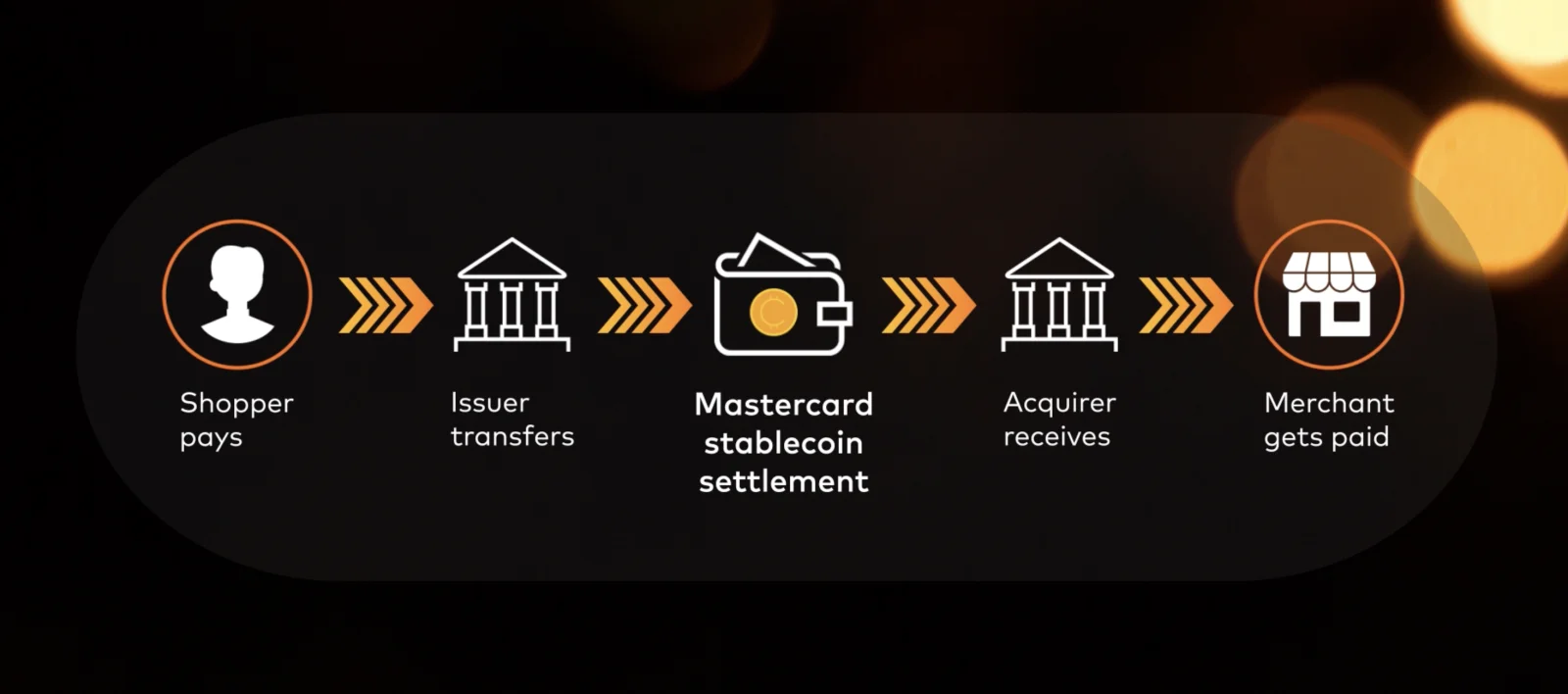
The first group of participating institutions is also notable. ARQ, formerly known as DolarApp, CBW Bank, Cross River, Lead Bank, and Nuvei will be among the first institutions to offer stablecoin settlement options in the United States and Latin America. Mastercard said the expansion will continue throughout 2026.
The company emphasized that the system enables transactions outside the current banking calendar. The new structure will operate in parallel with existing settlement processes, while security standards, fraud prevention mechanisms, and dispute procedures will remain in place.
The Background Behind Mastercard’s Stablecoin Moves
This announcement marks the continuation of a series of steps Mastercard has taken in recent months to strengthen its stablecoin infrastructure. In May, the company received a BitLicense from the New York State Department of Financial Services. This license completes the regulatory framework required to process tokenized deposits and payment stablecoins within New York state.
In March 2026, Mastercard signed a binding agreement to acquire institutional stablecoin infrastructure provider BVNK for up to $1.8 billion. Last month, the company also granted Mastercard Principal Membership to stablecoin card issuing platform Rain.
These developments also reflect a broader trend in the payments sector. Visa has expanded its stablecoin-based settlement pilot program to nine different blockchains, while its weekly transaction volume has reached $7 billion. MoneyGram, meanwhile, launched its MGUSD stablecoin on Stellar as part of its global payments network.
Market Size
The scale of the stablecoin market also shows the strategic importance of these moves. The total supply of dollar-pegged tokens is approaching $300 billion. Tether’s USDT continues to dominate the market with around $188 billion in supply, while Circle’s USDC ranks second with roughly $76 billion.
Rival Visa is also gaining momentum in the same field. The company’s stablecoin-based settlement pilot program now spans nine blockchains and has reached $7 billion in weekly transaction volume. The simultaneous moves by the two payments giants suggest that stablecoin settlement is no longer just an experimental phase, but is becoming a lasting standard across the industry.