Hong Kong has announced notable steps in its 2026–27 budget to gain a competitive edge in the global cryptocurrency market. In his budget address on Wednesday, Finance Secretary Paul Chan announced that the first licenses for fiat-backed stablecoin issuers will be issued in March. He also stated that a new bill covering companies offering digital asset trading services and custodians will be submitted to the Legislative Council later this year.
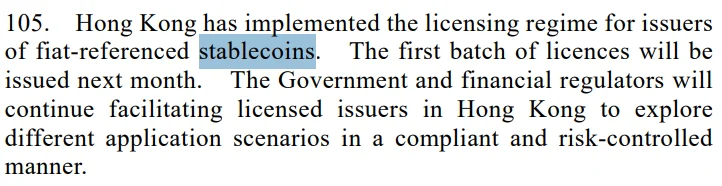
The Hong Kong government already has a licensing regime in place for stablecoin issuers. Chan said regulators will continue to support licensed entities in developing different use cases within a “compliant and risk-controlled” framework. The first licenses expected to be issued in March are anticipated to be limited in number.
HKMA statements earlier this month
HKMA Chief Executive Eddie Yue also stated earlier this month that applications are being thoroughly reviewed in terms of use case, risk management, anti-money laundering (AML) controls, and asset collateral. This approach points to a strategy focused on building robust infrastructure and trust rather than rapid expansion.
Another prominent item in the budget was increasing liquidity in the digital asset market. The Securities and Futures Commission (SFC) will take new steps to increase depth in the crypto asset market and strengthen price discovery. The SFC's plan to allow crypto margin financing and derivative products for professional investors is also part of this strategy. The institution has prioritized improving market quality, strengthening investor confidence, and expanding product innovation in a controlled manner.
Tokenization is at the heart of Hong Kong's digital asset vision. Chan said that legal clarity will be increased regarding the recording of traditional financial instruments on the blockchain. In particular, guidance will be published on the ability to keep bondholder records on the blockchain. It was also stated that the use of electronic signatures in the issuance of tokenized bonds is being evaluated.
A new digital asset platform will be established this year by CMU OmniClear Holdings under the HKMA. The platform will provide infrastructure for the issuance and exchange of tokenized bonds and will be expanded to other digital assets over time. It is planned to integrate with other tokenization systems in the region, supporting Hong Kong's goal of becoming a regional digital finance hub.
The Hong Kong government conducted a third-party tokenized government bond issuance in the last quarter of 2025, selling a total of 10 billion Hong Kong dollars (approximately $1.28 billion). The administration announced that such issuances will become regular. This step represents a transition from pilot programs to a permanent market infrastructure.
On the other hand, alignment with global standards will also be ensured on the tax side. Over the next two years, Hong Kong will amend its Income Tax Regulations to implement the OECD's Crypto Asset Reporting Framework (CARF) and the updated Common Reporting Standard. This will allow the city to comply with increasing international tax transparency rules for crypto assets.