The UNIfication proposal, long debated within the Uniswap community, passed the governance vote with an overwhelming majority. This decision, which fundamentally changes the economic structure of the protocol, moves Uniswap towards a more deflationary model and ushers in a new era for the UNI token. Uniswap founder Hayden Adams shared the voting results on the social media platform X. According to Adams, the proposal received the support of 99.9% of the votes cast. Over 125 million UNI tokens voted "yes," while only 742 tokens voted "no." This result indicates a rare level of strong consensus within the community. The UNIfication proposal, jointly submitted by Uniswap Labs and the Uniswap Foundation in November, activates the long-awaited "fee switch" mechanism in the protocol. Previously, all transaction fees went to liquidity providers, but under the new model, a portion of these fees will be transferred directly to the protocol. The collected revenue will be used to burn Uniswap's native token, UNI. Net sequencer fees on Unichain will also be channeled into the same burning system. This structure creates a simple but effective deflationary cycle. The more the protocol is used, the less the UNI supply will decrease. In other words, as transaction volume and activity on Uniswap increase, the number of tokens in circulation will decrease. This approach aims to strengthen UNI's long-term value dynamics. The proposal is not limited to the token economy. UNification also includes a significant simplification on the operational side. Uniswap Foundation teams and responsibilities will be consolidated under Uniswap Labs. In addition, fees for Labs' interface, wallet, and API services will be eliminated. To support the protocol's growth and ecosystem expansion, an annual growth budget funded by UNI will be created. Following the completion of the voting, the proposal entered a two-day time lock. At the end of this period, the protocol will burn approximately 100 million UNI tokens. This figure represents the estimated amount of UNI that could be burned to date if the fee switch had been active since the token's launch. This burning aims to send a strong symbolic message to the market.
Uniswap management emphasizes that changes in the regulatory environment also played a role in this strategic transformation. In particular, following legal processes with the SEC and then-chairman Gary Gensler in the US, it is stated that the DeFi sector has now reached a more mature and mainstream point. According to the protocol, a turning point has been reached for DeFi.
Hayden Adams stated in his assessment that he believes Uniswap can become the primary address for token trading. According to Adams, the UNIfication proposal is laying the groundwork to shape the protocol's next decade.
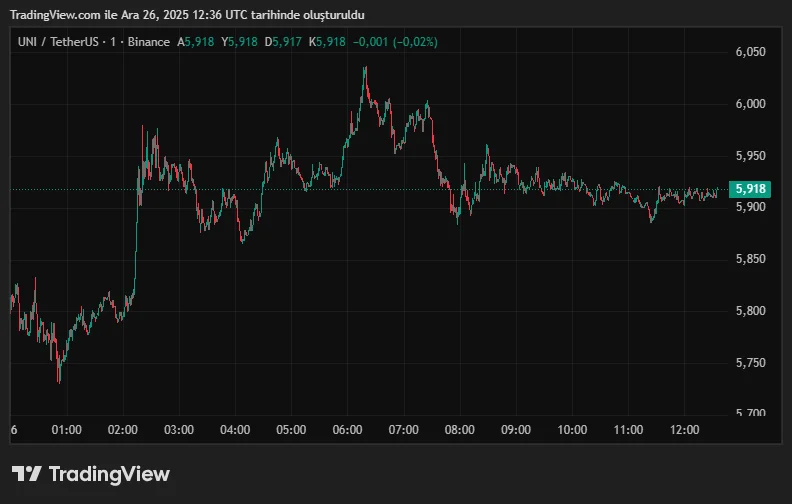
UNI price positively affected
The effects of the decision are also being felt on the market. UNI was trading at $5.91 at the time of the announcement, gaining 13 percent in value in the last week. Uniswap has generated over $1.05 billion in transaction fees this year alone.