
Bitwise Asset Management CEO Hunter Horsley said that the long-referenced four-year cycle narrative in the crypto market is no longer valid. Speaking in Miami as part of Consensus 2026, Horsley stated that investors should not expect the market to recover according to the old timeline.
According to Horsley, in the past, the crypto market was generally interpreted as three years of ups and one year of downs. However, the weak market outlook experienced last year indicated that this pattern has broken down. Therefore, the Bitwise CEO argued that the "four-year cycle is dead," suggesting that the sector has now entered a different phase.
Emphasis on the new era in the crypto market
Horsley stated that old patterns and reflexes from the previous era no longer provide sufficient guidance to investors in the crypto market. According to him, the sector is moving towards a new structure that is more institutional, more widely participated in, and where fewer large players are decisive.
While describing this change, the Bitwise CEO used Winston Churchill's frequently quoted saying, "This is not the end, nor the beginning of the end, but the end of the beginning." According to Horsley, the crypto sector has now moved beyond its early stages and is approaching a more mature market structure. The topics of discussion are also changing in this new era. Horsley stated that traditional financial giants like Morgan Stanley are now more prominent in crypto conversations than in-house companies like Gemini. He also noted that with the stablecoin supply exceeding $300 billion, market interest is shifting not only to altcoins but also to payment and financial infrastructure.
A "juggernaut" comment for Strategy's new instrument
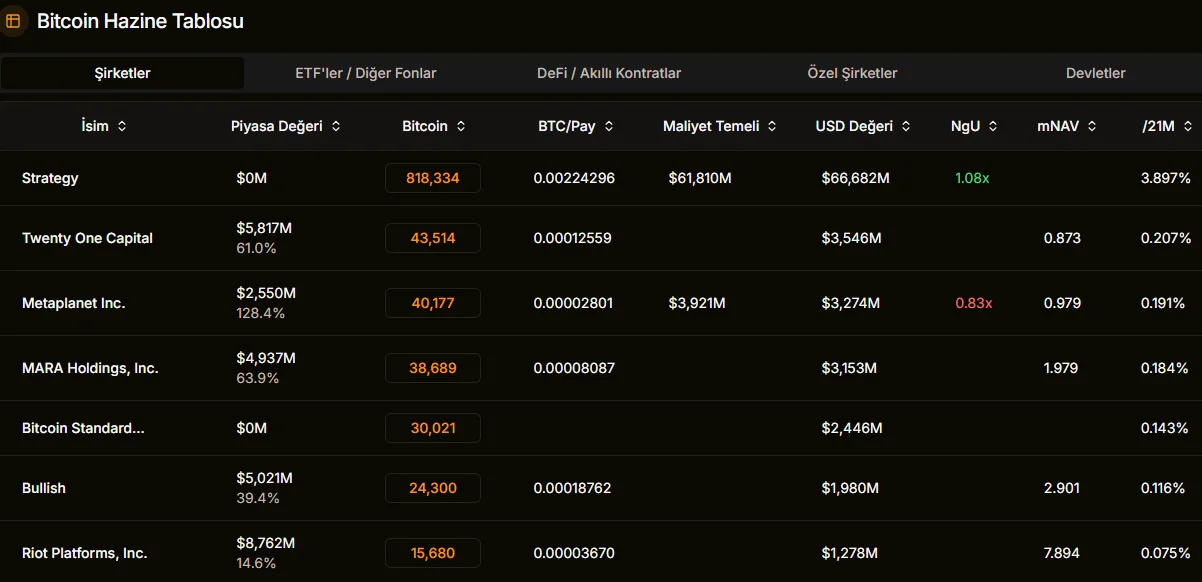
Another point Horsley highlighted was Stretch, a preferred investment vehicle developed by Michael Saylor's company, Strategy. This structure stands out with elements such as Bitcoin collateral, stable net asset value, and a target return of over 10%.
The Bitwise CEO described Strategy's product as a "juggernaut" and said the structure is still in its early stages. According to him, while Stretch may seem unusual at first glance, it addresses one of investors' fundamental needs: a Bitcoin-collateralized, income-oriented, and price-capable instrument. Horsley also predicted that this structure could become widespread across the sector within the next 12 months. In this scenario, Bitcoin could find a greater place not only as a spot market or treasury asset, but also in fixed-income products. The Bitwise CEO stated that Michael Saylor's financial engineering approach plays a significant role in this transformation. However, the picture on the Strategy side is not entirely risk-free. While the company's STRC product reached record transaction volume last month, it was also noteworthy that Saylor acknowledged the possibility of selling from the Bitcoin treasury. This possibility is seen as a significant break from the company's long-held "no selling Bitcoin" approach.
The payment narrative for Bitcoin may return
Horsley also approached the idea of Bitcoin being seen only as a store of value with caution. According to him, the vision of Bitcoin as a payment tool from its early days has not completely disappeared; it simply means the market needed to solve a different issue first.
The Bitwise CEO said that the main debate in the last 10 years has revolved around whether Bitcoin is valuable or not. Horsley noted that hundreds of millions of people hold BTC today, and there is a stronger acceptance of Bitcoin's value across broader segments of the market. According to Horsley, this creates a more favorable environment for the resurgence of Bitcoin's use cases in the payments sector.