
Dozens of leading crypto companies, including Coinbase, Kraken, Uniswap and Andreessen Horowitz, have sent a joint letter to the U.S. Congress calling for legal protections for software developers to be added under the CLARITY Act. The letter argues that developers working on open-source blockchain infrastructure should not face legal liability for illegal actions committed by third parties.
The signatories also include Aave, 1inch, Block, BitGo, Aptos Labs, Zcash, Solana Labs, Galaxy Digital, Ledger and Hyperliquid.
Point of tension: Developer liability
The CLARITY Act, currently being considered in the Senate, aims to clarify the legal status of digital assets and the boundaries of regulatory authority. However, several key issues remain unresolved. The scope of developer protections and whether stablecoins should be allowed to pay interest are among the main points of disagreement in the final stage of negotiations.
In their letter, crypto companies raise a concrete concern: those who develop open-source software or build blockchain infrastructure could face excessive legal burdens due to user behavior or third-party misuse beyond their control. According to the industry, this risk seriously weakens the DeFi development environment in the United States.
The White House is involved
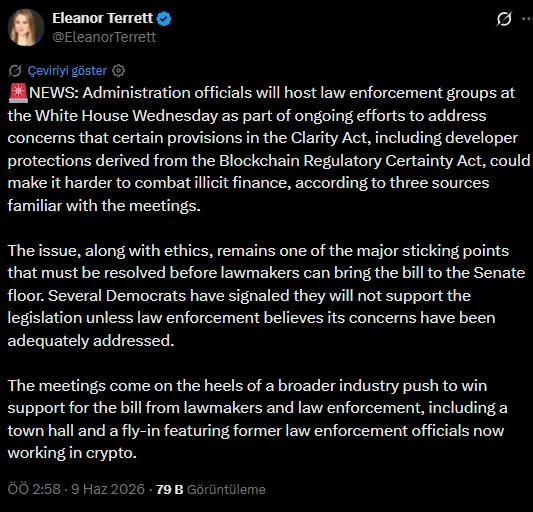
Discussions on the issue are not limited to Capitol Hill. According to Fox Business reporter Eleanor Terrett, administration officials met with law enforcement representatives at the White House on Wednesday. The agenda focused on concerns over whether the CLARITY Act could undermine efforts to combat illicit finance.
This concern remains one of the biggest obstacles preventing the bill from moving to the Senate floor. Some Democratic senators have made clear that they will not support the bill unless they believe law enforcement concerns have been adequately addressed.
The meetings followed a broad industry pressure campaign. That campaign included a public meeting attended by former law enforcement officials and a private event involving crypto industry supporters.
What the industry wants
The core demand in the companies’ letter is clear: blockchain development activity cannot grow in the United States unless legal uncertainty is resolved. If developer protection provisions are included in the bill, the legal risks for those working on open-source DeFi infrastructure would be significantly reduced.
Although it remains unclear when the bill will come up for a vote, negotiations in Congress are continuing alongside White House-level discussions and intense lobbying efforts from the industry.