
Data and analyst/writer Omkar Godbole suggests that Bitcoin is confronting a market environment unlike anything it has faced before. This time, the pressure is coming from the bond market.
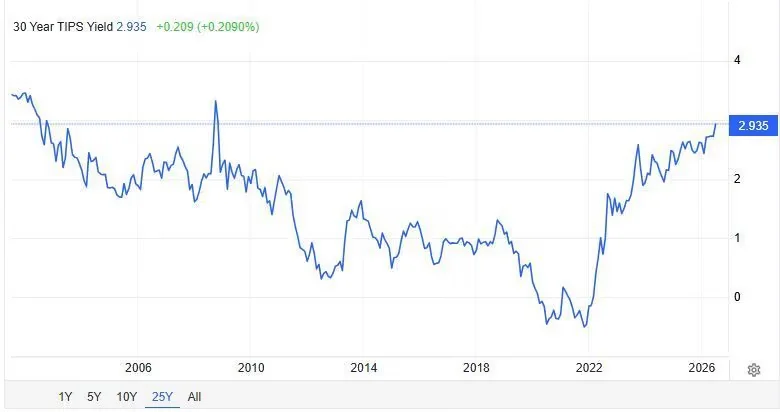
The yield on the U.S. Treasury’s 30-year inflation-protected security, known as TIPS, is currently close to 3%, its highest level in 17 years. As TreasuryBonds.com puts it, investors can lock in a return of roughly 3% above inflation for the next 30 years, backed by the U.S. government.
What does the yield pressure mean for Bitcoin?
Bonds have traditionally been viewed as safe-haven assets. When a relatively secure investment offers a return three percentage points above inflation, the opportunity cost of holding non-yielding assets such as gold or Bitcoin increases. At least, that is how the argument works on paper.
The crypto community sees the issue differently. Bitcoin’s decentralized and censorship-resistant structure, supporters argue, makes it a stronger store of value. That argument is not entirely unfounded. When housing prices are measured in Bitcoin rather than U.S. dollars, the resulting picture appears to support this view.
It remains unclear whether high TIPS yields will place lasting pressure on Bitcoin or whether the market will largely ignore them. For now, the second scenario appears more likely.
Spot Bitcoin ETFs have attracted approximately $1 billion over the past seven trading days, suggesting that institutional capital is returning. However, if rising bond yields trigger a broader sell-off in technology stocks, it would hardly be surprising to see that pressure spread to the crypto market.
The historical context behind TIPS yields
The yield on 30-year TIPS remained low for years following the 2008 global financial crisis. At times, real yields even fell below zero as central banks pursued expansive monetary policies.
Real yields have risen again over the past few years as central banks reduced their bond purchases and concerns grew that inflation could remain elevated for longer. The latest move toward 3% signals a reversal of that prolonged downward trend and shows that safe assets are becoming attractive again.
At the same time, continued inflows into Bitcoin ETFs suggest that this theory has yet to gain much traction in the crypto market.
Other developments
A series of attacks on protocols connected to Bitcoin and Ethereum resulted in combined losses of $35 million. According to blockchain data, three separate bridge protocols were targeted within a six-hour period.
Oil prices also climbed following reports of attacks on tankers near Saudi Arabia and new U.S. threats against Iran. Brent crude futures rose 4.6% to $98.44 per barrel, while West Texas Intermediate crude gained 3.8% to $90.14.
In foreign exchange markets, the U.S. dollar climbed to a 40-year high against the Japanese yen. It edged slightly lower against the euro ahead of the European Central Bank’s meeting on Thursday.