
Bitcoin fell to $81,200 on Friday, the second trading day following the US Federal Reserve's (Fed) decision to keep interest rates unchanged, as selling pressure intensified. This move, marking the lowest level since November, wasn't limited to Bitcoin; US-based spot crypto ETFs experienced net outflows of over $1 billion in a single day. Simultaneous outflows from Bitcoin, Ethereum, Solana, and XRP demonstrated the rapid impact of deteriorating risk appetite on the crypto market.
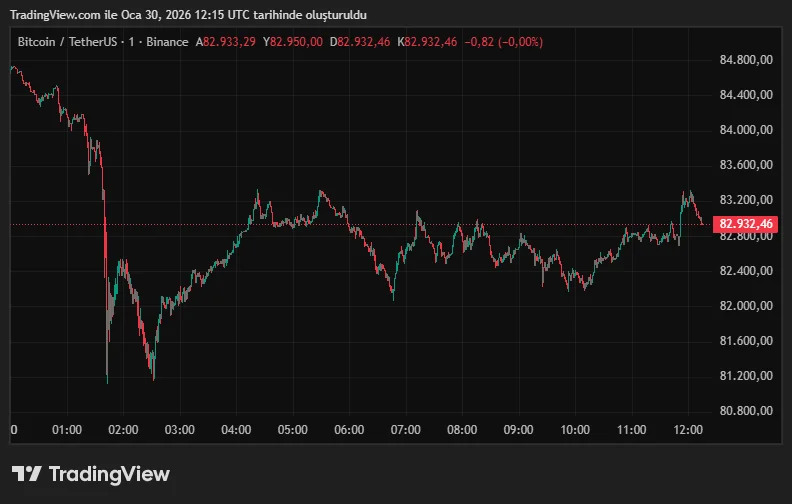
While markets initially appeared relatively calm immediately after the Fed's decision, selling quickly accelerated. The widespread pullback in US stock and commodity markets also reversed the downward trend in crypto assets. Bitcoin lost approximately 3% of its value during the day, while altcoins experienced even sharper declines. Large projects like Ethereum and Solana also faced daily losses approaching double digits. Another notable factor during this period was the sharp correction in the gold market. Precious metal prices fell by approximately 7 percent in a short period, resulting in a loss of trillions of dollars in market value. Despite this, a year-to-year performance comparison reveals a divergence in investor preferences. While gold has risen by over 80 percent in the last year, Bitcoin has fallen by approximately 20 percent during the same period. This indicates that defensive capital is still flowing towards traditional safe havens.
The sell-off also triggered forced liquidations in leveraged trades. Over $1.8 billion worth of positions were closed in the last 24 hours, with the majority of these liquidations coming from long positions. Although the price showed a limited recovery to around $82,600, Bitcoin is heading towards its fourth consecutive monthly loss. This series was last seen in the post-ICO bear market of 2018.
Liquidity issues are prominent
Market commentators emphasize that liquidity conditions, rather than the interest rate decision, were the determining factor in the recent decline. The tight global liquidity is making it difficult for crypto assets to recover. Although there are expectations of easing nominal interest rates, credit conditions and dollar liquidity still do not indicate a supportive environment for crypto. In contrast, gold has historically continued to attract capital during periods of weaker dollars.
Short-term positioning is also among the factors increasing pressure. Markets, which entered the week with high risk appetite, changed direction with increasing concerns about the artificial intelligence spending of large technology companies. In an environment where credit spreads are quite narrow, risk aversion accelerated and Bitcoin took its share of this wave. Analysts state that if the $83,500 level is not surpassed, the $80,000 region may come back into play.
Temporary pressure on miners
In addition to macro factors, on-chain data shows that there has been stress on the mining side recently. The harsh winter conditions in the US led some large miners to temporarily halt production. As a result, one of the largest drops in the total computing power of the network since 2021 occurred. Hashrate has fallen by approximately 12 percent, while daily mining revenues have dropped to their lowest levels of the year.
With weather conditions returning to normal, there are signs of recovery in block times and network performance. However, weakness in prices and continued ETF outflows are causing a cautious outlook to be maintained in the crypto market in the short term.