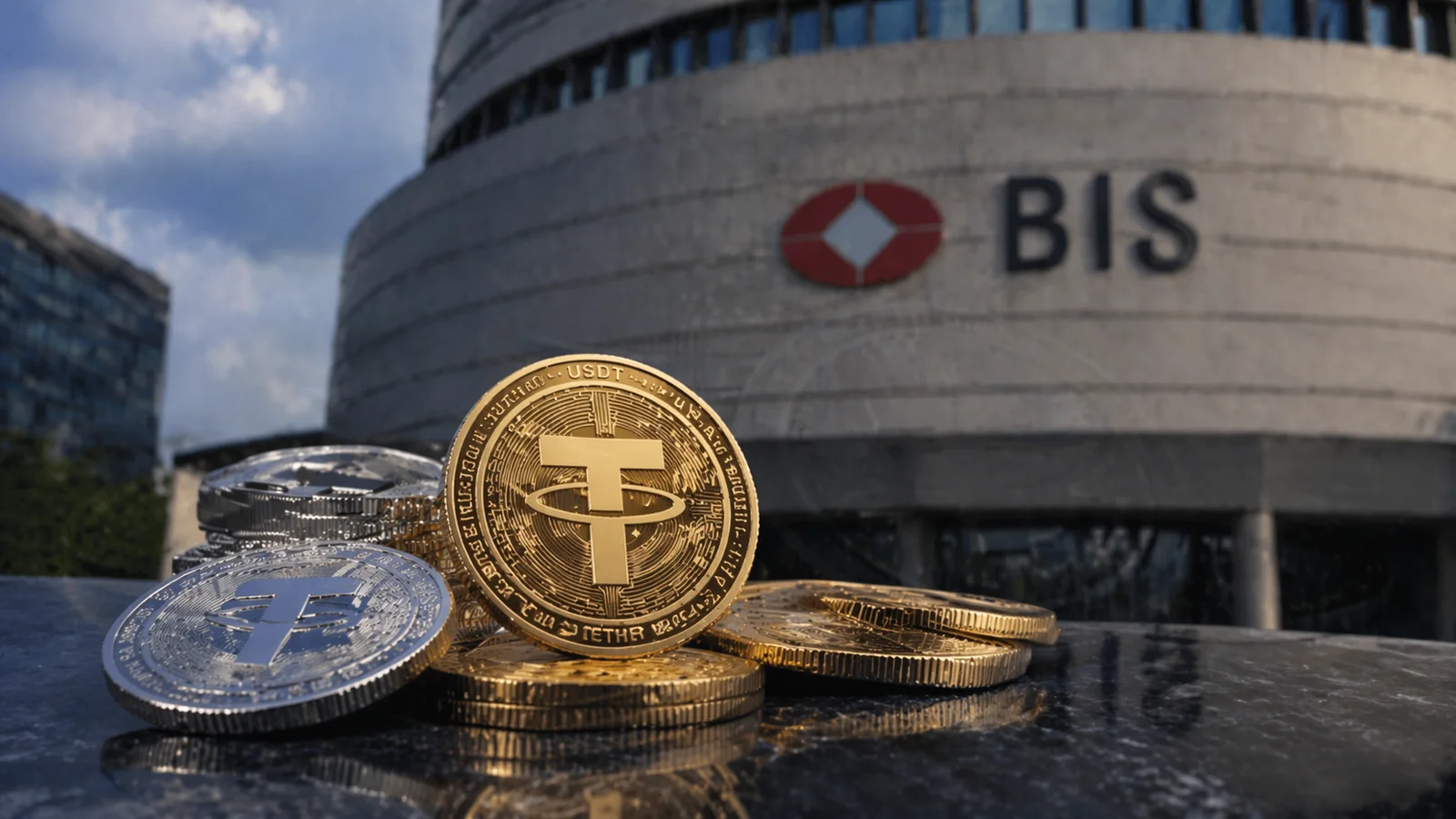
The BIS has published a comprehensive assessment of the stablecoin market, explicitly stating that these assets do not function as traditional money. According to BIS Managing Director Pablo Hernandez de Cos, stablecoins theoretically maintain a fixed value; however, in practice, they can deviate from this value, and users may encounter significant price fluctuations during the conversion process. De Cos likened stablecoins to exchange-traded funds (ETFs) in this respect: Price instability and repayment irregularities make these assets behave more like investment instruments than payment instruments.
The market is growing, but risks are also increasing
The total market capitalization of dollar-indexed stablecoins has exceeded $300 billion. Much of this growth belongs to two companies: Tether's USDT and Circle's USDC. Together, they control approximately 85% of the total supply. Such a tight concentration is a risk factor in itself.
According to the BIS, the real danger lies in large-scale withdrawal requests. If panicked users try to exit simultaneously, this pressure could spread to the wider financial system. To mitigate this risk, the institution has opened a discussion on granting stablecoin companies mechanisms similar to deposit insurance or central bank-backed liquidity facilities. While there is no concrete proposal, the mere fact that it's on the BIS's agenda is noteworthy.
Lack of regulation creates the risk of fragmentation
Another problem highlighted by De Cos is the varying regulatory frameworks from country to country. The more the rules differ, the more easily some players can choose more lenient regions. This situation, known as regulatory arbitrage, leads to market fragmentation and makes oversight more difficult. For this reason, the BIS considers international coordination essential: As long as countries set their own rules, it will be difficult to improve the situation.
Interest rate debate and competition with banks
Whether stablecoins offer interest returns is also a separate issue. De Cos points out that users may shift their bank deposits to stablecoins, especially during periods of high interest rates. A ban on paying interest on stablecoins could slow down this transition; however, De Cos himself leaves it questionable whether such a ban would be practically feasible. Whether or not they are a serious competitor for banks remains unanswered.
Real world usage is increasing
Despite all these risk discussions, stablecoins are finding more place in daily life. For freelancers and digital platform vendors, stablecoin payments now constitute a significant portion of their income.
In Europe, however, there is a different dynamic. Roland Lescure argues that the current size of euro-based stablecoins is insufficient and that European banks should become more active in this area. Jeremy Allaire also says that yuan-backed stablecoins may enter the market in the future, and this could take global competition to a different dimension. However, steps against dollar dominance remain theoretical for now.