
Binance, one of the world's largest cryptocurrency exchanges, continues its efforts to expand its product diversity in both derivatives and spot markets. The exchange's consecutive announcements point to a broader trading universe encompassing not only crypto assets but also energy commodities and next-generation tokens.
Three New Contracts on Binance Futures
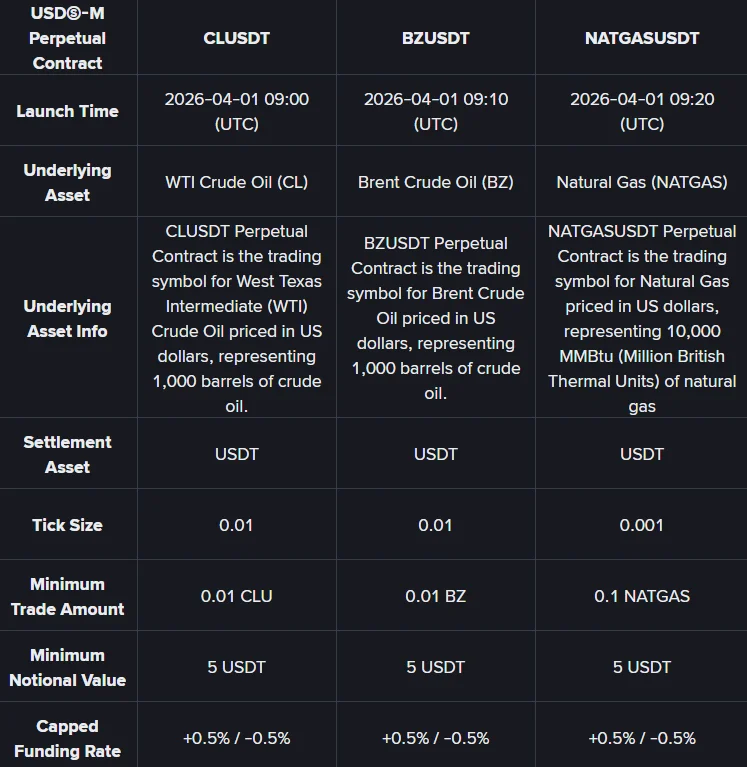
As of April 1, 2026, three new USDⓈ-M futures contracts will be launched on Binance Futures. These include CLUSDT, BZUSDT, and NATGASUSDT. These contracts track WTI crude oil, Brent oil, and natural gas prices, respectively. This move allows crypto investors to take positions through derivative products without direct exposure to energy markets.
Each of the new contracts offers leverage of up to 100x. They also include standard Binance Futures features such as 24/7 trading, funding payments every four hours, and a funding rate capped at 0.5%. Minimum transaction size and margin requirements are kept relatively low; This makes it easier to access for both individual and professional investors.
Announcement for BASED as well
On the other hand, the exchange announced in another announcement on the same day that it would also list the BASEDUSDT futures contract. This contract, which opened for trading on the evening of March 30, offers leverage up to 50x. This step towards the BASED token shows that Binance is rapidly including new and potentially high-volatility assets in its derivatives market.
Many altcoin pairs added to the spot market
Expansion continues in the spot market as well. As of 4 PM on March 31, 2026, the Aptos (APT/U), Ethena (ENA/U), Fetch.ai (FET/U), NIGHT (NIGHT/U), TRUMP (TRUMP/U and TRUMP/USD1) and Worldcoin (WLD/U) trading pairs will be listed on Binance. These new trading pairs allow users to trade more flexibly across different assets, and stand out as a development that could increase liquidity, especially in the altcoin market. Binance will also be deploying spot algorithmic trading bots alongside these trading pairs. This will allow users to create automated trading strategies, react more quickly to market movements, and more effectively capitalize on opportunities during periods of high volatility.