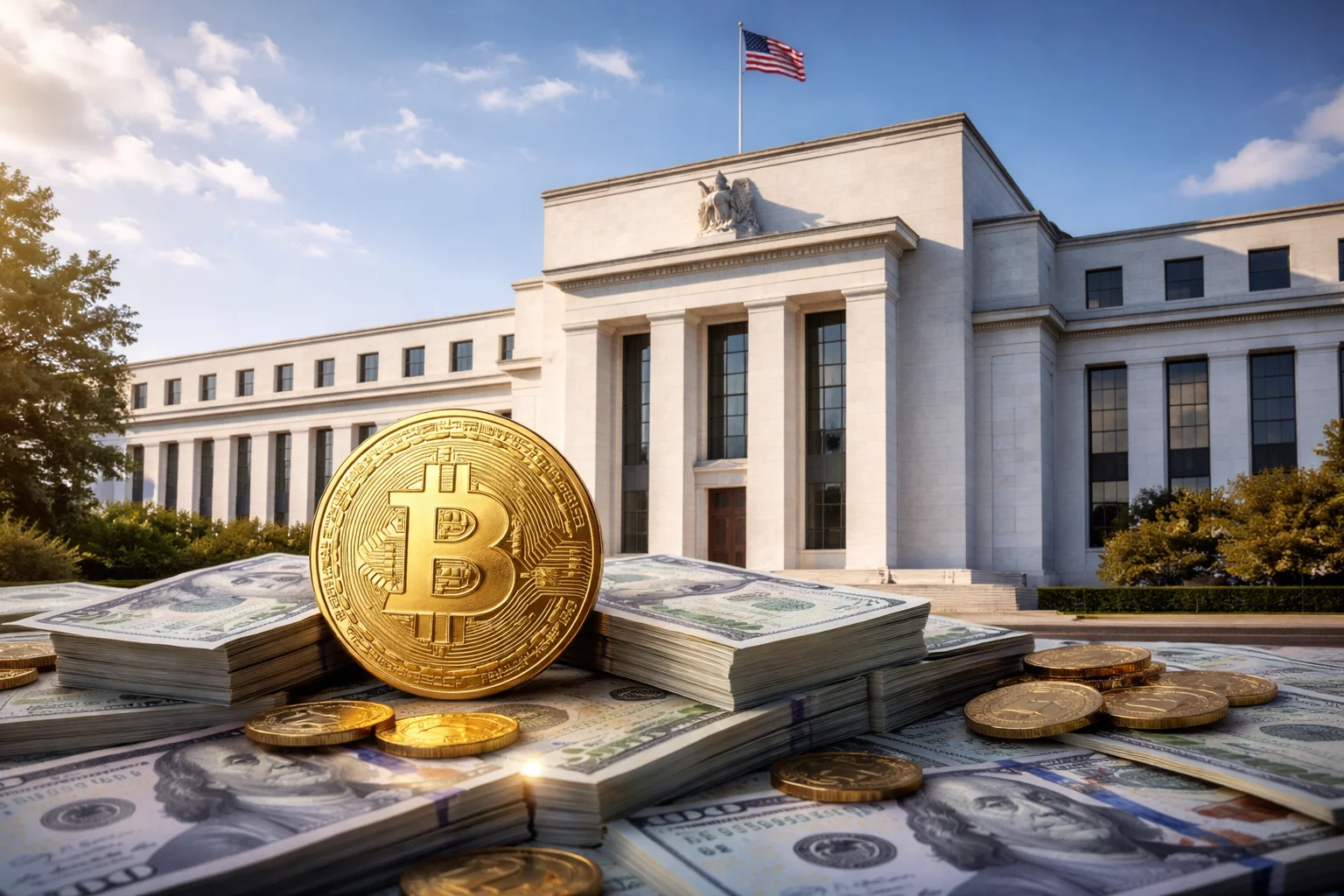
The Federal Reserve (Fed), also known as the US central bank, has taken a critical step that could ease tensions between the cryptocurrency sector and traditional finance. The institution has launched a public consultation process for a formal proposal to permanently remove the concept of "reputational risk" from its bank supervision framework.
The Fed's proposal aims to prevent banks from distancing themselves from legally operating customers solely on the grounds of "reputation." This change is seen as a significant turning point, especially for crypto companies that have argued they have experienced difficulties accessing banking services in recent years.
60-day consultation period begins
The proposal, announced on February 23, 2026, will allow for a 60-day public comment period before the regulation is finalized. Comments will be collected after publication in the Federal Register, and the final decision will be made in light of these evaluations.
The Fed actually signaled this policy change in June 2025. In that statement, it was indicated that "reputational risk" would no longer be considered in supervisory programs. The step taken now aims to make this approach a binding regulation rather than a temporary guidance.
According to the new framework, bank supervisions; It will be based on measurable financial criteria such as capital adequacy, liquidity, financial soundness, risk management, and compliance with existing laws. Public perception, political sensitivities, or social debates will not be part of the audit process.
Bowman: Discrimination has no place in auditing
Federal Vice Chair for Supervision Michelle W. Bowman made striking statements on the subject. Bowman said that they had heard disturbing examples of some auditors pressuring banks because of their clients' political views, religious beliefs, or because they operate in legal but controversial sectors, citing "reputational risk" concerns.
According to Bowman, this kind of discrimination against legally operating individuals and institutions has no place in the Fed's audit framework. The primary purpose of auditing is to ensure financial stability; not to indirectly push certain sectors out of the system.
"Operation Choke Point 2.0" debate
Crypto sector representatives and some Republican politicians have been calling the practices of recent years "Operation Choke Point 2.0." This statement refers to claims that banks are being discouraged from working with digital asset companies.
Senator Cynthia Lummis welcomed the Fed's proposal. Lummis stated that the Fed should not act as both judge and jury for digital asset companies, and that permanently removing "reputational risk" is important for the goal of making the US a global center in the digital asset space.
US President Donald Trump had also previously promised to end the practices referred to as "Operation Choke Point 2.0." The political dimension of the discussions has made the issue of access to the banking system not only a financial but also a political agenda item.
What does this mean for banks and crypto companies?
If the proposal becomes law, banks may feel less apprehensive about facing regulatory pressure when working with crypto companies. This could allow crypto firms to more easily access basic banking services such as account opening, access to payment systems, payroll, and tax processing.
Clearer rules could also pave the way for large financial institutions to take a more active role in areas such as digital asset custody, clearing, and ETF services. This could accelerate the integration between traditional finance and the crypto ecosystem. Consequently, the Fed's move to remove "reputational risk" from its supervisory framework is seen not merely as a technical regulatory change, but as a strategic move that could redefine the crypto sector's position within the financial system. The final decision, following a 60-day consultation period, will be crucial for both the banking sector and the digital asset market.