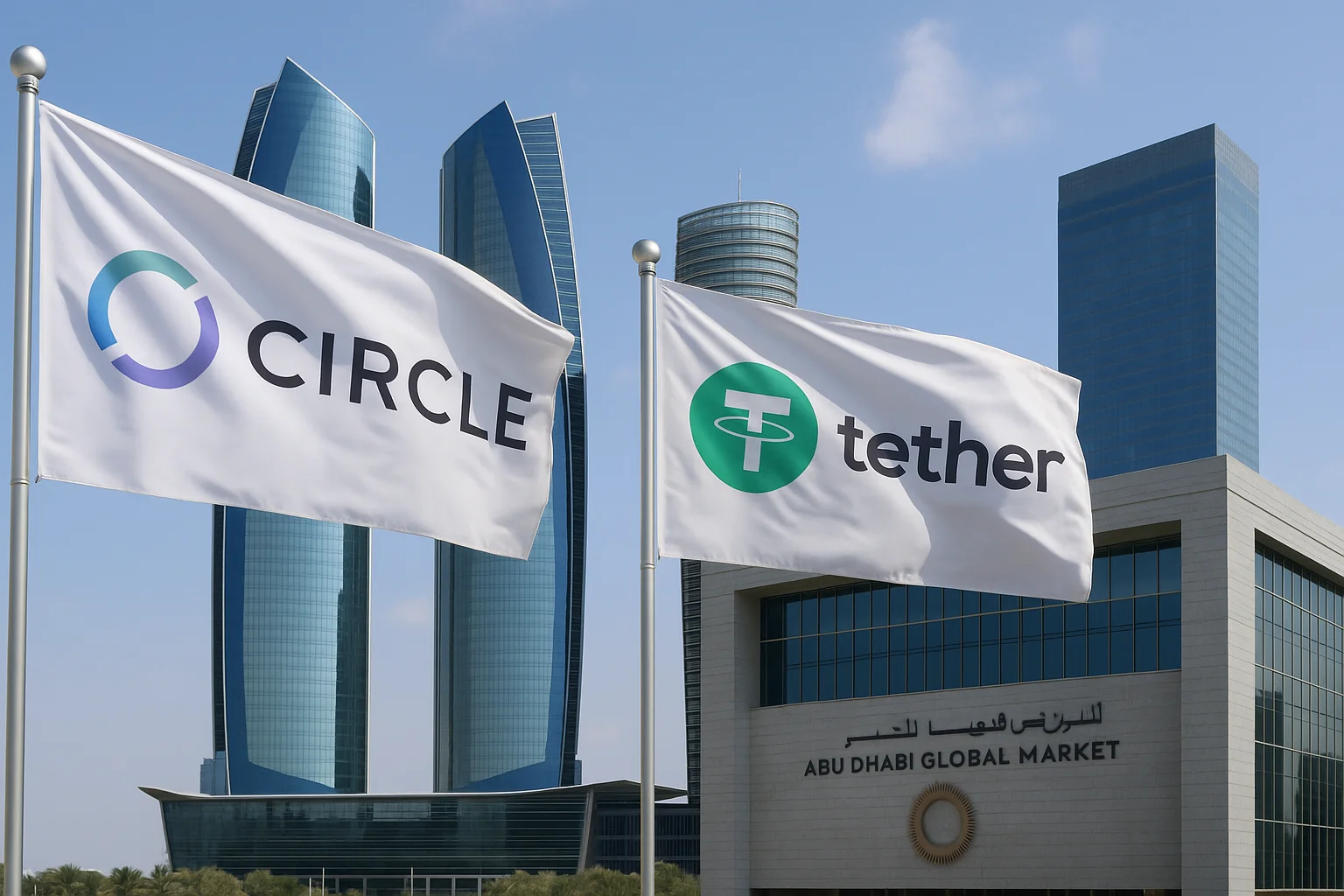
Abu Dhabi has once again raised the bar in the digital asset ecosystem. Both Circle's money services license and Tether's broad recognition for USDT have made ADGM the new arena for stablecoin competition in the region.
Abu Dhabi Approves Two More Major Companies
With recent regulatory steps, Abu Dhabi is accelerating its goal of becoming the Middle East's digital asset hub. Both Circle's critical license and Tether's expanded recognition for USDT have significantly intensified stablecoin competition in the region. The Binance announcement recently further intensified the situation.
Circle, the company behind USDC, has received a license from the Financial Services Regulatory Authority of the Abu Dhabi Global Market (ADGM) allowing it to operate as a money services provider. This authorization paves the way for the company to offer a broader range of payment and settlement services in the United Arab Emirates. Circle aims to expand its presence in the region with regulated solutions specifically targeted at corporate businesses, developers, and financial institutions. Circle Co-Founder and CEO Jeremy Allaire stated that the ADGM framework offers a "high standard" for risk management and consumer protection. Allaire emphasized that clear regulation lays the foundation for a more open and efficient financial system operating at internet scale. The company has appointed Saeeda Jaffar, a former Visa senior executive, as head of the Middle East and Africa to lead its strategy in the region. Jaffar is seen as a key figure to accelerate the adoption of dollar stablecoins and the proliferation of on-chain payment infrastructure.
Tether also made a significant move. The company announced that USDT has been officially recognized as a "fiat-referenced token" in the ADGM. This new regulation allows licensed institutions to conduct regulated activities with USDT. Furthermore, this recognition covers not only well-known networks like Ethereum, Solana, and Avalanche, but also a broad range of multi-chain infrastructures, including Aptos, Celo, Cosmos, Kaia, Near, Polkadot, Tezos, TON, and TRON. Tether CEO Paolo Ardoino stated that the integration of USDT into the ADGM framework strengthens the critical role stablecoins play in global finance. This expanded recognition enhances both liquidity and cross-chain compatibility, further bolstering Abu Dhabi's claim as a compliant digital financial hub.
Binance also received authorization
The activity in the region doesn't stop there. Recently, Binance, the world's largest crypto exchange, announced that it has received full authorization from the ADGM for its global platform, Binance.com. The exchange will operate through three separate licensed entities (exchange, clearinghouse, and broker-dealer), modeled after traditional markets. Regulated operations are scheduled to begin on January 5, 2026. Binance Co-CEO Richard Teng emphasized that the ADGM's "gold standard" regulatory framework meets the highest level of international compliance requirements.